Sources: Karaim association, Department of National Minorities and heritage inventory sources
Who are Lithuania’s Karaims?
Lithuania’s Karaims are a distinct ethnic community with a Turkic language and the religious tradition of Karaism. Karaims and Tatars are different communities, although both feature in the history of the Grand Duchy of Lithuania. This overview introduces cultural foundations; existing related pages examine weddings and the Trakai kenesa in greater detail.
Trakai and the historical account
The Karaim cultural association connects settlement in Lithuania with the late fourteenth century and Vytautas. It presents the account of families brought from Crimea as an established tradition. Trakai is described as an administrative and spiritual centre; later settlements in Biržai, Naujamiestis, Pasvalys and Panevėžys are also mentioned. This traditional account should not be turned into a verified genealogy for every family.
Language and transmission
Karaim belongs to the Western Kipchak group of Turkic languages. The association distinguishes Trakai, Halych–Lutsk and Crimean dialects. The Department of National Minorities describes language teaching and written heritage, while the Vilnius University publication “Karaim language in use”, presented by the association, connects research with learning. Exploring texts and learning materials takes an introduction beyond a handful of tourist phrases.
Karaism and the kenesa
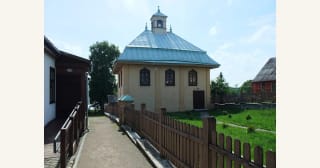
The association explains Karaism as a faith grounded in the Old Testament. A Karaim place of worship is called a kenesa. This is not another name for a mosque: Karaim and Tatar religious traditions differ. Distinguish the history of an ethnic community, its religious teaching and the history of a particular building; they are connected subjects with different questions.
Family, celebrations and food
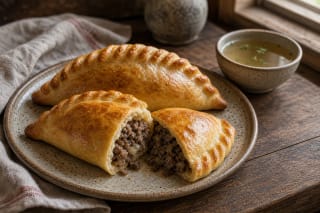
Lithuania’s intangible cultural heritage inventory identifies the community itself as the custodian of Karaim wedding traditions. Begin with its explanations rather than assigning imagined meanings to ceremonies. The Department of National Minorities also discusses Karaim cooking and kibinai pastries. Continue from food to language, family and faith so that a single popular dish does not stand in for an entire culture.
Continuing your exploration
Compare the association’s language page with its introduction to religion and note the different questions each answers. Then explore the wedding tradition or the history of a kenesa. Before visiting, check the responsible organization’s published arrangements. A public cultural description is not an invitation to family ceremonies, and access to a kenesa follows its own rules.