- Category
- Heritage and UNESCO
- Reading time
- 15 min.
- Sources
- UNESCO, Lithuanian National Commission for UNESCO, and encyclopedic sources
What UNESCO Heritage Is and Why It Matters for Lithuania
UNESCO is the United Nations Educational, Scientific and Cultural Organization. It recognizes and protects cultural and natural values of exceptional importance to humanity at the international level. Properties and practices are inscribed on UNESCO lists when they have what is called outstanding universal value, meaning their importance crosses the borders of a single state and belongs to all humanity. In Lithuania, UNESCO matters are handled by the Lithuanian National Commission for UNESCO, while heritage protection is coordinated by the Department of Cultural Heritage and the Lithuanian National Culture Centre.
Lithuania's UNESCO heritage is not one uniform category. It belongs to several separate programs: the World Heritage List, which includes properties such as cities, landscapes, and archaeological sites; the Representative List of the Intangible Cultural Heritage of Humanity, meant for living traditions; and the Memory of the World programme, which safeguards documentary heritage. Each list has its own inscription criteria, so they are worth discussing separately.
Today Lithuania can be proud of five World Heritage properties, four intangible cultural heritage elements, and one Memory of the World register inscription. This guide brings all of them together in one place, with exact inscription years, explanations of what each property or practice means and why it was recognized, and practical pointers to where in Lithuania the heritage can actually be seen or experienced.
World Heritage vs Intangible Heritage: The Difference
World Heritage covers physical, tangible properties: historic cities, buildings, archaeological sites, and natural or cultural landscapes. This list is based on the 1972 World Heritage Convention, and properties are inscribed according to ten criteria of outstanding universal value. A World Heritage property can be visited and experienced in place, because it has a concrete location and boundaries on a map.
Intangible Cultural Heritage is different in nature. It consists of living traditions that people transmit from generation to generation: songs, dances, crafts, rituals, and knowledge. Its safeguarding is regulated by a separate 2003 convention, and elements are inscribed on the Representative List of the Intangible Cultural Heritage of Humanity. Until 2008, the most exceptional traditions were proclaimed Masterpieces of the Oral and Intangible Heritage of Humanity; later they were incorporated into the unified Representative List.
The third, less familiar area is the Memory of the World programme, which protects documentary heritage: manuscripts, archives, sound and video recordings. It is not the same as World Heritage or intangible heritage, so Lithuania's Memory of the World inscription is discussed separately in this guide. Understanding these differences matters because public language often blends all UNESCO lists into one.
Vilnius Historic Centre (Old Town) - 1994
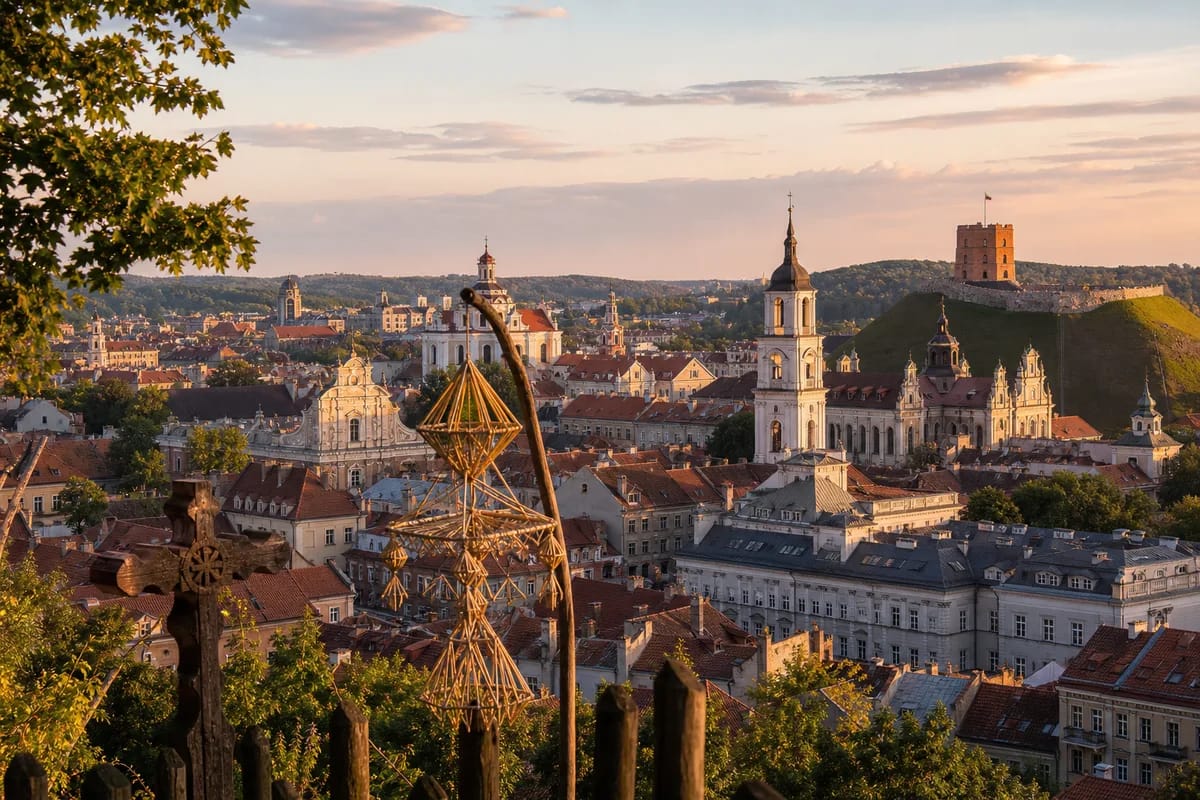
Vilnius Historic Centre was inscribed on the UNESCO World Heritage List in 1994, reference no. 541, and is Lithuania's first property on the list. It is one of the largest and best-preserved old towns in Central and Eastern Europe, covering about 360 hectares. UNESCO recognized it as an outstanding example of an Eastern European medieval city in which Gothic, Renaissance, Baroque, and Classicist architectural layers developed organically over centuries.
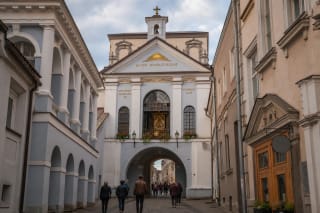
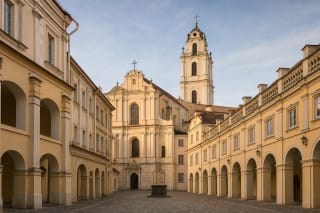
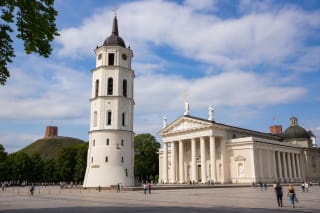
Vilnius Old Town formed from the thirteenth-fourteenth centuries onward, and its character was especially marked by the Baroque period; Vilnius is not accidentally called a Baroque city. The old town gathers the most important monuments: Vilnius Cathedral with its bell tower, the Vilnius University ensemble with St. Johns' Church, the Gate of Dawn with its miraculous image of the Mother of Mercy, numerous churches, and old burgher houses. UNESCO emphasized not only individual buildings but also the coherent fabric of the historic city: the street network, courtyards, and skyline.
Vilnius Old Town is also important as a meeting place of many cultures and religions. Lithuanians, Poles, Jews, Ruthenians, and other communities lived here for centuries. It is a living, functioning city center, so it can be experienced simply by walking from Cathedral Square along Pilies and Aušros Vartų streets toward the Gate of Dawn.
Curonian Spit - 2000 (Shared with Russia)
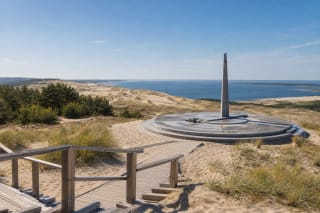
The Curonian Spit was inscribed on the World Heritage List in 2000, reference no. 994, as a cultural landscape. It is a shared property of Lithuania and the Kaliningrad region of the Russian Federation: the northern, larger part of the spit belongs to Lithuania, while the southern part belongs to Russia. The Curonian Spit is a narrow sand peninsula about 98 km long, separating the Curonian Lagoon from the Baltic Sea.
UNESCO recognized the Curonian Spit primarily as testimony to the interaction of people and nature. Sand dunes constantly move here, and the work of planting and stabilizing them, begun in the early nineteenth century and requiring the efforts of several generations, saved settlements from being buried by sand. Today this cultural landscape survives only through continuous protection. In 1991 Lithuania established Curonian Spit National Park.
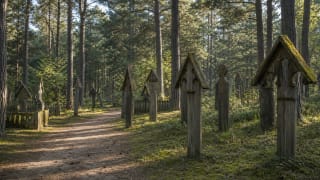
The value of the Curonian Spit lies both in the great dunes, especially the impressive Parnidis Dune near Nida, and in seaside fishing villages with distinctive architecture in Nida, Preila, Pervalka, and Juodkrantė. Visitors should climb Parnidis Dune, visit Nida Lighthouse, and see Juodkrantė's old cemetery with krikštai, signs of Baltic and Lithuania Minor cultural heritage.
Kernavė Archaeological Site - 2004
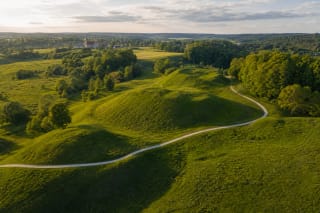
Kernavė Archaeological Site was inscribed on the World Heritage List in 2004, reference no. 1137. It is an exceptional cultural landscape in the Neris valley, concentrating ten thousand years of human habitation traces, from the first inhabitants in the Late Palaeolithic to a medieval town. Kernavė is sometimes called Lithuania's first capital because it was an important center of the early Lithuanian state and was mentioned in written sources in 1279.
The core of the site is a complex of five hillforts and the broad Pajauta Valley, where the medieval town was located. UNESCO recognized Kernavė as an exceptional archaeological landscape testifying to the long development of Baltic-region settlements and a well-preserved defensive system of hillforts. Burial grounds, old settlement layers, and the almost unchanged relief of the Neris valley make it possible to read whole millennia in one place.
Kernavė is convenient to visit in a few hours. The State Kernavė Cultural Reserve and its museum operate here, and wide views of Pajauta Valley open from the hillforts. The site is especially busy during Rasos, or Midsummer, celebrations and the Days of Living Archaeology, when old crafts and customs are demonstrated.
Struve Geodetic Arc - 2005 (Transnational, 10 Countries)
The Struve Geodetic Arc was inscribed on the World Heritage List in 2005, reference no. 1187, and is one of the most unusual properties on the whole list. It is not a building or landscape but a scientific monument: a chain of measurement points stretching across ten present-day countries. The arc extends roughly 2,820 km from Hammerfest in Norway to the Black Sea and is the first transboundary, multinational World Heritage property.
The arc was measured in 1816-1855 by a team led by astronomer Friedrich Georg Wilhelm Struve. It was one of the earliest and most accurate attempts of its time to determine the true size and shape of the Earth using triangulation. Because of its scientific and technical importance for the history of geodesy and cartography, 34 of the best-preserved points in the chain were inscribed by UNESCO.
Lithuania has three Struve Arc points inscribed by UNESCO: Gireišiai in Panevėžys district, Meškonys in Vilnius district, and Paliepiukai near Nemenčinė. Today they are marked with memorial signs, so they can be visited as modest but historically significant places that remind us that a scientific achievement can also become world heritage.
Modernist Kaunas: Architecture of Optimism, 1919-1939 - 2023
Modernist Kaunas: Architecture of Optimism, 1919-1939 was inscribed on the World Heritage List in 2023, reference no. 1661. It is Lithuania's fifth and newest property. The decision was made on September 24, 2023, during the 45th session of the World Heritage Committee in Riyadh. The property was recognized as an exceptional example of interwar urban modernization.
This property covers Kaunas interwar architecture in Naujamiestis and Žaliakalnis, from the period when Kaunas was Lithuania's temporary capital. In 1919-1939, a small provincial city grew and modernized extremely quickly, while local architects created a distinctive variant of modernism that combined international trends with national character. UNESCO described this architecture as "architecture of optimism" because it reflects the determination of a young state's citizens to build a modern European city in a short time.
Kaunas modernism consists not of isolated masterpieces but of an entire urban fabric: public buildings, churches, schools, and residential houses with functional plans and restrained aesthetics. In Kaunas, it is worth walking along Laisvės Avenue and the surrounding Naujamiestis streets, taking the funicular up to Žaliakalnis, and viewing the Christ's Resurrection Basilica, an important symbol of the period.
Cross-Crafting and Cross Symbolism - Intangible Heritage (2001 -> 2008)
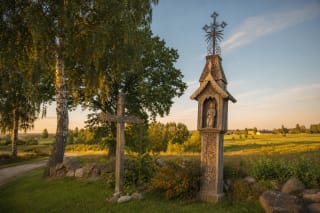
Cross-crafting and cross symbolism was the first Lithuanian intangible heritage element to receive UNESCO recognition. In 2001 it was proclaimed a Masterpiece of the Oral and Intangible Heritage of Humanity, and in 2008 it was inscribed on the Representative List, reference no. 00013. It is a living tradition of making, erecting, and blessing crosses, shrine-poles, roofed poles, and small chapels, together with the rituals connected to them.
Lithuanian cross-crafting stands out for its synthesis of artistic forms: wood carving, blacksmithing, ornament, and folk sculpture, often depicting saints and the rūpintojėlis, the pensive Christ. UNESCO emphasized that these crosses became not only religious but also national and community symbols, especially during the nineteenth-century restrictions of the tsarist authorities and the Soviet period, when cross erection was persecuted but the tradition survived.
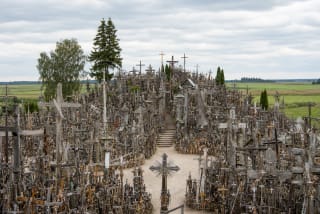
The most vivid symbol of cross-crafting is the Hill of Crosses near Šiauliai, where hundreds of thousands of crosses stand. Individual shrine-poles and roofed poles can be seen in almost every Lithuanian village, by churchyards and road junctions, while folk artists demonstrate traditional carving techniques at craft festivals and fairs.
Sutartinės - Lithuanian Multipart Songs (2010)
Sutartinės were inscribed on the Representative List of the Intangible Cultural Heritage of Humanity in 2010, reference no. 00433. They are a unique genre of multipart, or polyphonic, singing, found mainly in northeastern Lithuania, in Aukštaitija. Sutartinės are characterized by simple melodies, often made of only a few notes, a meaningful main text, and refrains with distinctive vocables.
The uniqueness of sutartinės lies in performance practice. Singers, traditionally women, sing in two parallel seconds, in strict canon, or in several groups at once, creating a distinctive archaic sound. The subject matter is broad: work, calendar rituals, weddings, family, and war. Singing is often accompanied by restrained movements and simple choreography. UNESCO recognized the genre as especially archaic and unique in the European musical context.
Living sutartinės can be heard in folklore ensemble performances, ethnographic festivals, and Song Celebrations, while their history and recorded variants are preserved in ethnomusicological archives. Lietuva.love has a separate sutartinės section collecting individual sutartinės with variants and explanations.
Baltic Song and Dance Celebrations - Shared Tradition (2003 -> 2008)
The Baltic song and dance celebrations tradition is shared by Lithuania, Latvia, and Estonia. In 2003 it was proclaimed a Masterpiece of the Oral and Intangible Heritage of Humanity, and in 2008 it was inscribed on the Representative List, reference no. 00087. These are large-scale cultural celebrations bringing together thousands of amateur choir singers and folk dance group participants.
The celebrations have a distinct rhythm in each country: in Estonia and Latvia they are held every five years, while in Lithuania they take place roughly every four years. Their repertoire covers the full musical spectrum, from the oldest folk songs to contemporary works. UNESCO recognized the tradition as an exceptionally important phenomenon of national identity, community, and cultural continuity.
Lithuania's Song Celebration tradition dates to 1924, and the major Song Celebrations take place in Vilnius, where mass choir concerts in Vingis Park, dance days, and processions have become their main highlights. To witness a living celebration is to experience intangible heritage not as the practice of a small group of specialists but as something carried by entire generations.
Sodai Straw Garden Making (2023) and Memory of the World: The Baltic Way (2009)
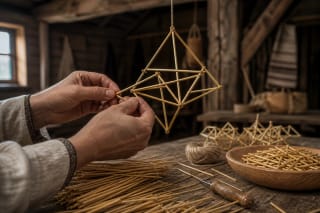
Lithuania's newest intangible heritage element is sodai, the craft of making straw gardens, inscribed on the Representative List in 2023, reference no. 01987. Sodai are hanging geometric structures tied from cereal straw, usually rye, traditionally hung above a cradle, wedding table, or family table. They are believed to reflect the structure of the world and bring harmony, so they are associated with life and spirituality.
Separate from World Heritage and intangible heritage is UNESCO's Memory of the World programme, which protects documentary heritage. On July 30, 2009, documents of the Baltic Way were inscribed on this programme's register as shared heritage of Lithuania, Latvia, and Estonia. The Baltic Way was the human chain of about two million people stretching more than 600 km from Vilnius through Riga to Tallinn on August 23, 1989, in peaceful protest against Soviet occupation.
The craft of tying straw gardens can be learned in craft camps, ethnoculture centers, and folk artists' workshops, and examples can be found in museums and exhibitions. The memory of the Baltic Way remains alive every year on August 23, the Day of the Black Ribbon, while documentary heritage from the event is preserved in Lithuanian archives.
Practical Guide: Visiting All of Lithuania's UNESCO Heritage
All five Lithuanian World Heritage properties can be visited over several trips. Vilnius Old Town and Kernavė are close to each other, both reachable from the capital in one day, so they are easy to combine. The Curonian Spit requires a separate trip to the seaside, where several days allow visitors to experience Nida, Parnidis Dune, Juodkrantė, and the spit settlements. Modernist Kaunas is best explored on foot within the city, while the Struve Arc points are best treated as separate stops on trips around the country.
Experiencing intangible heritage requires some planning because these are living phenomena. Cross-crafting is best revealed by the Hill of Crosses, shrine-poles and roofed poles, and craft fairs. Sutartinės and the song and dance celebration tradition are worth hearing at folklore festivals and Song Celebrations, while straw garden making can be experienced in ethnoculture camps and workshops. These experiences depend on the calendar, so it is worth checking event dates before traveling.
When planning a route, remember that UNESCO status does not mean a tourist complex. Some properties and expressions, especially Struve Arc points or individual crosses, are modest and require an attentive eye. That is precisely the charm of Lithuania's UNESCO heritage: it includes a grand old town, a shifting sand landscape, a quiet measurement stone, and a living song passed from mouth to mouth.