Sources: LLTI and encyclopaedic sources; editorial activities without classroom testing
Words and examples
Showing: 6
Riddles
A small round thing rolls along; when it goes bad, no craftsperson can repair it. What is the recorded solution?
Reveal the answer
An egg.
Roundness and irreversible spoiling point to an egg. Underline both clues. The Lithuanian wording follows the specific record; translations and the question are editorial.
Source · LLTI misles_id 36386; LTR 960(353-44); CC BY 4.0
#Riddles
It has legs but does not walk, straw but does not eat, feathers but does not fly. What is the recorded solution?
Reveal the answer
A bed.
The legs support the furniture, straw points to mattress stuffing, and feathers to pillows. This interprets an older household image rather than describing every modern bed.
Source · LLTI misles_id 43048; LTR 4627(740); CC BY 4.0
#Riddles
It goes and goes but gets nowhere, strikes but kills nobody, and points only to itself. What is the recorded solution?
Reveal the answer
A clock.
Going, striking and pointing describe timekeeping, sounding the hours and the hands. Explain why a literal attack on a person does not fit the complete clue.
Source · LLTI misles_id 44621; LTR 3157(1528); CC BY 4.0
#Sutartinės sources
Find the Slaviūnas variant of “Antinas antelę vadinojo”. What is its number, and how does it differ from the page’s main version?
Reveal the answer
SlS I 18. In the source variant the duck is warned against the invitation; in the main version she refuses to swim herself.
Compare the two labelled texts and point to the relevant passage. The task concerns the versions displayed in this catalogue, rather than every existing version of the song.
Source (in Lithuanian) · SlS I 18; LTR 963(22)
#Sutartinės sources
Are the first lesson’s D–E–D–F and E–F–E–G lines a recording of the SlS I 18 melody? What would you need to learn the specific song?
Reveal the answer
No. They are an editorial technical exercise. You would need a reliable melody source for that same documented variant and guidance on its phrasing.
The lesson explicitly distinguishes its exercise from the traditional tune and archival singing. A useful new teaching example does not thereby become a historical source.
Source (in Lithuanian) · Sutartinės: pirmoji pamoka; SlS I 18
#Feast calendar
Fill in the dates of Kūčios and Joninės. Which of these three feasts—Kūčios, Joninės and Easter—moves each year?
Reveal the answer
In this Lithuanian Catholic-calendar context, Kūčios is the evening of 24 December. Joninės falls on 24 June, with celebrations often beginning on the evening of 23 June. Easter moves.
Record a source beside each row. Distinguish the eve from the calendar day, and do not treat different church calendars as one rule shared by every community.
Source · VLE: Kūčios; Joninės; Velykos
#No entries match this search.
Who the activity pack is for
These editorial activities combine Lithuanian culture with reading sources for teachers, families and heritage-language schools. The suggested difficulty is for grades 5–8; a teacher should adapt the language and scope to the group. The pack has not been classroom-tested or endorsed by a teachers’ association.
The tasks use specific riddles, a documented sutartinė variant and feast pages already on this site. Learners support an answer with clues or source details, rather than guessing a single supposedly universal meaning for Lithuanian culture.
Preparation and a suggested lesson sequence
Prepare paper, pens and access to the related pages, or print the texts beforehand. This source-reading lesson needs no audio, instruments, fire or food. Read “Antinas antelę vadinojo” in advance: the documented version includes imagery of a bird’s death.
A suggested 45-minute outline is 5 minutes on sources versus editorial explanation, 10 on riddles, 15 on the sutartinė variant, 10 on the calendar and 5 for reflection. These are planning suggestions rather than measured completion times. You can select a single subject instead.
1. Riddles: answers supported by clues
On the riddle page, find misle-36386, misle-43048 and misle-44621. Leave the answers closed at first. For each riddle, write a guess and underline two supporting clues before revealing the recorded answer.
Separate the recorded solution from a plausible alternative guess. Another object may fit one clue, but the learner should account for the others too. Retain the LLTI number and archival reference. Original texts and solutions come from LLTI’s open dataset under CC BY 4.0; activities, explanations and translations are editorial.
2. Sutartinės: a documented variant and a practice exercise
Open “Antinas antelę vadinojo”. Its main displayed text and the separately labelled Slaviūnas-collection variant are not identical. Select the SlS I 18 variant. Record its reference and one textual difference from the main version. A shared title does not make every performance identical.
Next read the first sutartinės lesson. Its D–E–D–F and E–F–E–G lines are an editorial preparatory exercise, rather than the tune of SlS I 18. Identify which page presents a traditional variant, which supplies a new practice task, and what source you would need to learn the traditional melody itself.
3. Feast calendar: date, custom and belief
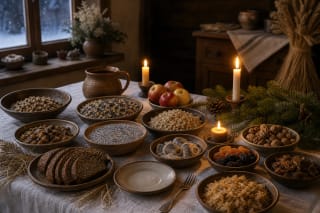
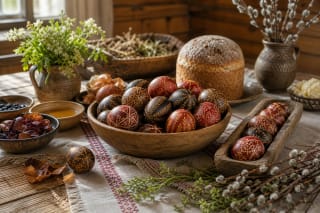
Compare the Kūčios, Joninės and Easter pages. Make columns for feast, date or date rule, a described custom, and source. Enter calendar dates for Kūčios and Joninės; for Easter, note that the date changes annually and depends on the church tradition.
Choose a described belief or divination custom and restate it using “people believed”, “the story says” or “the source describes”. A story about the fern flower, for example, is not botanical evidence. Do not extend one custom to every family, period or Lithuanian community.
Printing and discussing the answers
Filter the cards below by subject or search. For a pupil copy, leave “Include answers when printing” unchecked; check it for the teacher’s copy. Inspect the browser print preview and page selection. Clear both filters to print the complete set.
Discuss three things: whether an answer fits the text, whether it identifies a specific source, and whether it distinguishes the record from editorial interpretation. These are suggested discussion criteria rather than a standardised assessment scale. Finish the sentence “My answer is supported by…”