- Category
- Understanding historical households
- Reading time
- 5 min
- Sources
- An introductory account based on museum records and ethnographic sources
Start with the action
Washing and smoothing cloth involve several operations. Objects assembled in one case need not have belonged to the same household or period. The National Museum of Lithuania’s textile-care collection distinguishes washing vessels, beating implements and smoothing devices.
The sequence below is an explanatory framework, not a single historical recipe for all Lithuania. Fabrics, access to water, tools and household habits differed.
1. The vessel and wet cloth
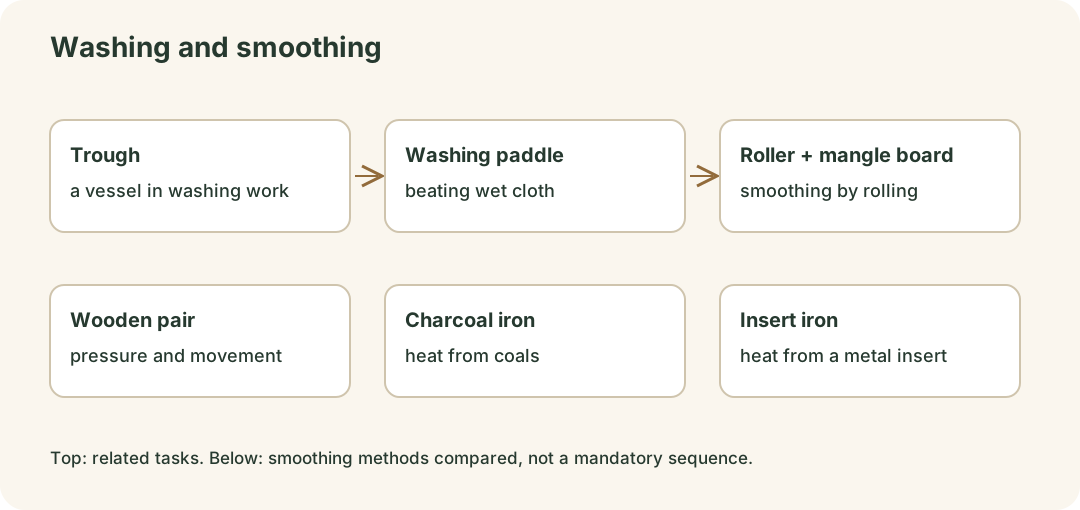
A trough can belong to laundry work, but the name alone is insufficient: troughs also served other purposes. A record should establish the use of the particular exhibit. A broad washing-paddle head explains beating, while the ridges of a washboard explain rubbing.
These are different movements. Add a verb to each object: soak, rub or beat. This prevents every wooden board from being casually labelled an early iron.
2. A roller and board work together
Cloth wraps around the round roller, while the grooved mangle board presses and rolls it. If only an ornamental handled board survives, part of the explanation is missing. Kernavė Museum’s account is useful for understanding the pair.
Decoration is first an observable feature. Add a wedding-gift story, personal association or ritual interpretation only when the object’s documentation supports it.
3. A hot sole uses another technology
A charcoal iron and an iron with a heated insert are different mechanisms. One holds coals; the other receives metal heated separately. Look for the lid, openings and insert compartment, using the museum’s description.
The National Museum also mentions larger mangles. A simple progression from paddle to electric iron is misleading: different tools could coexist while carrying out different tasks.
Try this in a museum
Choose four objects. For each, record the action, working part and information still needed for identification. Compare your answers with the labels. A mismatch is an invitation to ask a custodian, rather than invent an answer.
An object’s date does not mark the beginning or end of the entire custom. A paddle made in 1932 documents that particular implement; it cannot date the washing practices of every Lithuanian family.