
- Category
- Learning traditional music
- Reading time
- 5 min
- Sources
- Source-based explanation; editorial exercises identified separately
Choose the purpose before the song
Decide whether you need listening, communal singing, a game or house-visiting repertoire. Each needs different evidence: an identified recording can support listening, while a game also needs a documented sequence of actions.
Volume XX of the Lithuanian Folk Song Book (2007), prepared by Jurgita Ūsaitytė and Aušra Žičkienė, distinguishes winter-season songs, game songs and house-visiting songs. It contains 402 songs, 321 with melodies, plus 101 additional melodies.
An exact record: Oi tu, bitaite, leliumai
LLTI item 57761 identifies Ona Pigagienė (Kopkaitė), living in Jaujakaimis and originally from Mikniūnai. Recorded in Kaunas in 1936, it lasts 49 seconds. References: audio LTRF pl 521(9), text LTR 930(59), melody 2767(51). The entry names publication in volume XX.
Open the linked archive record and listen there. On a first hearing, note the refrain returns; on a second, locate the ends of melodic phrases. This is our listening task. A short recording alone cannot establish a complete game.
A second record explains why titles are insufficient
Item 59239, “Untinas untalį vadinojo vadinojo,” was recorded from Domicelė Šlapelienė of Rakučiai, Kupiškio valsčius, in 1937. Its references are LTRF pl 740(2), text LTR 1227(4) and melody 2841(139). The archive labels it a sutartinė and also links it to volume XX.
A shared duck motif does not make this the version of “Antinas antelę vadinojo,” SlS I 18, in our catalogue. Different references, performers and melodies require comparison rather than an automatic match.
Find the matching score and game
Locate volume XX in a library or the publication, then compare the opening words, performer, place and archive reference. Record the song number and printed page. Matching words with a different archival identifier should be labelled another variant.
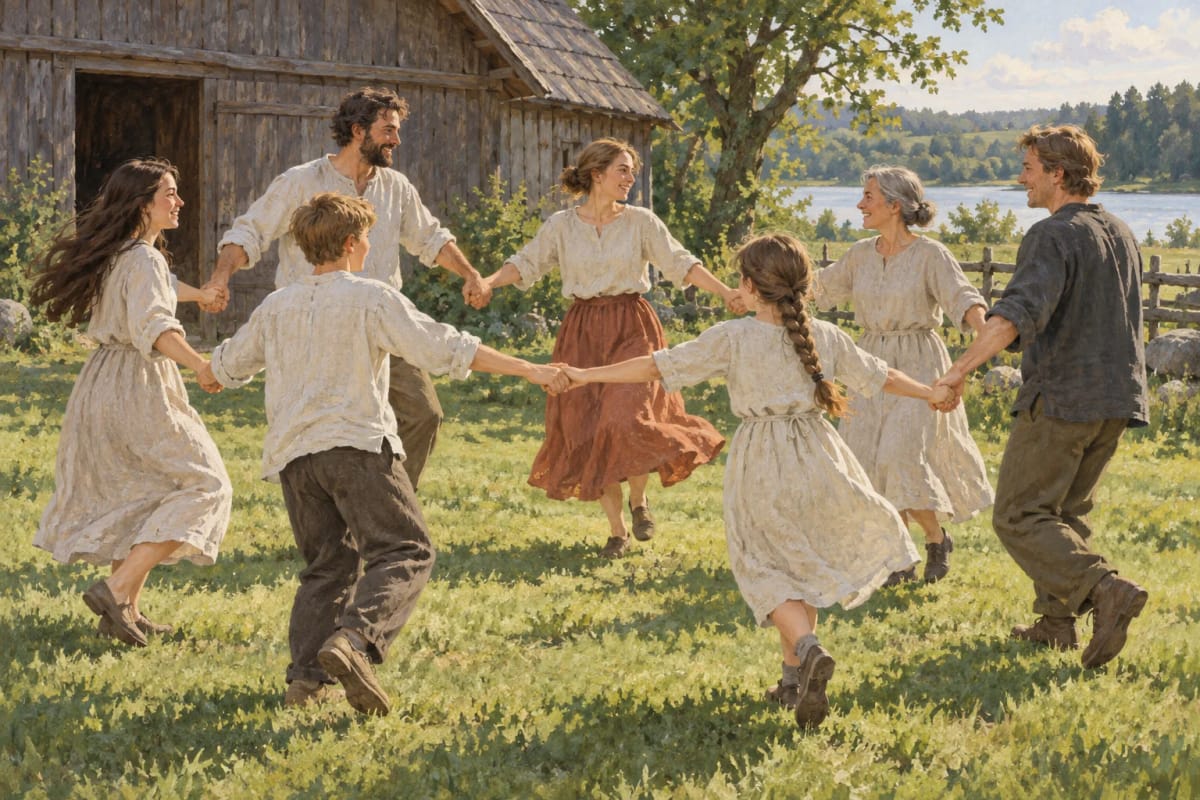
For a game, separately find who stands in the centre, who moves, which words change the action and how a round ends. If you devise the movements yourself, describe them as a contemporary educational interpretation. A refrain does not by itself document choreography.
Build a small, traceable session
For one meeting, we suggest an archival listening example, one verified song to learn and one fully described game. Keep a card for each item: title, purpose, place, performer, archive reference, score page and movement source.
Our “Atbėga elnis devyniaragis” and “Jievaro tiltas” pages help you select texts, but we do not attach either text to the recordings above. This page links to the original recordings and score publication; it does not reproduce score images or invent “authentic” tunes.