
- Genre
- Hillfort and spring legend
- Source status
- local tradition of the Utena region
- Motifs
- spring, happiness, health, offering, Utenis
Utenis Castle, Narkūnai hillfort, Happiness Valley
The Legend of Narkūnai Hillfort
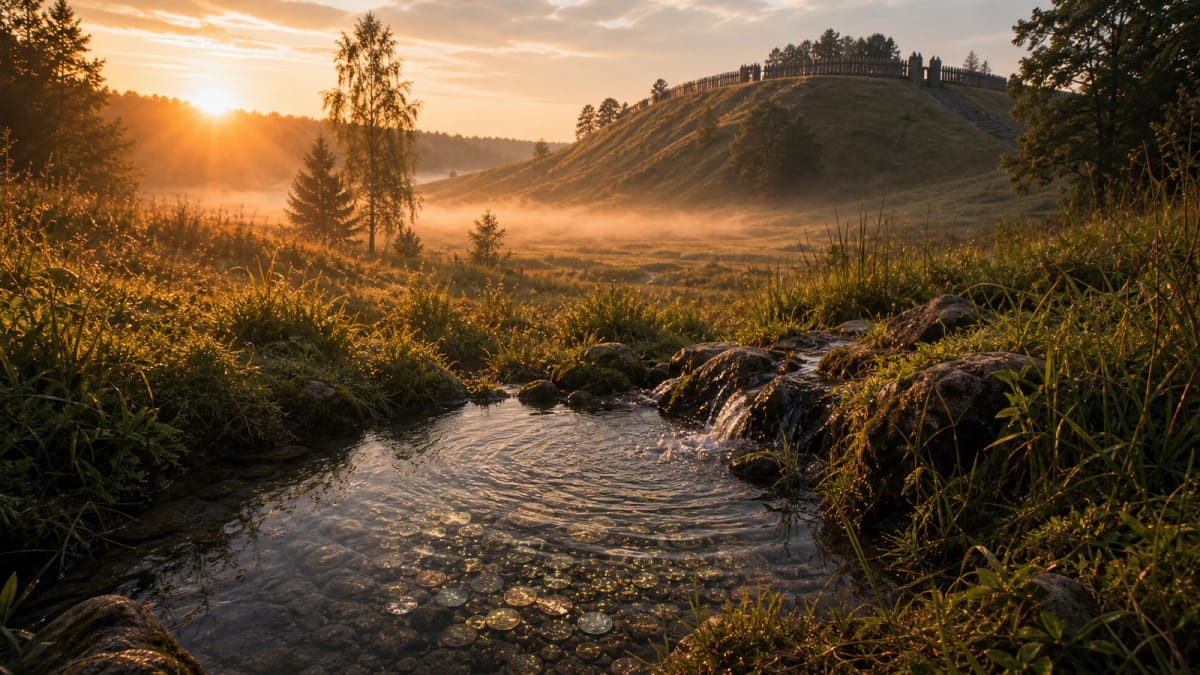
In people's memory, Narkūnai hillfort is associated with Utenis Castle. It is said that an old castle stood on the hill, while at its foot lay a place where a person could ask for health and happiness.
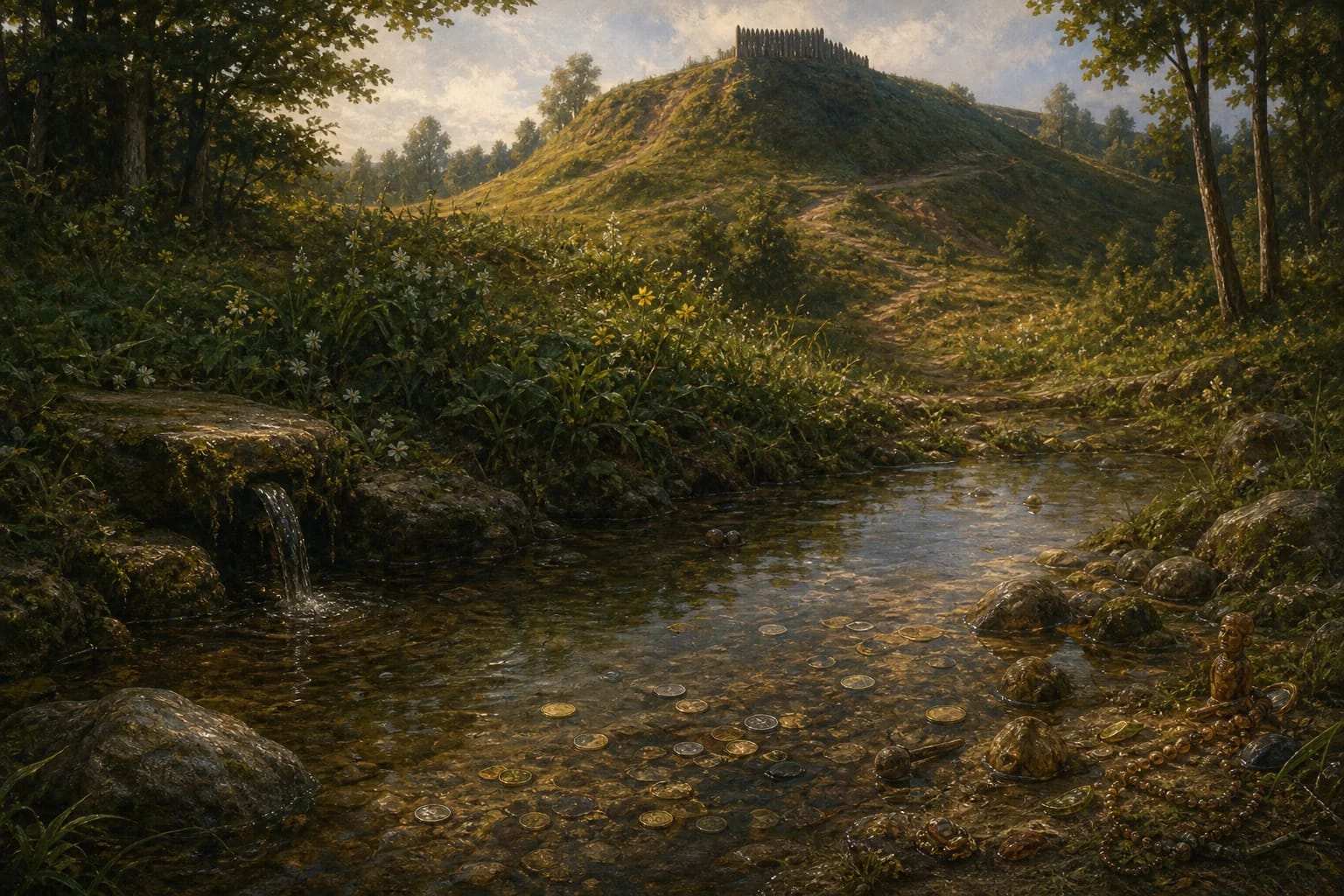
A spring flowed in Happiness Valley. In earlier times those seeking help came to it: they drank the water, washed themselves, and threw a coin into the spring as an offering.
In this way the hillfort and spring form one legend. Above is the memory of castle and authority; below is living water, where a person speaks with the unseen power of the place.
Interpreting the Narkūnai Hillfort Legend
Verticality matters in the Narkūnai story. The hill preserves the memory of defense and authority; the valley preserves practices of healing and asking for happiness.
Throwing a coin into water is a simple but strong act of offering. A person leaves a small value in hope of receiving something greater: health, luck, favor.
The name of Utenis Castle gives the legend the authority of old Aukštaitija. Even if historical details are treated cautiously, the local story has a clear center.
History of the Narkūnai Hillfort Legend
VLE describes Narkūnai hillfort as an archaeologically investigated place with a thick cultural layer. Keliauk Lietuvoje presents it as an important archaeological site of the Utena region.
The Baltic Road mentions Happiness Valley and the spring where money was once offered. This spring layer makes Narkūnai not only a castle site but also a place of sacred water.
The Narkūnai page therefore joins hillfort and spring legends while keeping them separate from future practical travel content.
Narkūnai Great Hillfort is one of the best-investigated hillforts in northeastern Lithuania, with a thick cultural layer attesting settlement as early as the first millennium BCE, including the Brushed Pottery culture. In genre terms, this is a hillfort legend. Lithuanian place legends were collected in Žemės atmintis: Lietuvių liaudies padavimai (1999) and classified in Bronislava Kerbelytė's catalogue, volume 3 (2002).