
- Genre
- Hillfort legend
- Source status
- historical hypothesis and local tradition
- Motifs
- Voruta, Mindaugas, hillfort, wooden castle, stream valleys, hidden stronghold
Voruta hillfort legend, Šeimyniškėliai hillfort, Mindaugas's Voruta
The Legend of Šeimyniškėliai (Voruta) Hillfort
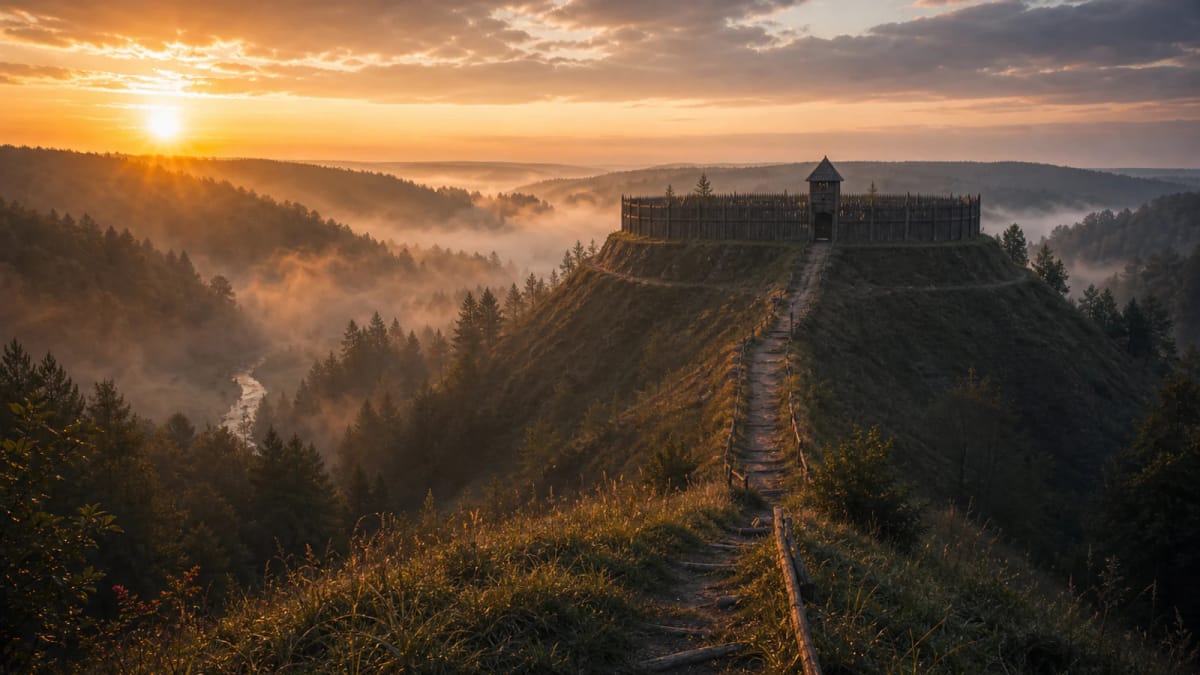
It is told that between the ravines of the Varelis and Volupis streams there once stood such a strong wooden castle that it was not easy to approach or even survey from afar. Protected by deep valleys, the hill looked like an island on dry land, and in human memory Voruta rose upon it.
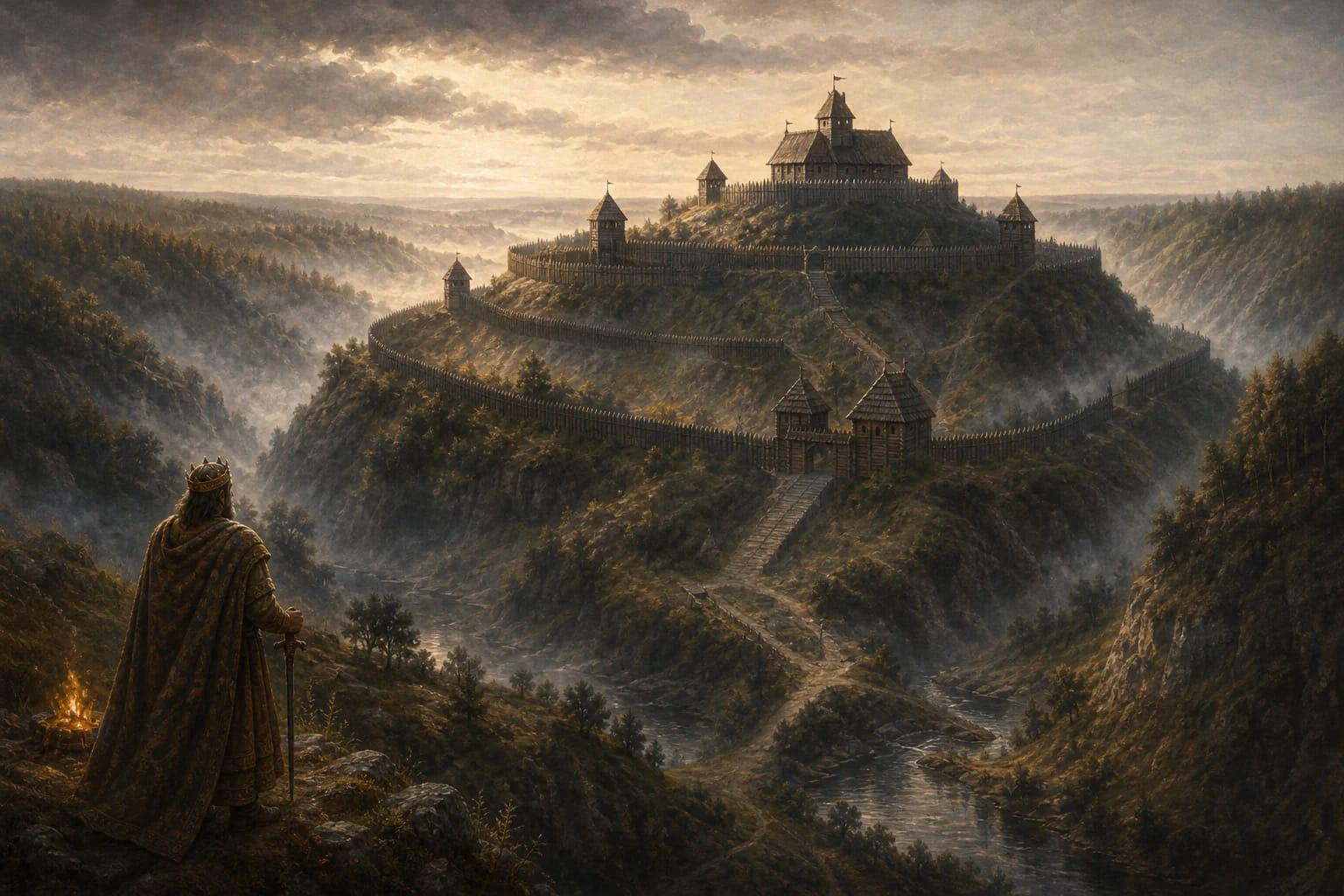
In local legend the castle is connected with King Mindaugas. When enemies approached the Anykščiai region, guards supposedly raised the bridges, closed the gates, and watched armies moving through the valleys from the high castle yard.
People say that when the castle decayed, the earth did not let it go. Beneath the ramparts remained the name of a royal castle, the memory of wooden walls, and the thought that true Voruta is not only stones or finds. It is the place where the hill itself guards the story of the beginning of the state.
Interpretation of the Šeimyniškėliai (Voruta) Hillfort Legend
This legend works through the landscape. Two deep stream valleys explain why the hill could be imagined as a fortress, while the name Voruta gives it royal weight. In the story, natural form and political memory strengthen one another.
Mindaugas's name is not a decorative addition here. It helps the place be read as a sign of the early Lithuanian state. Even when scholars speak cautiously about the hypothesis of Voruta's location, the legend lets people see the hill as a place of beginnings.
Hillfort legends often include vanished castles, underground passages, secret roads, or forgotten gates. At Šeimyniškėliai these motifs gather not around hidden treasure but around the image of a lost wooden stronghold.
History of the Šeimyniškėliai (Voruta) Hillfort Legend
Protected-territory and Anykščiai regional sources present Šeimyniškėliai Hillfort as one of Aukštaitija's most striking hillforts, associated with a mid-thirteenth-century wooden castle and the possible site of Mindaugas's Voruta.
Archaeological research has made this place especially important: the hillfort has been extensively investigated, and a living-history complex is being developed nearby. This does not mean every detail of the legend becomes historical fact, but it shows why the local story has strong ground.
This page therefore presents Voruta as a meeting point of local tradition and historical hypothesis. The legend speaks about how a real hillfort, research, and regional memory merge into one narrated place.
Voruta is the only castle of Mindaugas mentioned by name: its siege in 1251, during the conflict with Tautvilas, is described in the Hypatian or Volhynian-Halych Chronicle, and Šeimyniškėliai Hillfort is considered the most likely location. In genre terms this is a hillfort legend; Lithuanian place legends are collected in Žemės atmintis: Lietuvių liaudies padavimai (1999) and classified in Bronislava Kerbelytė's catalogue, vol. 3 (2002).
Why Has the Name Voruta Remained Powerful?
The name Voruta gives the hill a clear direction: it links the place with Mindaugas's era, state defense, and early Lithuanian rule. Without this name, Šeimyniškėliai Hillfort would be an impressive archaeological object; with it, it becomes a center of story.
The legend also reminds readers that wooden castles leave different signs from stone castles. They may disappear from sight, yet remain in ramparts, place names, and human stories.