
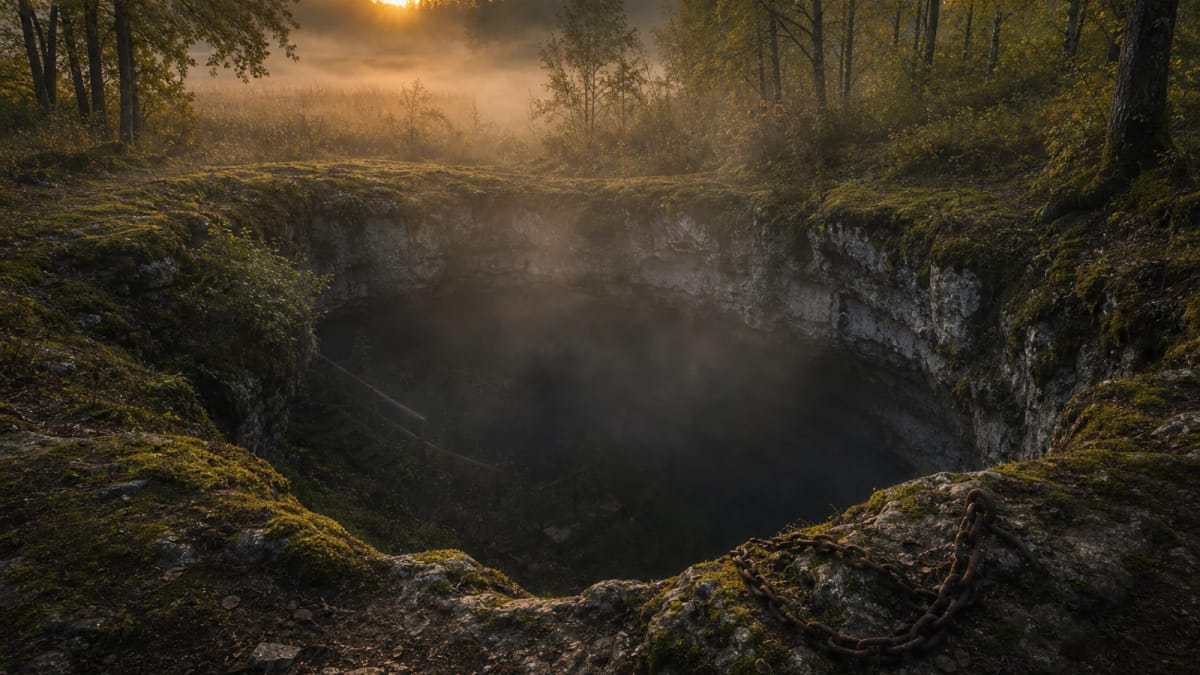
- Genre
- Karst-site legend
- Source status
- local legend and geological object
- Motifs
- sinking, cow, chain, sinkhole, Biržai karst
Karvės Ola, Karajimiškis sinkhole, Biržai Cow Cave
The Legend of Cow Cave
In the Biržai region it is said that a cow once grazed at this place. The ground beneath it suddenly opened; the animal sank deep down, and only the end of a chain or tether remained above.
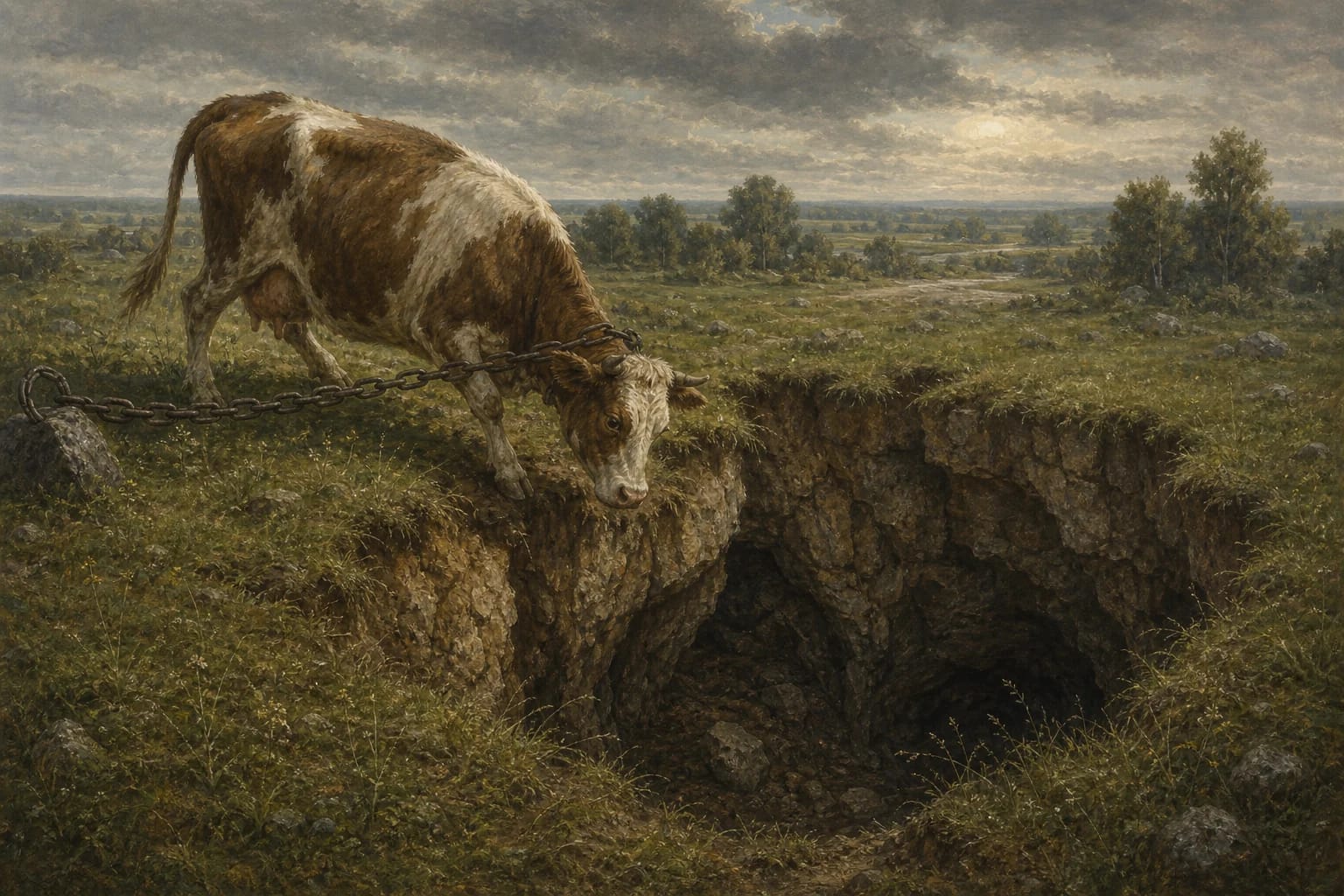
People understood that this was no ordinary pit. Dark openings appeared at the bottom, and the crack in the earth looked like a mouth that could swallow whatever came too close. From then on the place was called Cow Cave.
The legend is short but very precise: it speaks not of distant kings, but of an everyday farm animal and sudden loss. Such a story makes the karst landscape of northern Lithuania understandable through rural experience.
Interpreting the Cow Cave Legend
The Cow Cave plot grows out of a real danger. In the Biržai region, sinkholes are not only imagination; the ground really can collapse. The legend translates that geological reality into an easily remembered story.
The cow is not accidental. It was a value in farm life, so its loss gives the pit emotional weight. The earth does not simply change; it takes a person's wealth and care.
The end of the chain works as boundary evidence. It lets people see a trace of the event: what disappeared did not return, but left a sign on the surface.
History of the Cow Cave Legend
VLE and protected-area sources describe Cow Cave as one of the best-known and most thoroughly studied karst sinkholes in northern Lithuania, located in the Karajimiškis Geological Reserve.
Visit Biržai explicitly mentions the local story that a cow sank here and that the end of a chain remained by the cave. This ties the legend closely to the visited object.
The legend matters because it turns a geological process into a story of everyday memory, easy to pass on even to a child.
Cow Cave is one of the best-known karst sinkholes in the Biržai region, the main gypsum-karst area of Lithuania, where collapses form as gypsum layers dissolve. The plot of a sunken cow and the remaining chain end is an etiological, or place-origin, legend. Lithuanian place legends were collected in Žemės atmintis: Lietuvių liaudies padavimai (1999) and classified in Bronislava Kerbelytė's catalogue, volume 3 (2002).