

- Genre
- Hillfort legend
- Source status
- local tradition of the Trakai region
- Motifs
- nobleman Lackis, escape, abducted woman, castle, Verknė
Pilaitė hillfort, Aukštadvaris Castle Hill, Zomkelis hillfort
The Legend of Aukštadvaris Hillfort
Aukštadvaris Castle Hill is associated with the nobleman Lackis. It is said that he fled from Moscow not only because of religion or politics, but also because of the danger that followed the abduction of a beautiful nobleman's wife.
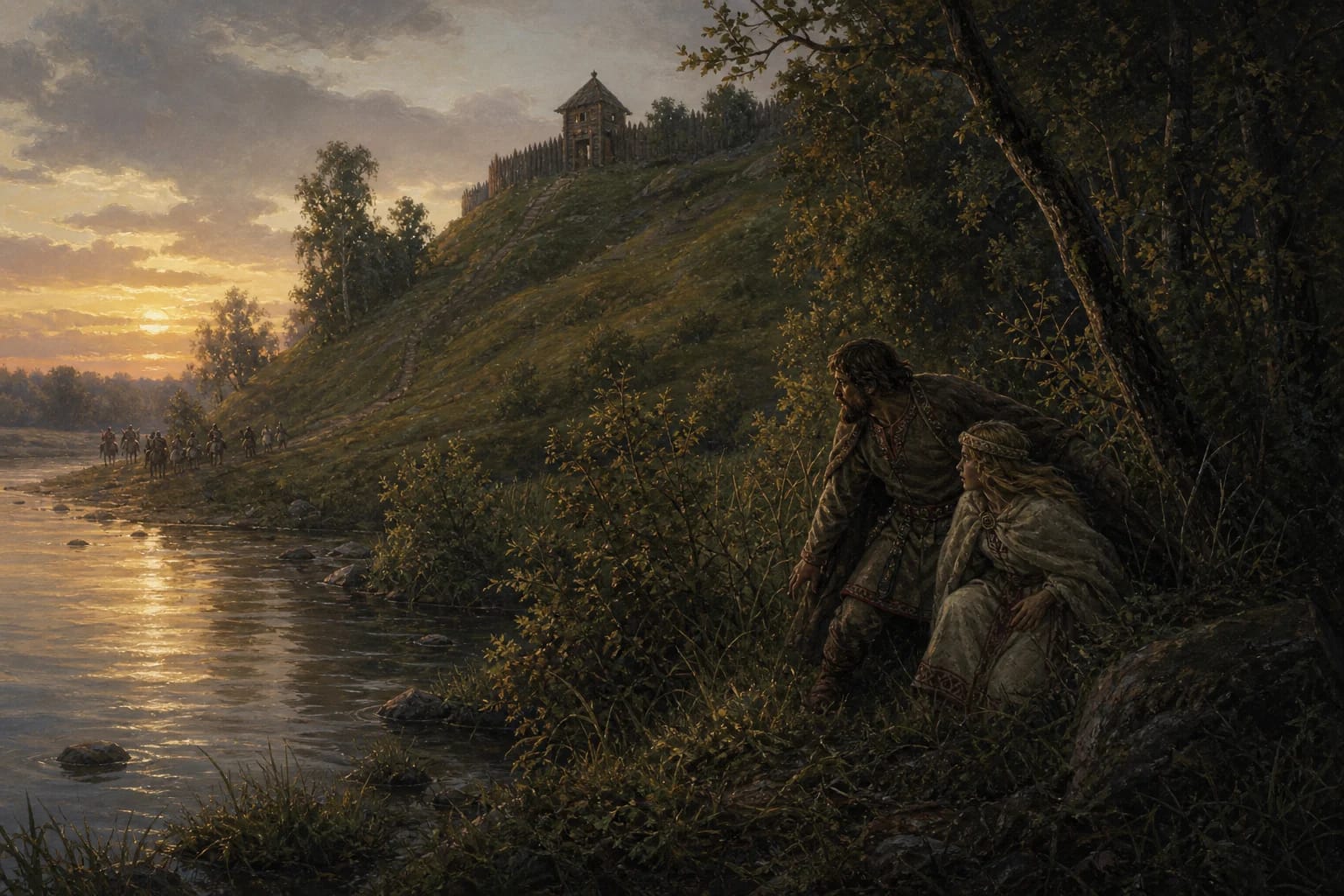
Seeking a safe place, Lackis came to the Verknė and Lake Pilaitė. Here the hill, water, and difficult access made the site suitable for hiding, defending oneself, and founding a new estate.
The Aukštadvaris legend is therefore not only about a castle. It is also about flight, guilt, fear, and the attempt to make a safe high manor in a foreign land.
Interpreting the Aukštadvaris Hillfort Legend
The Lackis plot differs from older legends of giants or devils. It belongs to a historical noble world of honor, revenge, a ruler's anger, and the politics of flight.
In the legend, the hillfort landscape becomes refuge. Water and hill protect not only from enemy armies but also from the consequences of the past.
Such legends show that local folklore can include early modern manor and noble stories, not only prehistory.
History of the Aukštadvaris Hillfort Legend
Saugoma.lt describes Aukštadvaris hillfort as an archaeologically investigated site by the Verknė and Lake Pilaitė, inhabited from early times and occupied by a castle in the tenth to fourteenth centuries.
Trakai Visit provides historical castle context, while Vietos dvasia records the legend of nobleman Lackis and the reasons for his flight.
Thus the Aukštadvaris page brings together two levels: the archaeological castle hill and a later noble legend.
In genre terms this is a hillfort legend: a type of narrative folklore that explains the origin of a specific place or links it with past events. The well-known Devil's Pit, which has its own separate legend, lies nearby. Lithuanian place legends were collected in Žemės atmintis: Lietuvių liaudies padavimai (1999) and classified in Bronislava Kerbelytė's catalogue, volume 3 (2002).