

- Genre
- Curonian hillfort legend
- Source status
- historical memory of a Curonian fortress
- Motifs
- Curonians, siege, fortress, confluence, earliest mention
Apuolė Castle, Apuolė hillfort, Curonian fortress
The Legend of Apuolė Hillfort
In Apuolė, people tell not of a single miracle but of a very old fortress. The Curonians held their ground here on a hill by the Luoba and Brukis, defending their land, homes, and honor.
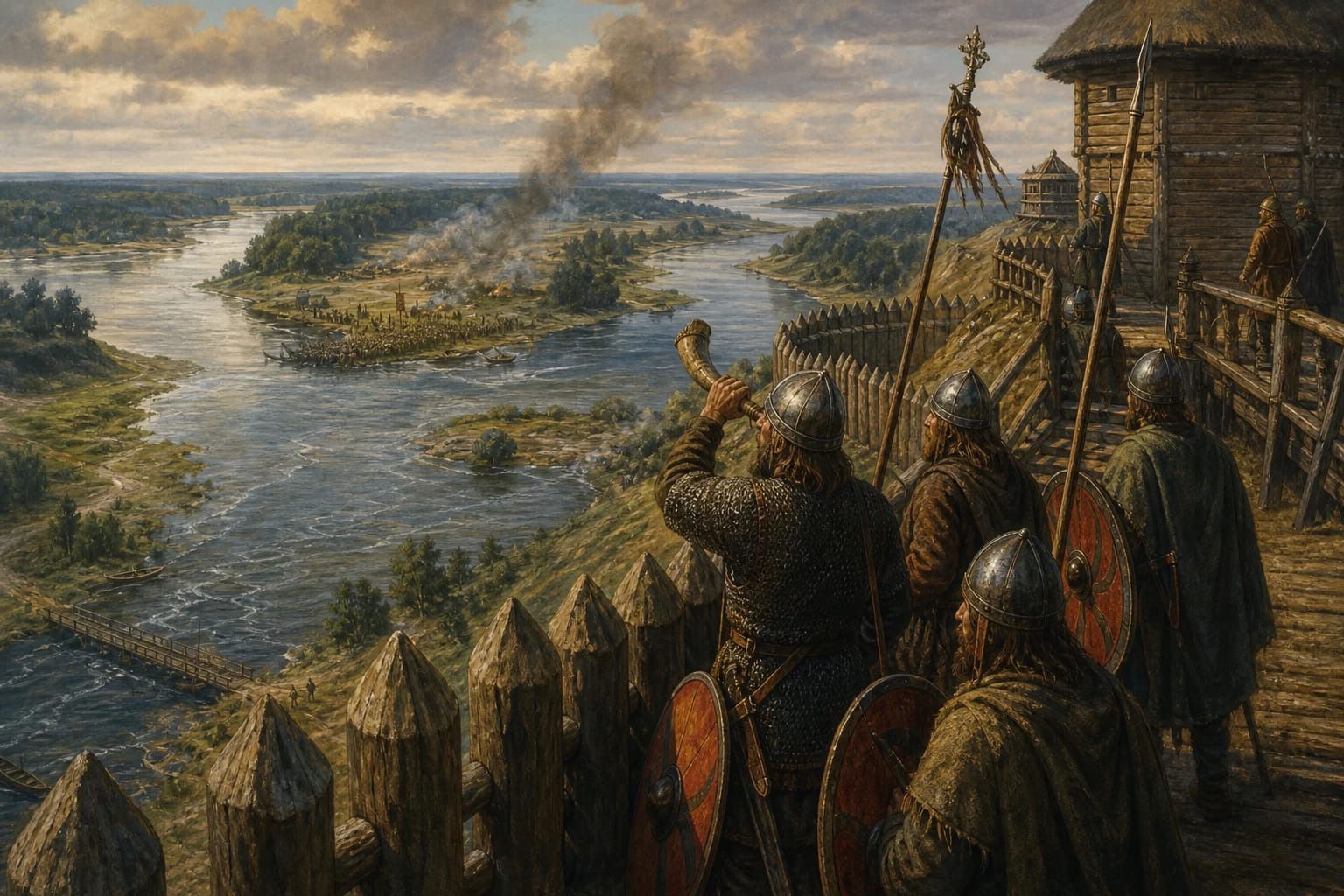
When a foreign army reached the fortress, the hillfort became a place where people had to choose: negotiate, defend themselves, wait the enemy out, or risk everything. In the legend, Apuolė sounds like a name older than many other places in Lithuania.
The hill preserves more than ramparts. It preserves the Curonian voice, which through history and storytelling reminds readers that the memory of statehood and struggle in this region begins very early.
Interpreting the Apuolė Hillfort Legend
The Apuolė legend is history turning into legend. Here the factual antiquity of the place is so impressive that it becomes the core of the story itself.
The motif of a Curonian fortress lets western Lithuanian memory be read through more than the later castles of the Grand Duchy of Lithuania. Apuolė points to an earlier layer of the Baltic world.
The confluence landscape strengthens the feeling of defense in the legend: water and ramparts together define the place where the community held on.
History of the Apuolė Hillfort Legend
VLE presents Apuolė hillfort and burial ground as an important Curonian archaeological complex. Regional heritage guides connect Apuolė's attack with Rimbert's ninth-century account, often treated as one of the earliest written mentions of a locality in the territory of present-day Lithuania.
Skuodas-region and local sources emphasize the hillfort's size, ramparts, and importance as a center of Curonian land. That historical density lets this legend page stand without artificial marvels.
For that reason, the most important element on the Apuolė page is heroic memory: the hill as a sign of the earliest struggles and Curonian identity.
Apuolė is mentioned in Rimbert's Life of Saint Ansgar, around 853, in the account of the Swedish king Olaf's campaign against a Curonian fortress. This is considered one of the earliest written references to a place in present-day Lithuania. In genre terms, it is a place legend: a semi-historical tradition tied to a specific real site. Lithuanian place legends were collected in the anthology Žemės atmintis: Lietuvių liaudies padavimai (1999) and classified in Bronislava Kerbelytė's catalogue, Lietuvių pasakojamosios tautosakos katalogas, volume 3 (2002).