
- Genre
- Hillfort legend
- Source status
- local legend of the Kėdainiai region
- Motifs
- hill heaped up with caps, castle, Liaudė, community, ramparts
Bakainiai hillfort, Bakainiai castle, Liaudė hillfort
The Legend of Bakainiai Hillfort
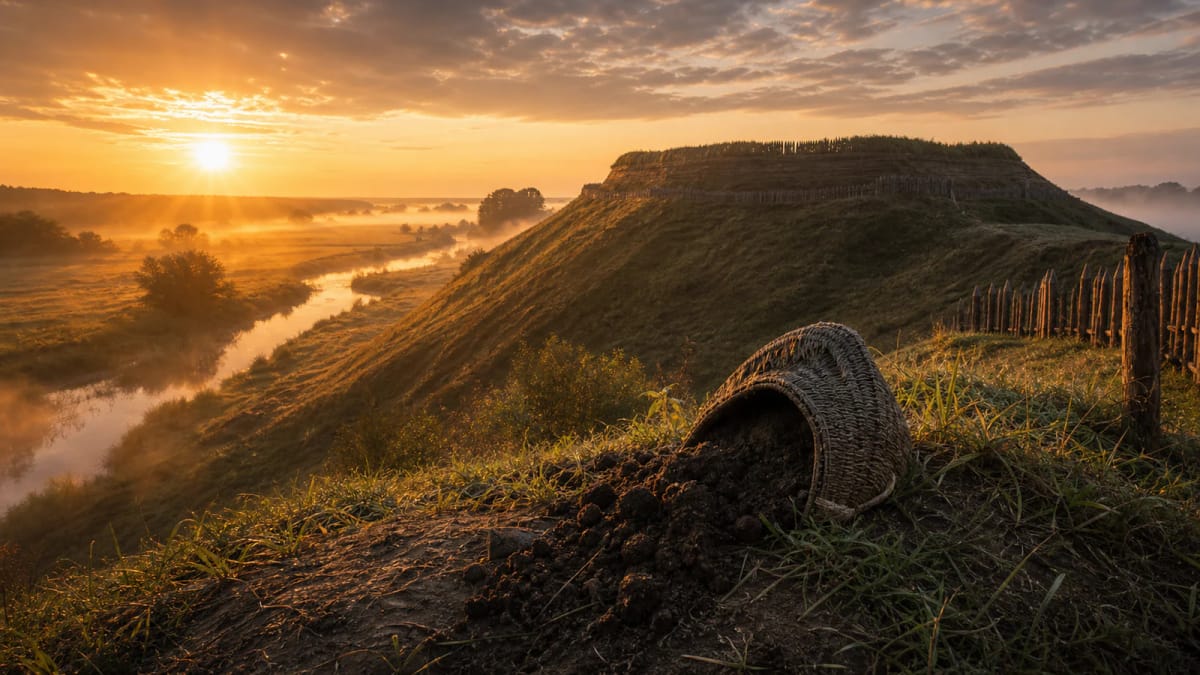
It is said of Bakainiai hillfort that people heaped it up with their caps. When the castle site needed strengthening, everyone carried earth in whatever way they could: one in a handful, another in an apron, a third in a cap.
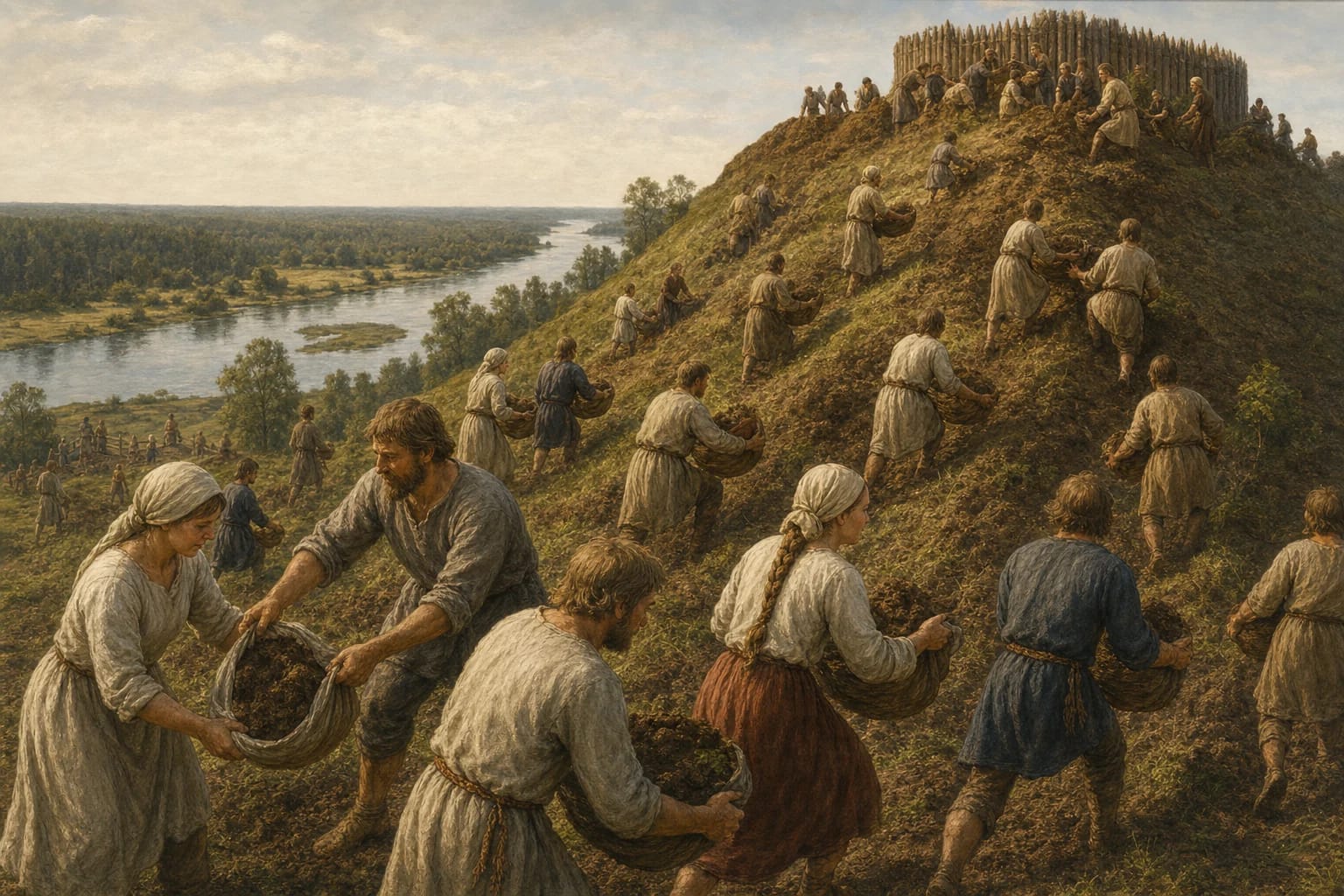
From these small loads a large hill grew, protected on three sides by the Liaudė River. The legend emphasizes not only supernatural force but human unity: the castle is built not by a giant, but by a community.
For that reason, Bakainiai Hill is a sign of labor and defense in the story. Every capful of earth becomes a small part of the shared fortress.
Interpreting the Bakainiai Hillfort Legend
The motif of a hill heaped up with caps shows how popular imagination explains the size of ramparts. A large relief form is understood through a small everyday object: a cap.
This legend is communal. Unlike giant stories, here the hill arises from many small efforts, so the hillfort becomes a symbol of collective defense.
The site encircled by the Liaudė River looks naturally chosen for a castle in the legend. The human-made hill only completes what the landscape had begun.
History of the Bakainiai Hillfort Legend
VLE and Kėdainiai tourism sources present Bakainiai hillfort as one of the largest hillfort complexes in the region, with foreworks and ramparts, dated from the beginning of the second millennium to the fifteenth century.
The Vietos dvasia description highlights the legend of the hill heaped up with caps. It helps explain why the hillfort's scale seemed to people worthy of a separate origin story.
The Bakainiai legend especially suits a separate page because its center is not a tourism route, but the explanation of hillfort form and community work.
The motif that a hill was heaped up with caps or helmets is one of the most frequent Lithuanian hillfort origin legends. It explains an impressive hillfort through the work of a community or army and is known in many Lithuanian places. In genre terms, this is a hillfort legend. Lithuanian place legends were collected in Žemės atmintis: Lietuvių liaudies padavimai (1999) and classified in Bronislava Kerbelytė's catalogue, volume 3 (2002).