
- Genre
- Hillfort legend
- Source status
- Venta region legend
- Motifs
- castle hill, tower, Venta River, hidden castle, local folklore
Papilė I hillfort, Papilė Pilies Hill, Venta hillfort
The Legend of Papilė Hillfort
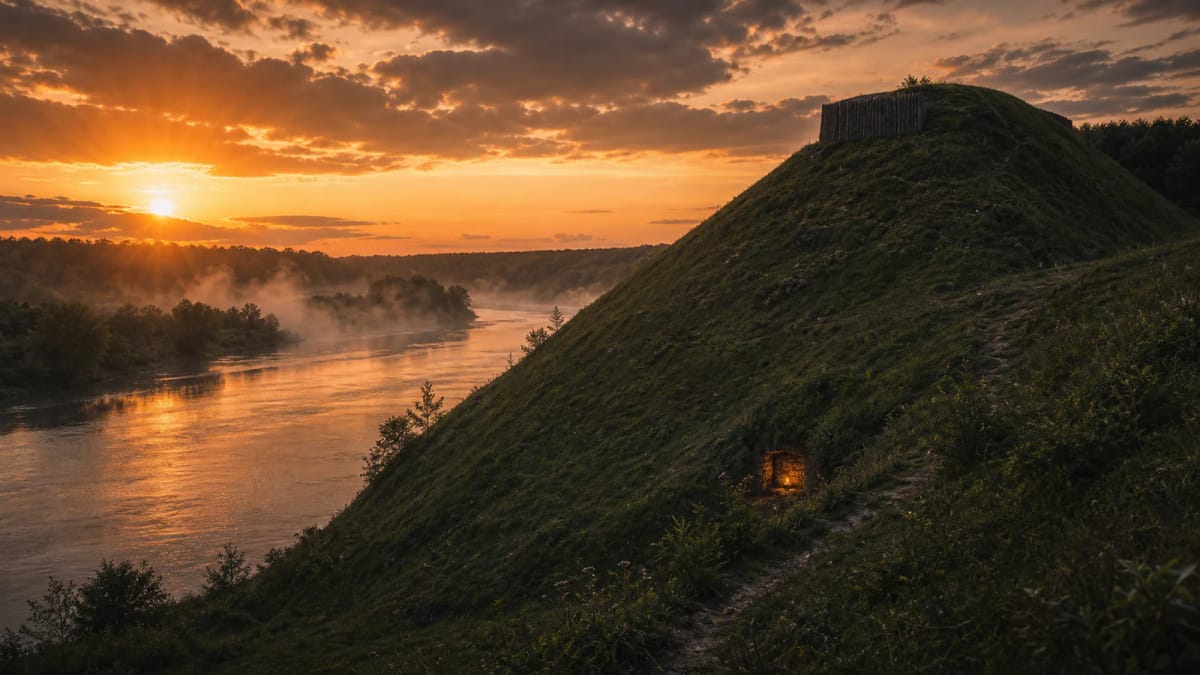
Papilė's Pilies Hill beside the Venta seemed to local people like a place where the old castle had not quite disappeared. One part of the hill rises as if it had once been a tower, while another preserves a flat top and traces of the past.
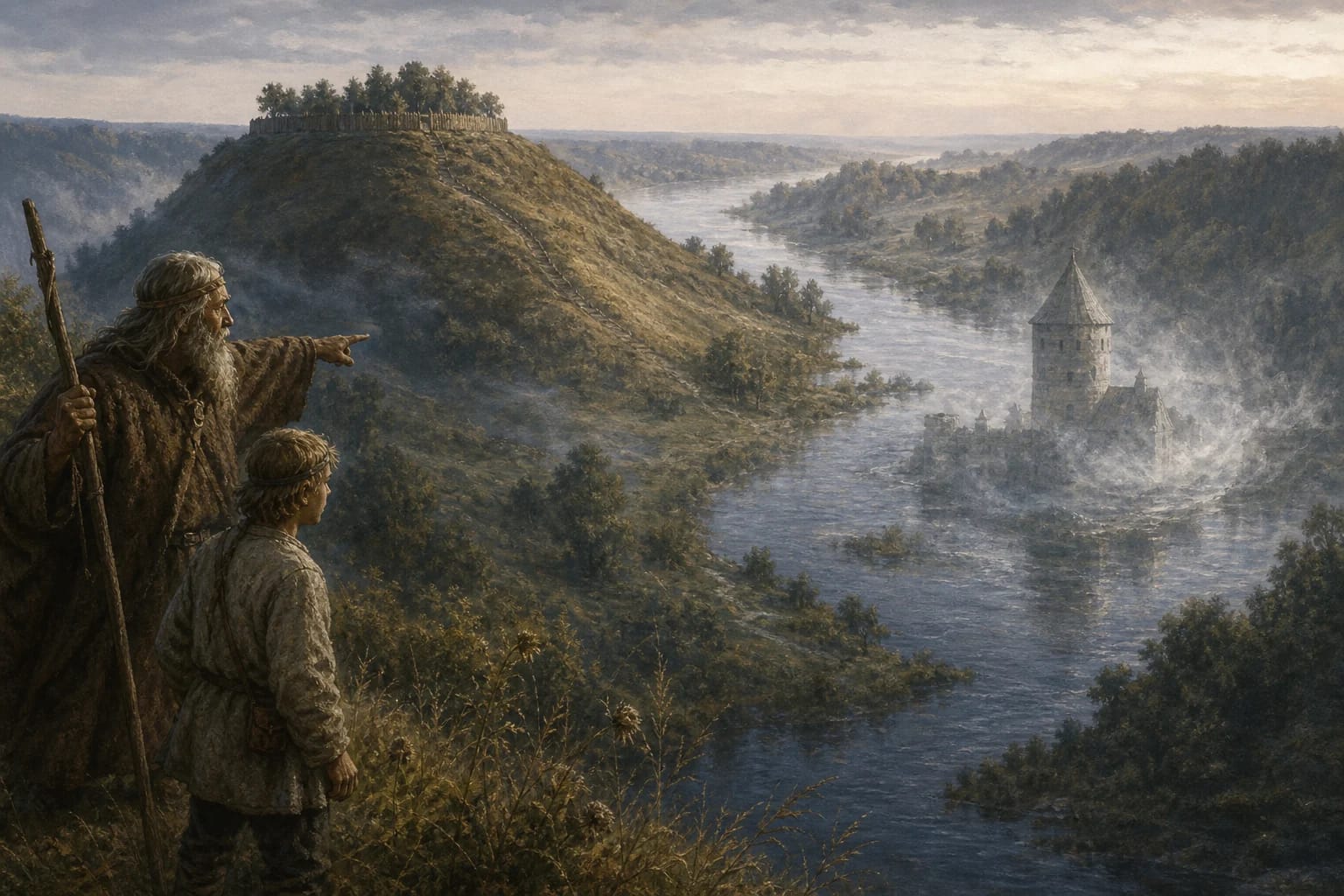
People tell that the memory of the castle remains inside the hill: underground spaces, shelters, or voices that reveal themselves only to someone who comes at the right time and knows how to listen.
In the legend, the Venta is a witness. Its water carries time past the hill, but the hill itself remains, as if proving that a castle may vanish while the name Pilies Hill can survive.
Interpretation of the Papilė Hillfort Legend
The Papilė legend grows from the impression made by the landform. When a hill resembles a tower or part of a fortress, the story reads it as the remaining body of a castle.
The closeness of the Venta adds movement and time to the place. The river changes while the hill holds its ground, so the story naturally speaks about a past that has endured.
The interwar attention given to the legend of Papilė Hillfort shows that this is not simply a modern travel text, but an older object of local folklore.
History of the Papilė Hillfort Legend
VLE connects the Papilė hillforts with an archaeological complex on the bank of the Venta. Local-memory material mentions a layer of legends, while the Interwar Architecture bibliography points to a 1932 Lietuvos Aidas text about the legend of Papilė Hillfort.
This allows Papilė to be included as a historically recorded legendary place, even if the full old text is not easily available on a modern public page.
For that reason, this page offers a cautious retelling grounded in the shape of the place and in available sources, without pretending that one version closes the whole tradition.
Papilė is also known in history as the place where Simonas Daukantas, historian and author of the first Lithuanian-language history of Lithuania, lived and was buried in 1864. In genre terms this is a hillfort legend; Lithuanian place legends are collected in the anthology Žemės atmintis: Lietuvių liaudies padavimai (1999) and classified in Bronislava Kerbelytė's catalogue, vol. 3 (2002).