
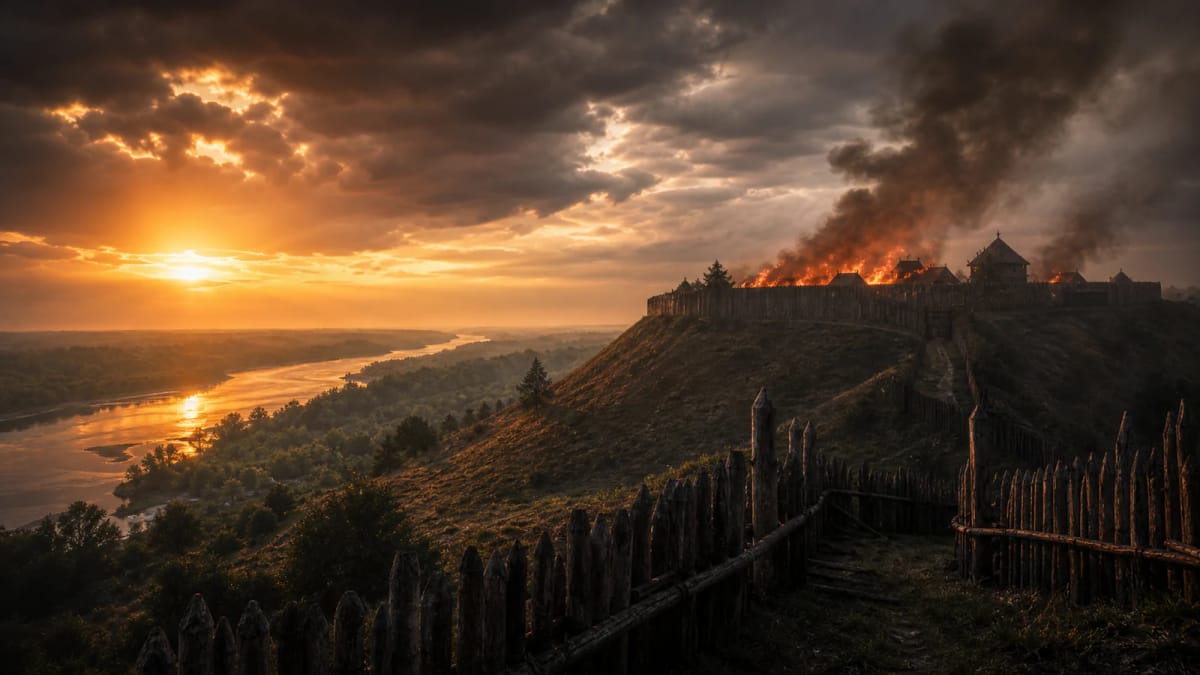
- Genre
- Hillfort legend
- Source status
- historical legend and local place legend
- Motifs
- Margiris, Pilėnai, fire, freedom, Nemunas
Margis Hill, Punia hillfort, Pilėnai legend in Punia
The Legend of Punia Hillfort
Punia Hillfort has long been called Margis Hill. It is told that a castle once stood here, ruled by Duke Margiris. When enemies besieged the stronghold and it became clear that escape was impossible, the defenders chose death rather than slavery.
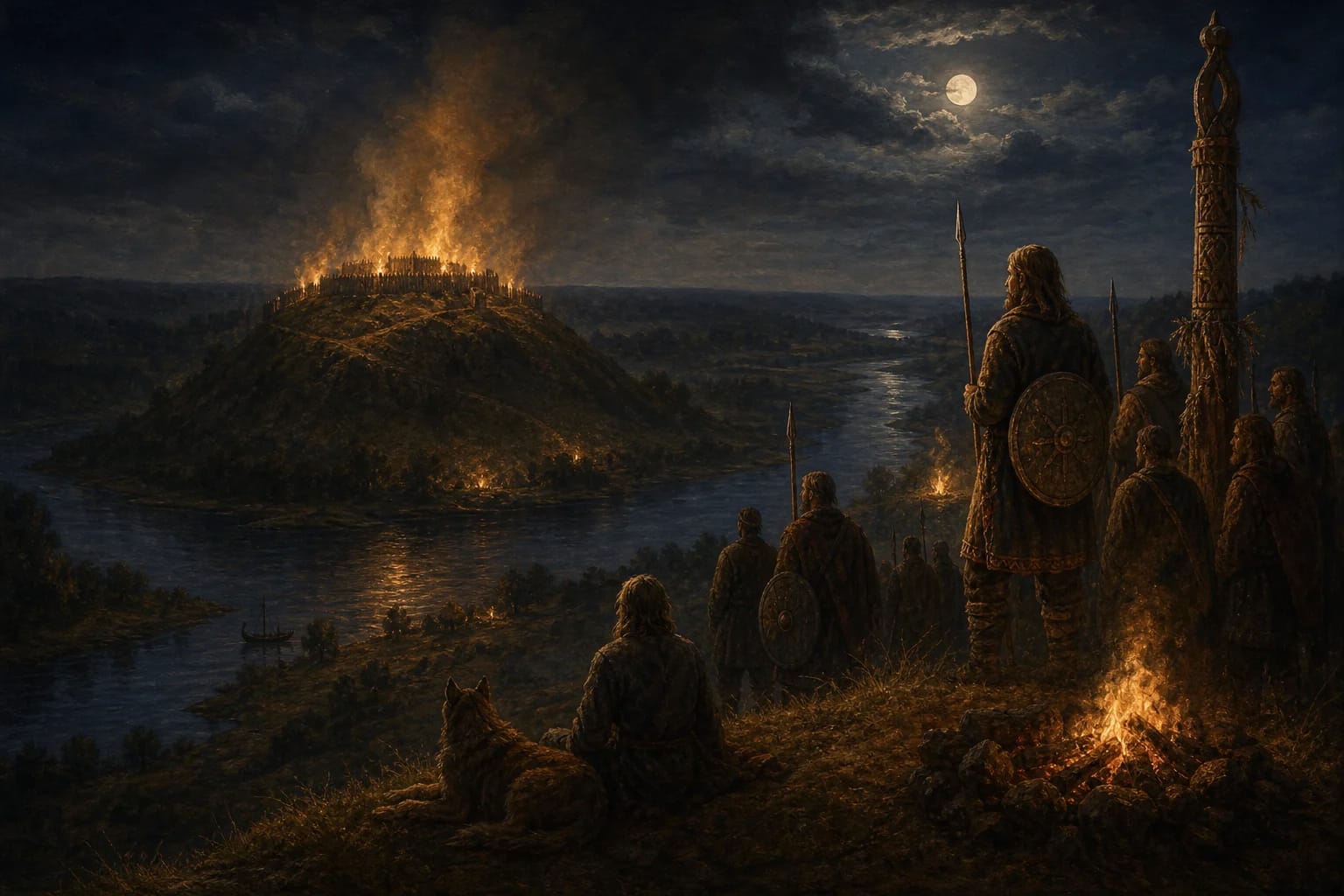
People say that the treasure, weapons, and everything precious in the castle were given to the fire. With them died the people who did not want to fall into the hands of the crusaders. The hillfort remained as a sign of freedom preserved in flames.
From the hill one sees the Nemunas and Punia Forest. In the legend this panorama becomes more than a beautiful view; it is a witness. The land remembers the people who became legend.
Interpretation of the Punia Hillfort Legend
The Punia legend is about an extreme choice. At its center is not treasure or miracle but a moral boundary: what is worth more than life, if life would have to continue in captivity?
Fire is double-edged here. It destroys the castle, but at the same time it preserves honor. The legend therefore works as a heroic memory text in which defeat is transformed into a victory of freedom.
It is important to separate historical debates about the location of Pilėnai from local tradition. Punia is not the only place associated with Pilėnai, but the name Margis Hill and Maironis's poetry made this connection especially strong.
History of the Punia Hillfort Legend
Tourism and local sources present Punia Hillfort as one of Lithuania's best-known hillforts, long associated with Margiris and the legend of Pilėnai. Pamatyk Lietuvoje notes that this very legend made the hillfort famous.
In historians' discussions, the location of Pilėnai is not unambiguously identified with Punia, so this page speaks about legend and local memory, not about a definitively proven historical location.
Punia Hillfort remains important because it helps show how folklore, literature, and landscape together create a heroic identity for a place.
The defense of Pilėnai in 1336, when the surrounded defenders and Duke Margiris chose death rather than captivity, is known from the chronicle of Wigand of Marburg and was later popularized by Maironis's writing. Punia is one of several places associated with Pilėnai. In genre terms this is a heroic hillfort legend; Lithuanian place legends are collected in Žemės atmintis: Lietuvių liaudies padavimai (1999) and classified in Bronislava Kerbelytė's catalogue, vol. 3 (2002).