
- Genre
- Hillfort legend
- Source status
- Samogitian local legend
- Motifs
- two girls, kūlgrinda, name origin, Samogitia, defense
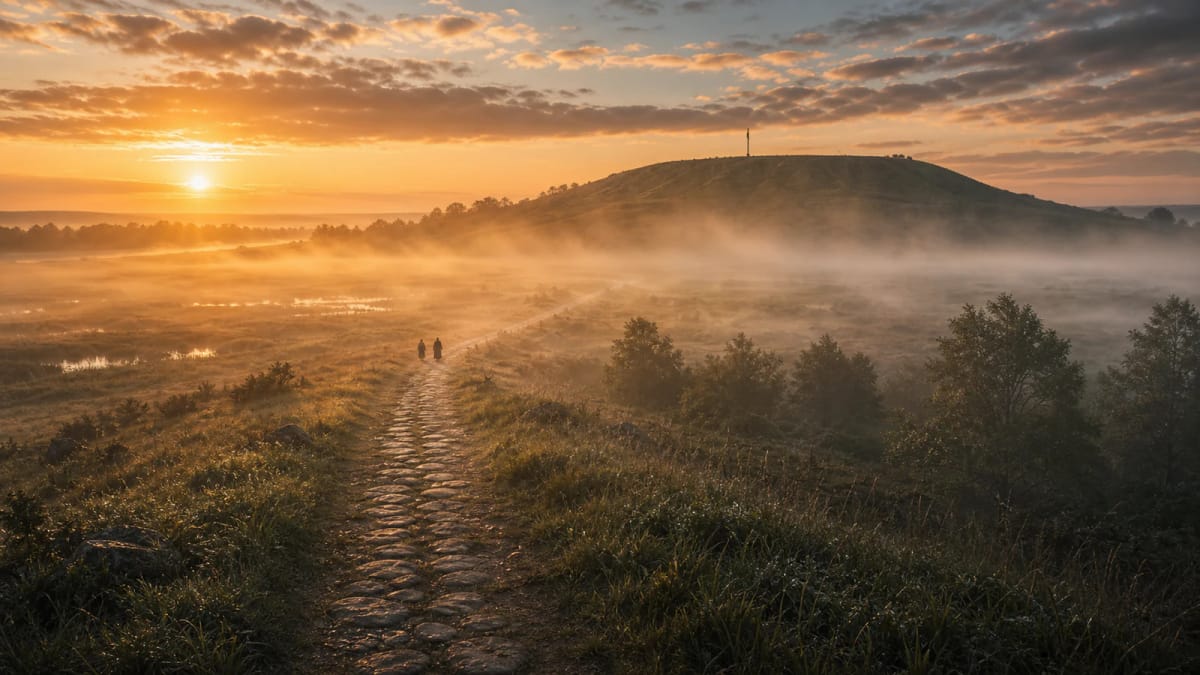
Medvėgalis Hill, Medvėgalis hillfort, Mudvi galiva
The Legend of Medvėgalis
When enemies surrounded the castle of Medvėgalis, the defenders understood that they would not hold out without help. Someone had to cross the marshes and the kūlgrinda, reach other castles, and report the danger.
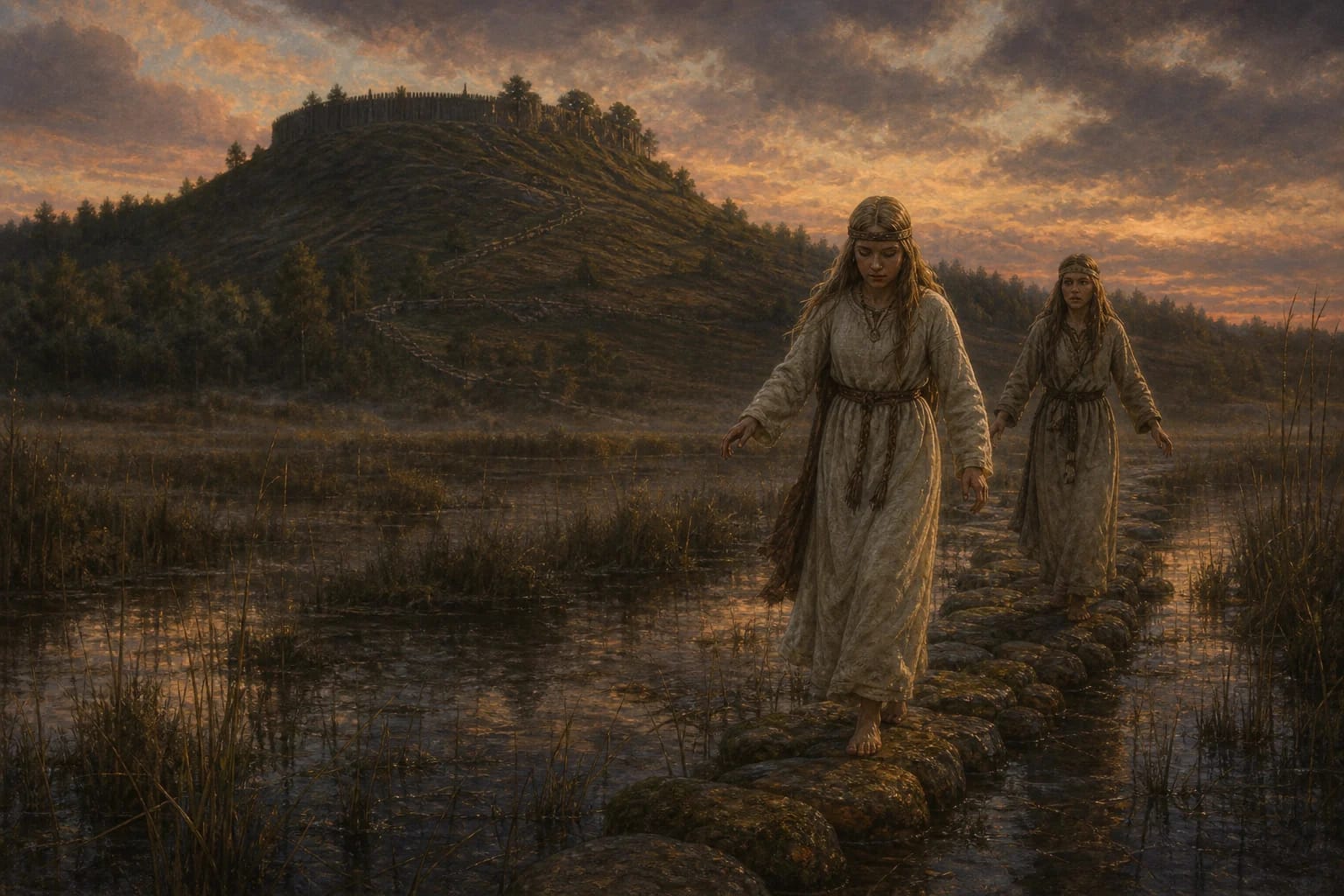
Then two brave girls said: mudvi galiva, meaning we two can. They knew the secret road, went through the bogs, and called for help. From their words, the legend says, came the name Medvėgalis.
Since then the hill has recalled not only the height of the castle but also a courage that need not look military. Sometimes a castle is saved not by the strongest warrior, but by the one who dares to go through an unknown path.
Interpreting the Medvėgalis Legend
The Medvėgalis legend is a story of name origin. The words mudvi galiva are joined with the hill's name, and language becomes the engine of history.
The two girls take on a special role. They do not wait to be rescued; they act, know the secret path, and accept risk. This is a strong motif of women's courage in Samogitian legends.
The kūlgrinda in the legend means hidden knowledge. Whoever does not know the road sinks or gets lost; whoever knows it can lead the community out of danger.
History of the Medvėgalis Legend
VLE describes Medvėgalis as the highest place in the Samogitian Upland, connected with Medvėgalis hillfort and a kūlgrinda. Saugoma.lt emphasizes its defensive importance in struggles against the Teutonic Knights.
Local and Samogitian sources repeat the legend about two girls and the words mudvi galiva. It is one of the clearest Lithuanian hillfort name-origin legends.
For that reason, the Medvėgalis page should present the historical hill and the folklore etymology together, but without merging them: the hill is real, while the plot explaining the name is a legend.
Medvėgalis, about 234 m high, is one of the highest points of the Samogitian Upland and an important center of Samogitian resistance to the Teutonic Order. Its castle is mentioned in the order's chronicles already in the fourteenth century, for example during the siege of 1316. The explanation of the name from the words mudvi galiva is one of the most vivid Lithuanian toponymic, or name-origin, legends. Lithuanian place legends were collected in Žemės atmintis: Lietuvių liaudies padavimai (1999) and classified in Bronislava Kerbelytė's catalogue, volume 3 (2002).