
- Genre
- Castle-site legend
- Source status
- historical local memory and legendary motifs
- Motifs
- island, castle, Radziwiłłs, Asveja, hidden grandeur
Dubingiai Castle Hill, Dubingiai castle site, Asveja Castle Hill
The Legend of Dubingiai Castle Site
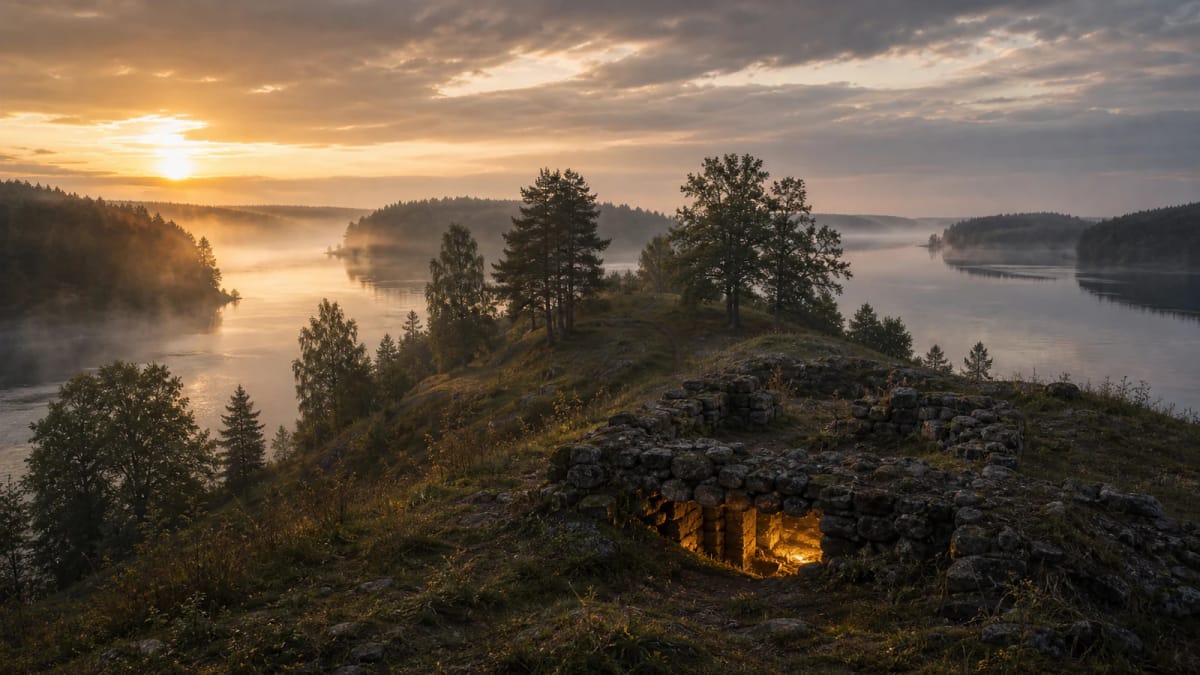
It is said that the Dubingiai hill, surrounded by the waters of Asveja, once looked like an island that not everyone could reach. A castle stood on it, guarding the road to Vilnius and looking into the depths of the long lake.
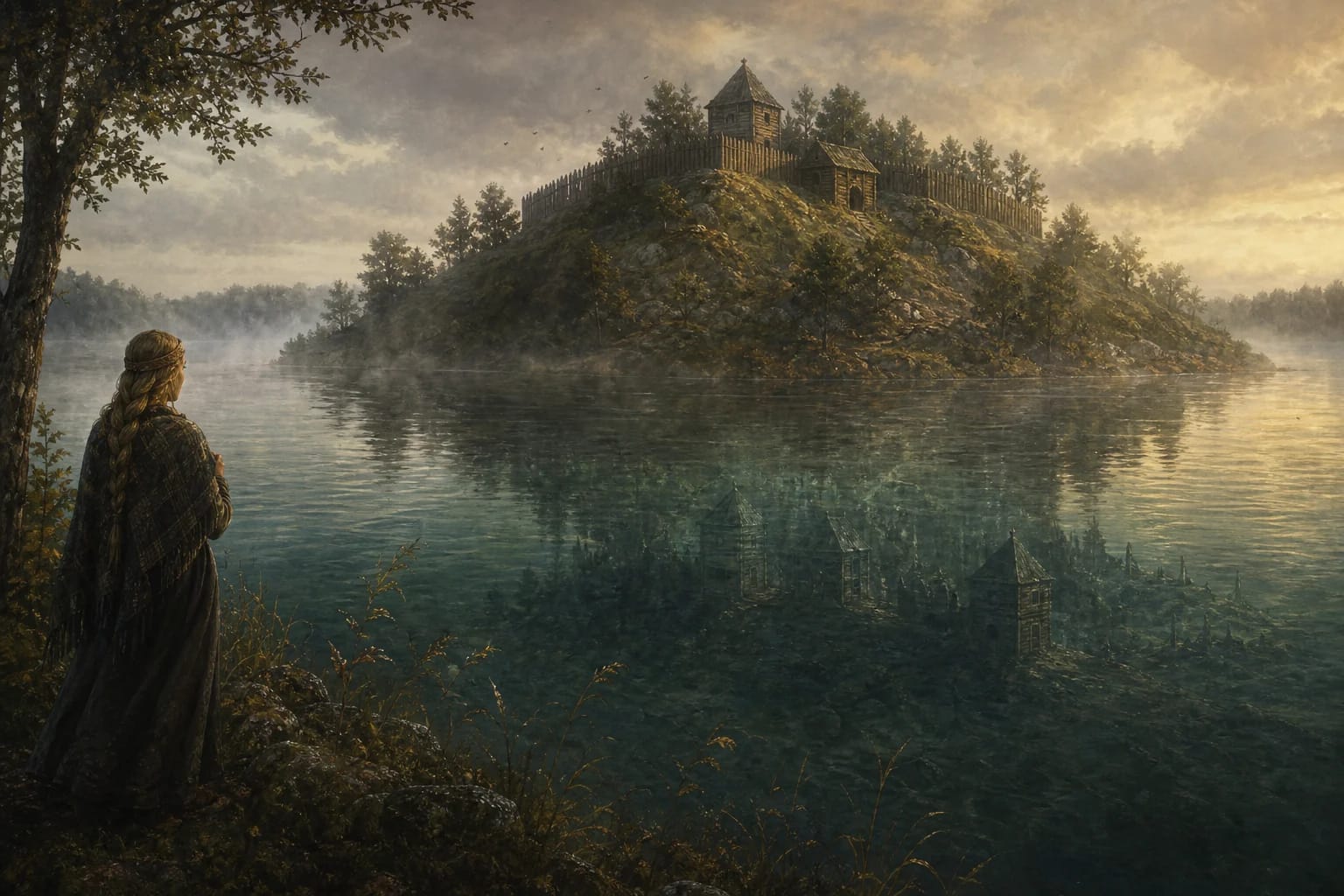
When the castle's greatness faded, the earth did not forget it. Beneath turf and oaks remained the memory of palaces, a church, and burials. People would say that in the castle site one could still feel the enclosed time of an island.
The Dubingiai legend is quieter than treasure tales. Its main theme is not a sudden miracle but hidden grandeur: a place that appears calm from outside but preserves layers of rulers, Radziwiłłs, and an old castle within.
Interpreting the Dubingiai Castle Site Legend
In the Dubingiai story, the island is a boundary. Even when we speak today of a peninsula, the feeling of separation remains in local imagination: the castle stands between water and land.
The hidden-grandeur motif suits a place where archaeology brought the Radziwiłł and castle history back from the ground. Legend here works as a language of waiting: the earth stayed silent for a long time, until research made it speak.
This page helps readers approach Dubingiai through a folkloric intuition, not only through the information of a heritage trail.
History of the Dubingiai Castle Site Legend
VLE notes that a wooden castle was probably built at the Dubingiai castle site in the first half of the fourteenth century; later the place carried layers of Vytautas and Radziwiłł history.
Saugoma.lt emphasizes the high hill on the Lake Asveja peninsula, the Radziwiłł burial crypt, the church site, and views over the lake. This lets the language of legend rest on real historical density.
The Dubingiai tradition is not one easily quoted plot, so this page presents it as a local-memory legend about an island, a castle, and a past hidden in the earth.
Dubingiai is historically important as a Radziwiłł estate: their palace and Evangelical Reformed church stood here, with a ducal burial place where Barbara Radziwiłł is also believed to have been buried. In genre terms, this is a castle-site or place legend. Lithuanian place legends were collected in Žemės atmintis: Lietuvių liaudies padavimai (1999) and classified in Bronislava Kerbelytė's catalogue, volume 3 (2002).