
- Genre
- Dune and hill legend
- Source status
- Palanga local legend and place legend
- Motifs
- giant, grave, Brukšva, tears, Palanga
Naglis Hill, grave of the giant Naglis, Palanga Naglis dune
The Legend of Naglis Hill
A Palanga legend says that Naglis Hill is the grave of the giant Naglis. When the mighty man died, his wife Brukšva, in grief, heaped a sand hill for him by the sea so that waves and winds would always know where her husband rested.
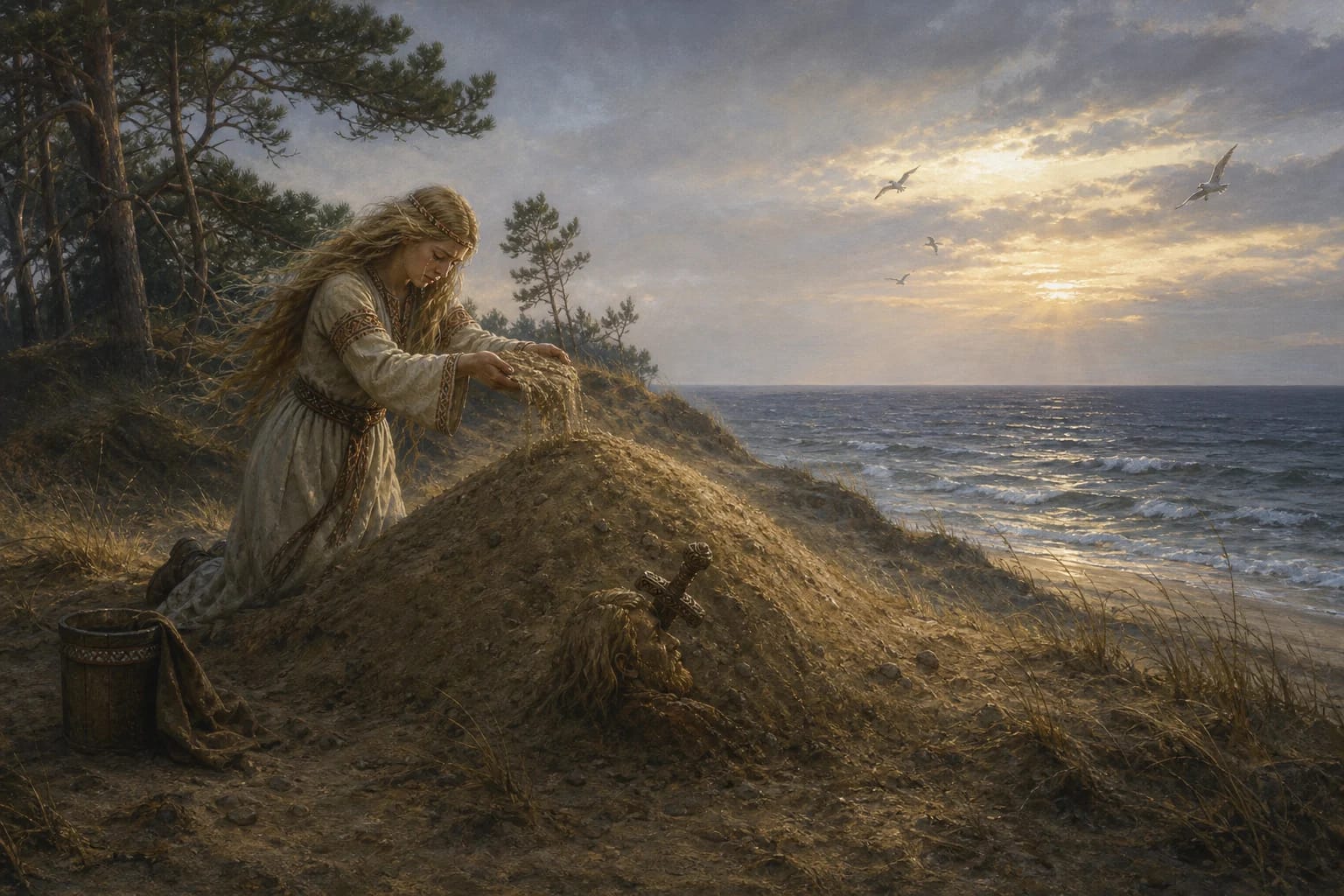
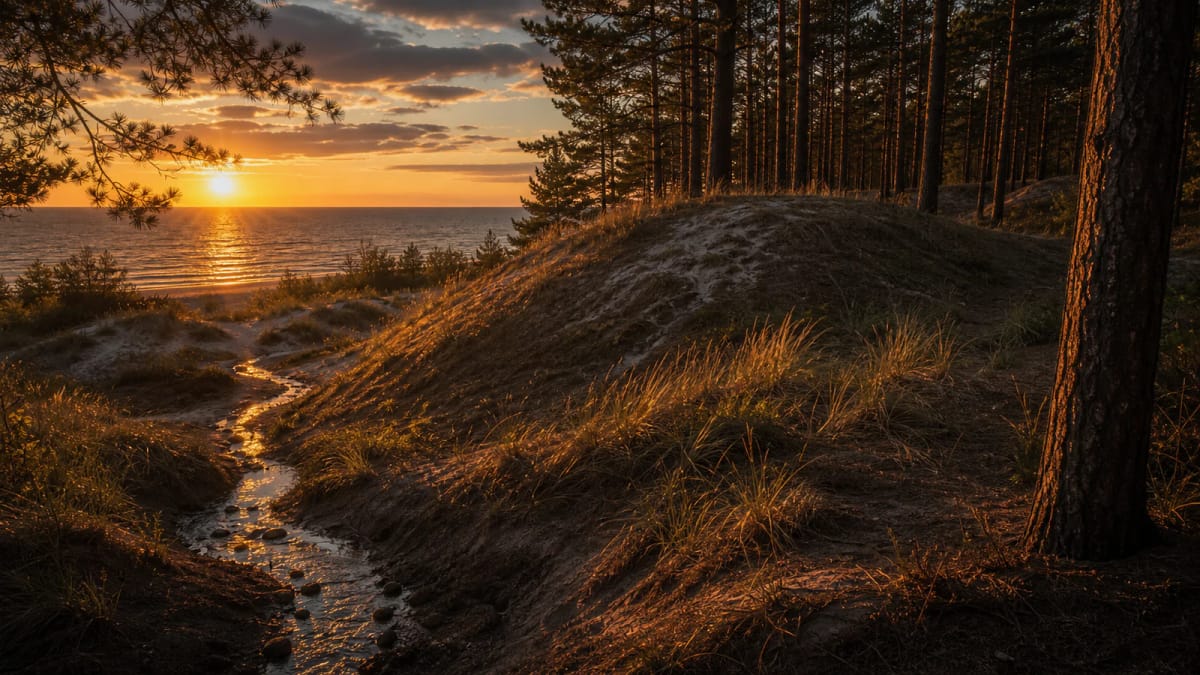
Brukšva wept so long that a stream began from her tears. It flowed by the hill like a sign of mourning, and the dune remained standing between sea wind, pines, and human story.
The hill has also been called a landmark for sailors, a burial hill, or a dune hill. But the legend of Naglis gives it a human core: it is not only a sand form, but a grave heaped up by love and loss.
Interpreting the Naglis Hill Legend
The plot of Naglis Hill belongs to giant legends. Here the giant does not destroy or fight; he becomes the cause of landscape: his body and grave explain the dune.
Brukšva's tears turn the place into a geography of mourning. Water born from sorrow joins body, hill, and coastal land into one emotional whole.
This legend separates well from Palanga travel content: it does not say what to see, but explains how a dune became a place of memory and relationship.
History of the Naglis Hill Legend
Palanga tourism sources mention that legends regard Naglis Hill as the grave of the giant Naglis, heaped up by his wife Brukšva, and that her tears are connected with a stream that once flowed past.
Naglis Hill is also connected with a possible layer of Palanga hillfort and with old place names. The archaeological and historical context is more cautious than the legend, but both layers help explain the site's meaning.
The Naglis legend is therefore valuable as local memory of northern Palanga, complementing the better-known story field of Birutė Hill.
In genre terms, this is a giants' etiological legend: a landscape form is explained as a giant's grave. It belongs to the field of sacred coastal hills alongside Birutė Hill. Lithuanian place legends were collected in Žemės atmintis: Lietuvių liaudies padavimai (1999) and classified in Bronislava Kerbelytė's catalogue, volume 3 (2002).