
- Genre
- Hillfort legend
- Source status
- local legend cycle
- Motifs
- enchanted princess, witch, unfinished castle, Nemunas, wall
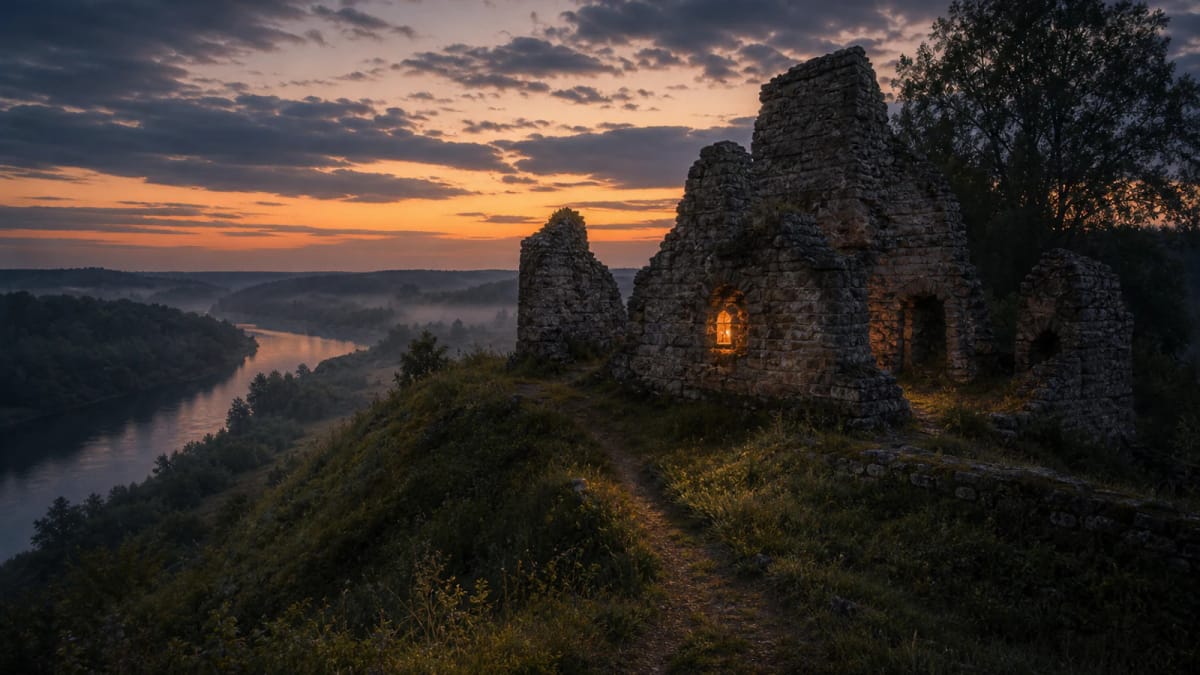
Witch's Wall, Liškiava Castle Hill, Perkūnas sanctuary
The Legend of Liškiava Hillfort
In Liškiava people tell of an old castle where Duke Krėza and his beautiful daughter lived. After the girl's mother died, a stepmother came to the castle, and people said she was a witch.
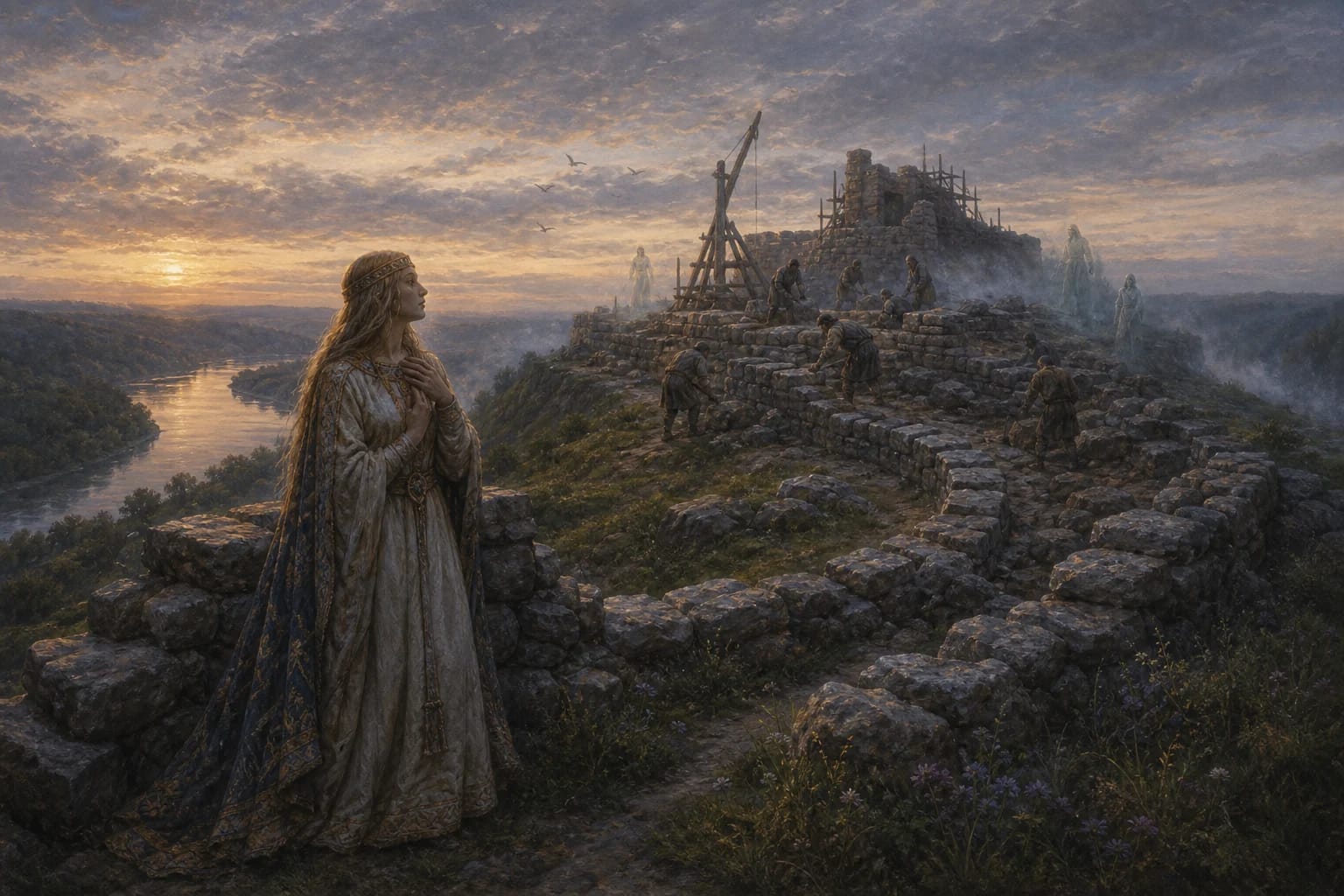
Jealous of the princess, the stepmother enchanted her. The girl became hidden in the castle, in the hill, or inside the wall, and her fate merged with Liškiava Hill. From then on, the place was associated with the Witch's Wall and an enchanted castle.
Other branches of the legend speak of an unfinished stone castle, mysterious openings, and treasures left inside the hill. Liškiava hillfort looks like a place where fairy tale, witch, and real masonry remains meet on one slope.
Interpreting the Liškiava Hillfort Legend
The Liškiava story has the structure of a fairy tale: a beautiful daughter, wicked stepmother, enchantment, and an enchanted place. Yet it is tied to a real hillfort and wall, so it becomes a place legend.
The name Witch's Wall is especially strong. It allows unfinished or ruined architecture to be explained not only through building history, but through a supernatural motif.
The enchanted princess symbolizes the hidden beauty of the place. The Liškiava landscape opens from the hill, but in the stories its interior remains enchanted.
History of the Liškiava Hillfort Legend
VLE and protected-area sources describe Liškiava hillfort as an archaeological site also called Liškiava Castle Hill, Witch's Wall, and Perkūnas Sanctuary. They mention the remains of a stone castle and archaeological finds.
Vietos dvasia gives a cycle of legends about Duke Krėza, his daughter, and the witch stepmother. These stories bring the place close to a fairy tale while locating it on a specific Nemunas slope.
For that reason, the Liškiava page must keep two truths in view: the archaeological object is real, and the fate of the princess belongs to legendary memory.
The motifs of the enchanted princess and the Witch's Wall belong to a broad type of legends about enchanted or sunken castles known across Lithuania. Near the hillfort in Liškiava also stands a valuable Baroque ensemble: the eighteenth-century Church of the Holy Trinity and Dominican monastery. In genre terms, this is a hillfort legend. Lithuanian place legends were collected in Žemės atmintis: Lietuvių liaudies padavimai (1999) and classified in Bronislava Kerbelytė's catalogue, volume 3 (2002).