

- Genre
- Curonian hillfort legend
- Source status
- historical Curonian local tradition
- Motifs
- Curonians, castle hill, Duvzarė, ramparts, old stronghold
Įpiltis hillfort, Impiltis hillfort, Pilies Hill
The Legend of Senoji Įpiltis Hillfort
In human memory, Senoji Įpiltis Hillfort is Pilies Hill, the Castle Hill. Stories speak of a Curonian stronghold whose ramparts and closeness to water protected the land from approaching enemies.
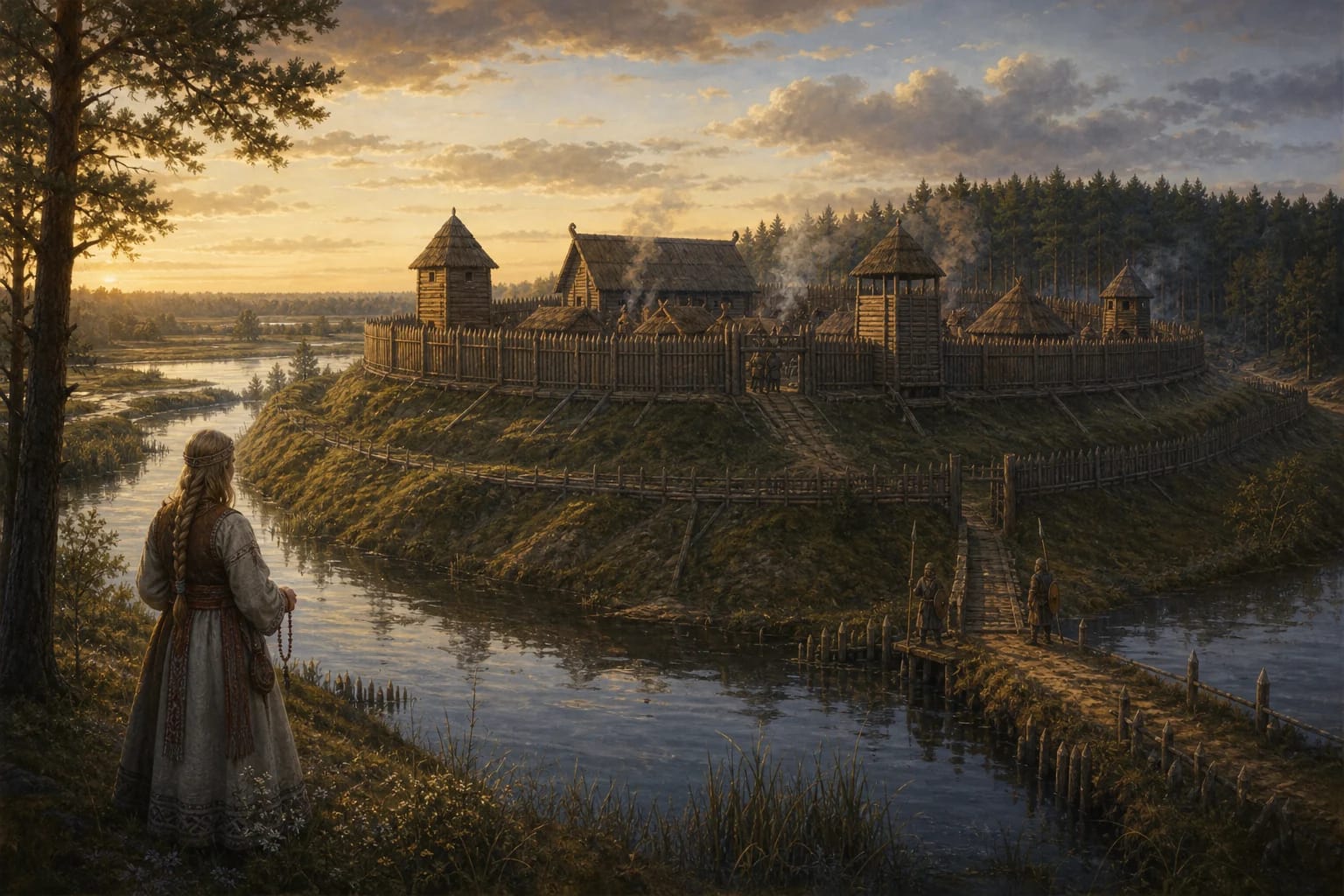
The hill looks as if it is gathered inward: signs of entrance, exit, ramparts, and an old settlement remain. In legend such a place easily becomes a mysterious castle where every ditch had a purpose.
The name Įpiltis is linked with old Duvzarė land and the Curonian world. The legend here therefore speaks not only about one castle, but about the whole sense of antiquity in western Lithuania.
Interpretation of the Senoji Įpiltis Hillfort Legend
The most important thing in the Įpiltis legend is the feeling of an enclosed stronghold. Ramparts, water, and the castle name create a landscape that seems deliberately hidden and guarded.
Curonian memory functions here as historical legend. It lets the place have a larger scale than a simple archaeological description: this is the defensive center of an old Baltic tribe.
Pages like this help expand the collection of place legends beyond Aukštaitija and Dzūkija, bringing in stories of western Baltic fortresses.
History of the Senoji Įpiltis Hillfort Legend
The Kretinga Region Encyclopedia states that Senoji Įpiltis Hillfort, also called Pilies Hill, is dated to the first millennium through the thirteenth century and is linked with the name Įpiltis.
Local-memory and Vakarų ekspresas texts emphasize the tradition of references to Impiltis, Empilten, or Ampillen and the importance of Curonian archaeological heritage.
The Senoji Įpiltis page therefore presents the legend as memory of a historical place: strong, but carefully separated from documentary claims.
Senoji Įpiltis Hillfort with its foot settlements is one of the largest Curonian defensive centers in the coastal region; the place is associated with the name Empilten or Ampillen mentioned in written sources. In genre terms this is a Curonian hillfort legend; Lithuanian place legends are collected in Žemės atmintis: Lietuvių liaudies padavimai (1999) and classified in Bronislava Kerbelytė's catalogue, vol. 3 (2002).