
- Genre
- Hillfort legend
- Source status
- regional local tradition and archaeology
- Motifs
- Žvelgaitis, Žagarė, Semigallians, castle, Švėtė, duke's death
Žagarė II hillfort, Žvelgaitis hillfort, Žvelgaitis Hill legend
The Legend of Žvelgaitis Hill
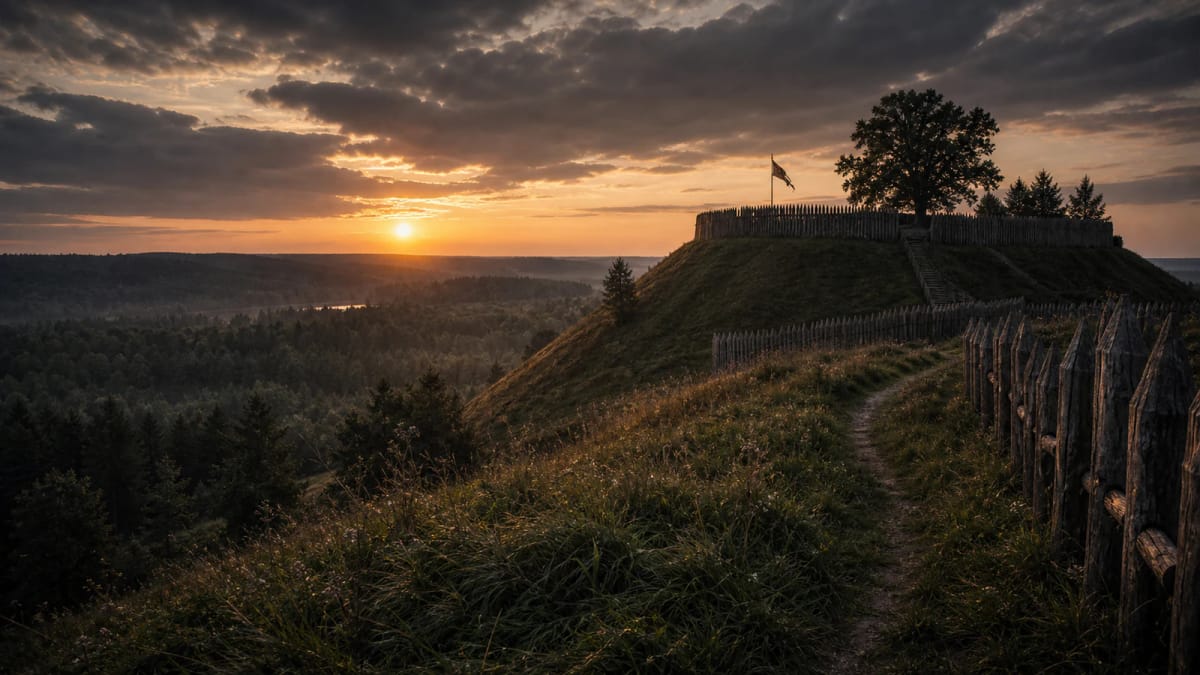
In Žagarė it is told that Duke Žvelgaitis's castle stood on a high hill by the Švėtė. The hill was so convenient for watchmen that from it one could see the road, the river bends, and approaching raiding bands.
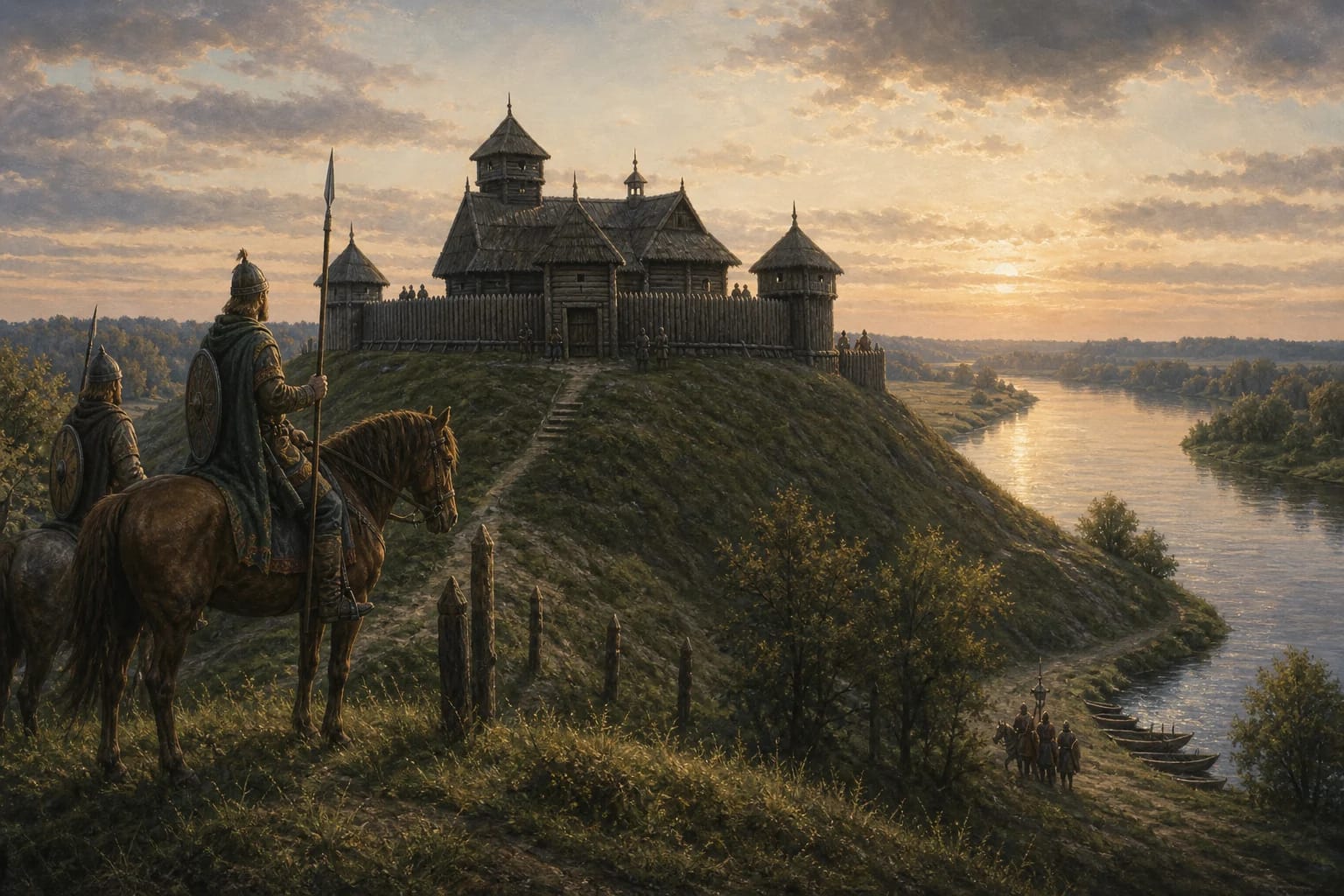
In the legend Žvelgaitis is imagined as a warlike ruler who ranged widely. His name attached itself to the hill so strongly that the hillfort came to be recognized not only by its shape or finds, but by the man whose story ended in violent death.
People say that when the duke's power was broken, the hill remained to speak for him. The wind on the esker, the banks of the Švėtė, and the place of the former castle remind us that in a border landscape power often lasted briefly, while names outlived walls.
Interpretation of the Žvelgaitis Hill Legend
The legend of Žvelgaitis Hill is a story of border memory. It brings together the name of a Lithuanian duke, Semigallian land, the neighborhood of the Livonian Order, and a hill convenient to turn into a place of defense.
The hill works here as a fortress of memory. Even if the historical biography of Žvelgaitis and the archaeology of the hillfort are not the same thing, the legend lets people join a person to a place and tell, through it, of the restless thirteenth-century borderland.
The death motif is also important. In stories about rulers, a violent end often binds a name to the earth: the hill becomes a sign not only of a castle but of interrupted power.
History of the Žvelgaitis Hill Legend
VLE describes Žvelgaitis Hill as the second Žagarė hillfort on the left bank of the Švėtė, with an archaeological layer and traces of a later manor site. Regional tourism sources emphasize the local legend of Žvelgaitis's castle.
Archaeological research shows that Žagarė II hillfort has a complex history: finds from different periods have been discovered here, and the place is associated both with the possibility of a thirteenth-century wooden castle and with a later manor layer.
The legend is therefore worth reading cautiously. It does not replace archaeological research, but explains why local people came to see the hill as a place marked by Žvelgaitis's name.
Žvelgaitis is a historical person: he is mentioned in the Chronicle of Henry of Livonia as a Lithuanian duke killed during a 1205 campaign, so the hill's name connects the place with early thirteenth-century Baltic history. In genre terms this is a hillfort or place legend; Lithuanian place legends are collected in Žemės atmintis: Lietuvių liaudies padavimai (1999) and classified in Bronislava Kerbelytė's catalogue, vol. 3 (2002).
Why Did Žvelgaitis's Name Take Root in the Hill?
Žvelgaitis's name gives the hill a character. Without it the hill would be one form in the Žagarė landscape; with it, it becomes a story about a castle, campaigns, border struggles, and the tensions of Semigallian land.
Such a name helps visitors remember the place: they see not only a path or rampart, but also the question of what power may have stood here and why its name endured.