
- Genre
- Spring legend
- Source status
- local tradition of a sacred spring
- Motifs
- apparition, Christ, shepherd children, holy water, chapel
Užpaliai Krokulė, Lygamiškis Spring, Krokulė Spring
The Legend of Krokulė Spring
It is said that one summer morning, shepherd children by the spring saw Christ surrounded by rays of light. The children were frightened, fell to their knees, and began to pray.
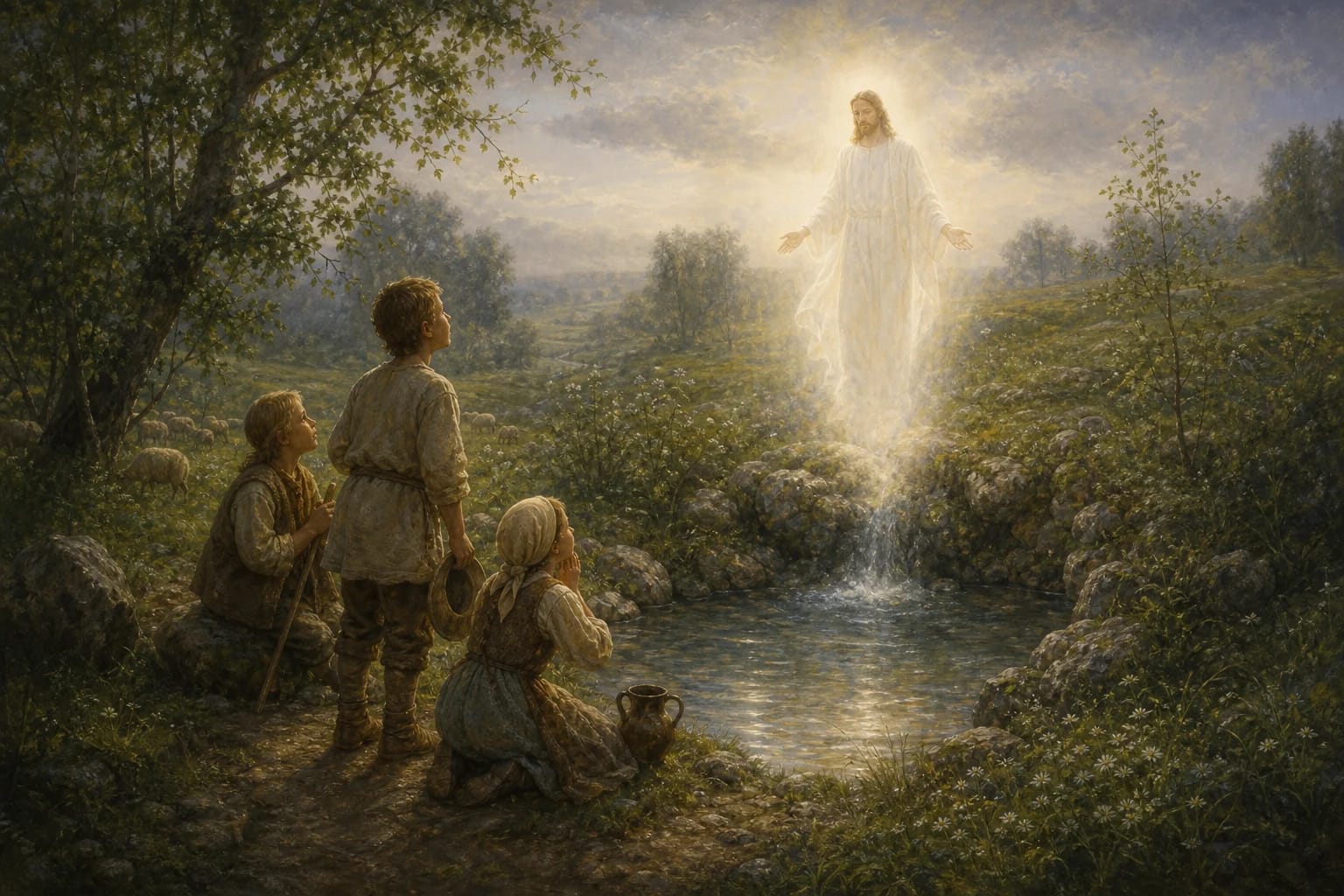
Christ blessed them and disappeared, and from then on the place was considered holy. People came to the spring water, prayed, asked for health, and left signs of respect.
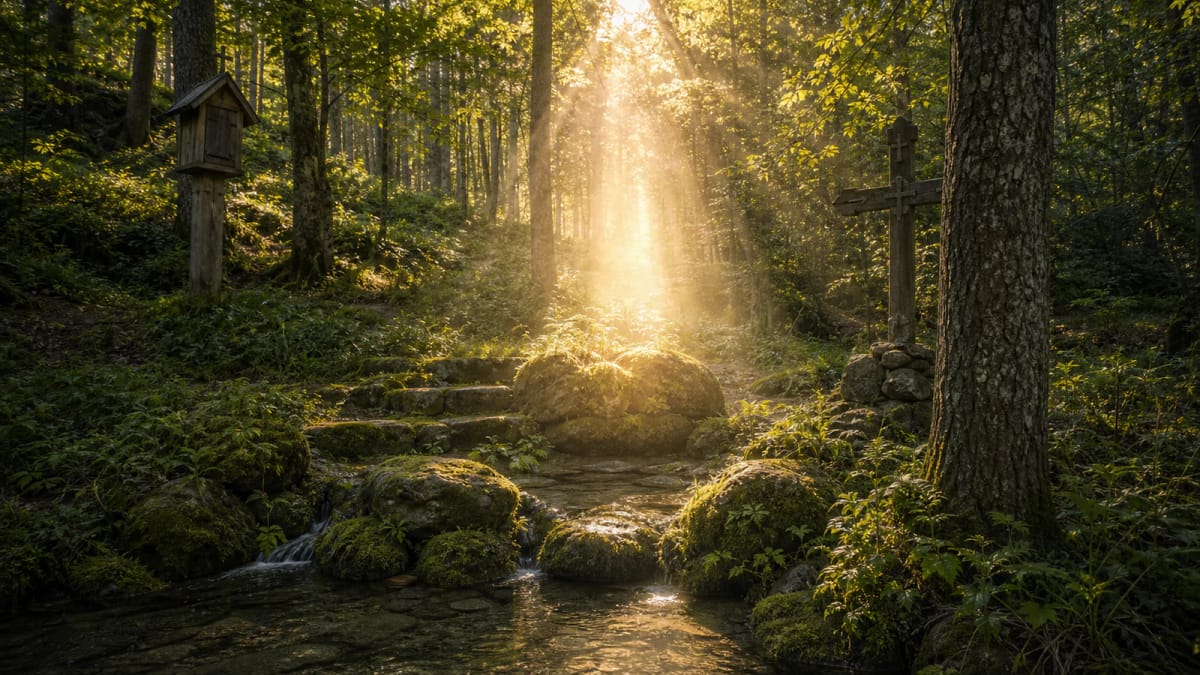
Later the spring was fenced, a chapel appeared nearby, and the name Krokulė became part of the sacred memory of the Užpaliai region.
Interpreting the Krokulė Spring Legend
In the Krokulė legend, water becomes the place of an apparition. The spring is not only a natural object; it is a place where holiness appears to a human being.
The motif of shepherd children matters because of its simplicity. The sacred sign is seen not by rulers or priests but by children, so the story emphasizes humility and truthfulness.
The chapel and fencing show how a legend becomes practice. The story organizes people's behavior: to come, draw water, pray, and protect the place.
History of the Krokulė Spring Legend
VLE notes that Užpaliai Krokulė has been mentioned since the mid-nineteenth century, and that in 1903 the spring area was fenced and a chapel was built beside it.
Pamatyk Lietuvoje and Atostogos kaime give the story of Christ appearing to shepherd children. Vietos dvasia describes the spring as a hydrogeological natural heritage object.
The Krokulė page therefore joins three levels: the spring's natural origin, the Christian apparition legend, and a living visiting tradition.
Užpaliai Krokulė has been mentioned since the mid-nineteenth century, and in 1903 the spring was fenced and a chapel was built beside it. The plot of Christ appearing to shepherd children belongs to Christian sacred-spring, or apparition, legends, which often rewrite an older holy-water tradition. Lithuanian place legends were collected in Žemės atmintis: Lietuvių liaudies padavimai (1999) and classified in Bronislava Kerbelytė's catalogue, volume 3 (2002).