

- Genre
- Lake legend
- Source status
- local legend of Trakai
- Motifs
- water sacrifice, head, Trakai, castle island, lake name
Galvė, Trakai Lake Galvė, Legend of Lake Galvė
The Legend of Lake Galvė
In Trakai it is said that Lake Galvė received its name because each year it demanded a head. When the lake broke its ice in spring or grew restless, people feared what it would take that year: a person, an animal, or at least a bird.
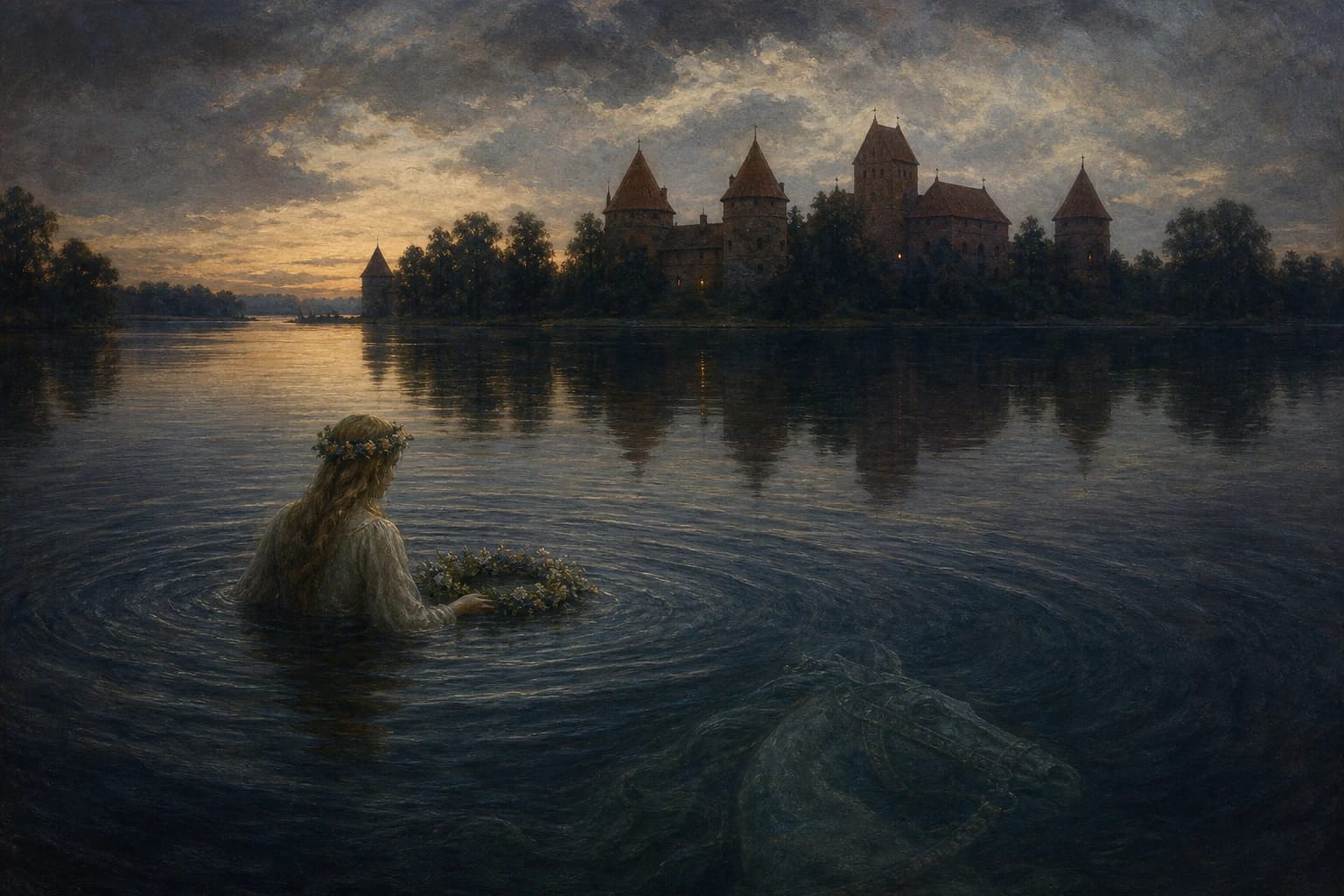
The lake is deep, and its islands carry the memory of the castle, so the water seemed not only beautiful but willful. It could guard treasures, hide the past, and remind people that Trakai's greatness stands on living water.
The legend does not only frighten; it explains the name. Galvė is a lake that has a price, and every day of the spring ice break made people remember its demand.
Interpreting the Galvė Lake Legend
In the Galvė legend, water is portrayed as an actor. It is not a passive background to the castle, but a force that can demand a sacrifice and thereby maintain its own order.
The head motif directly explains the name, but it also reveals an old fear of a deep lake breaking its ice. Spring water is a transitional and dangerous state.
The closeness of Trakai Castle gives the legend a historical background. Water sacrifice and the rulers' island meet in one place, so the lake becomes a landscape not only of nature but also of power.
History of the Galvė Lake Legend
Trakai tourism and local storytelling sources mention Lake Galvė legends about the name, castle construction, sunken treasures, and the lake's depths. The Knygadvaris record shows that the name-origin legend was documented as folklore.
In publications on Trakai folklore and in museum sources, Galvė appears as one of the strongest centers of Trakai's narrative landscape.
For that reason, the Lake Galvė page should be read separately from a future travel overview: the center here is not a route, but a legend explaining name and water.
The famous Trakai Island Castle, built in the fourteenth and fifteenth centuries and associated with Vytautas, stands in Lake Galvė; the lake has about 21 islands. The name explanation that the lake demanded a head each year is an etiological place-name legend. Lithuanian place legends were collected in Žemės atmintis: Lietuvių liaudies padavimai (1999) and classified in Bronislava Kerbelytė's catalogue, volume 3 (2002).