- Genre
- Lake-name legend
- Source status
- regional and folkloric tradition
- Motifs
- chestnut horses, collapsed bridge, lake name, punishment, Dusetos, horses
Sartai, Sartai legend, Sartai name legend
The Legend of Lake Sartai
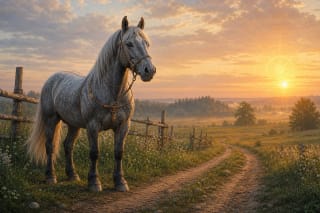
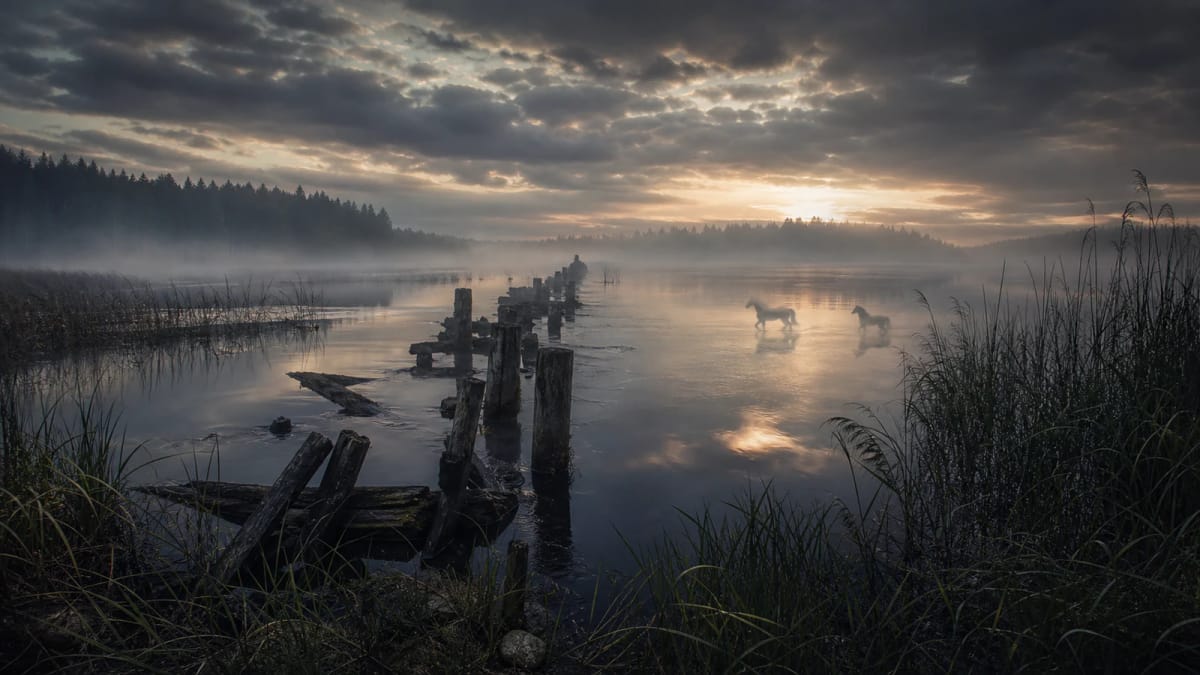
It is told that a bridge once crossed Lake Sartai or one of its narrow places. Lords or wealthy travelers drove over it in a carriage harnessed with chestnut horses. The bridge did not hold; it broke, and the people and horses plunged into the water.
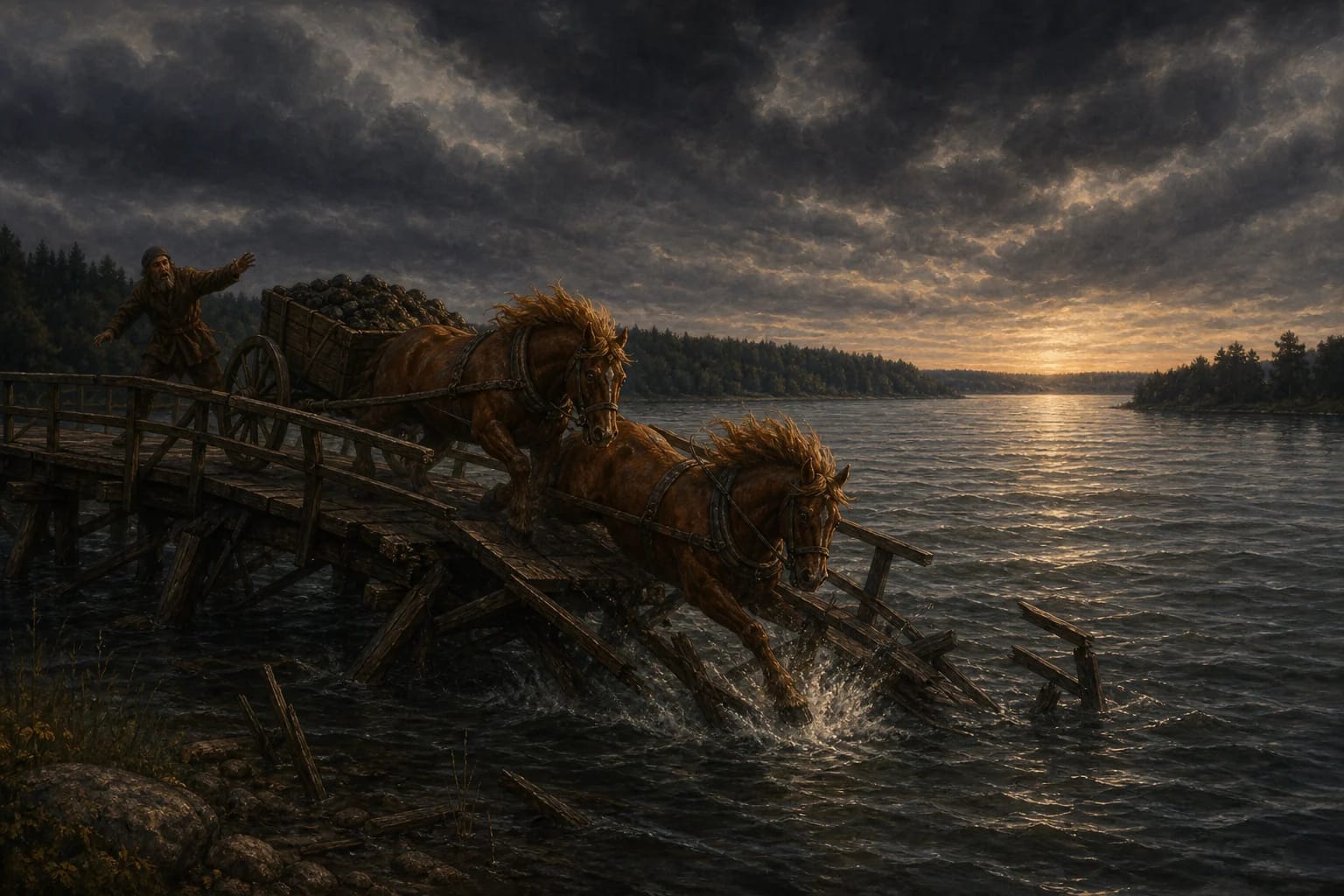
The horses' color became the most important sign in the story. The chestnut horses that vanished in the lake left their name to the water itself. Thus the lake is explained not through dry geography but through a dramatic event.
In some legends of this type the disaster has a moral shade: pride, carelessness, or too much confidence in a road across water ends in collapse.
Interpretation of the Lake Sartai Legend
In the Sartai legend the bridge is a boundary. It lets people cross the water, but it is also fragile. When the bridge breaks, human order can no longer withstand the depth of the lake.
The horses are not only animals here. In Lithuanian culture the horse often signifies journey, status, strength, and fate. In the Sartai legend their color becomes a name, so the animal is written into the landscape.
This page should preserve the name-origin plot. A future travel page about Sartai can describe Dusetos, horse races, viewpoints, and routes in the regional park.
History of the Lake Sartai Legend
Sartai is one of Lithuania's most distinctive lakes: branched, with a long shoreline, and strongly tied to Dusetos and the landscape of Sartai Regional Park.
Today Sartai is also widely known through the tradition of horse races. From the standpoint of legend, that is interesting because horses already stand at the center of the lake's name story.
The Sartai legend therefore joins an old place-name explanation with a living regional identity: even the modern layer of horse culture has a folkloric shadow here.
Sartai is widely known for the Sartai horse races on the lake ice, held since 1865 and considered one of the oldest traditions of this kind in Europe. The plot of the collapsed bridge and chestnut horses plunging into the water is an etiological place-name legend. Lithuanian place legends are collected in Žemės atmintis: Lietuvių liaudies padavimai (1999) and classified in Bronislava Kerbelytė's catalogue, vol. 3 (2002).
The Name Sartai and the Horse Motif
Name legends often work through a memorable detail. In the case of Sartai, that detail is color: a chestnut horse becomes the name of the water.
That makes the story easy to remember and pass on. Even without knowing a precise historical event, a listener can remember that the lake's name is linked with horses and a water disaster.