
- Genre
- Sacred-hill legend
- Source status
- well-known Žemaitian witch and sacred-hill tradition
- Motifs
- witches, broom, sacred hill, Žemaitija, fire
Šatrija, Pašatrija hillfort, Žemaitian sacred hill
The Legend of Šatrija Hill
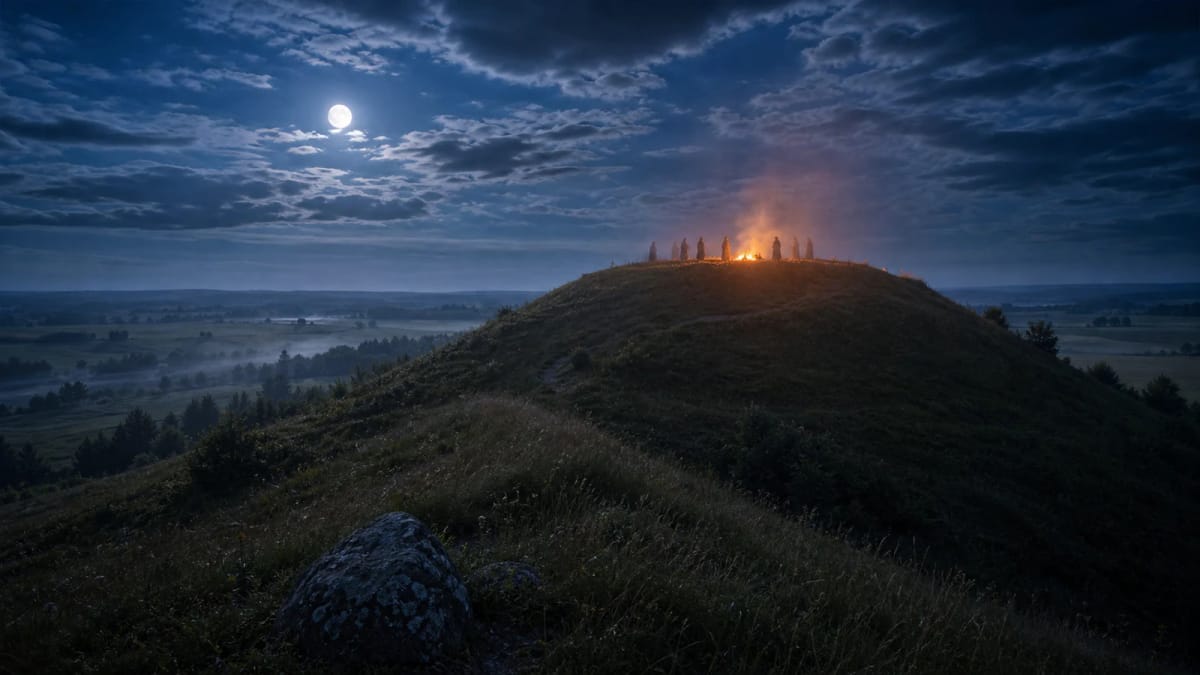
People speak of Šatrija as the capital of witches. It is said that on certain nights, especially when the world stands near a boundary, witches from all Lithuania flew to the hill to rage, confer, and feast.
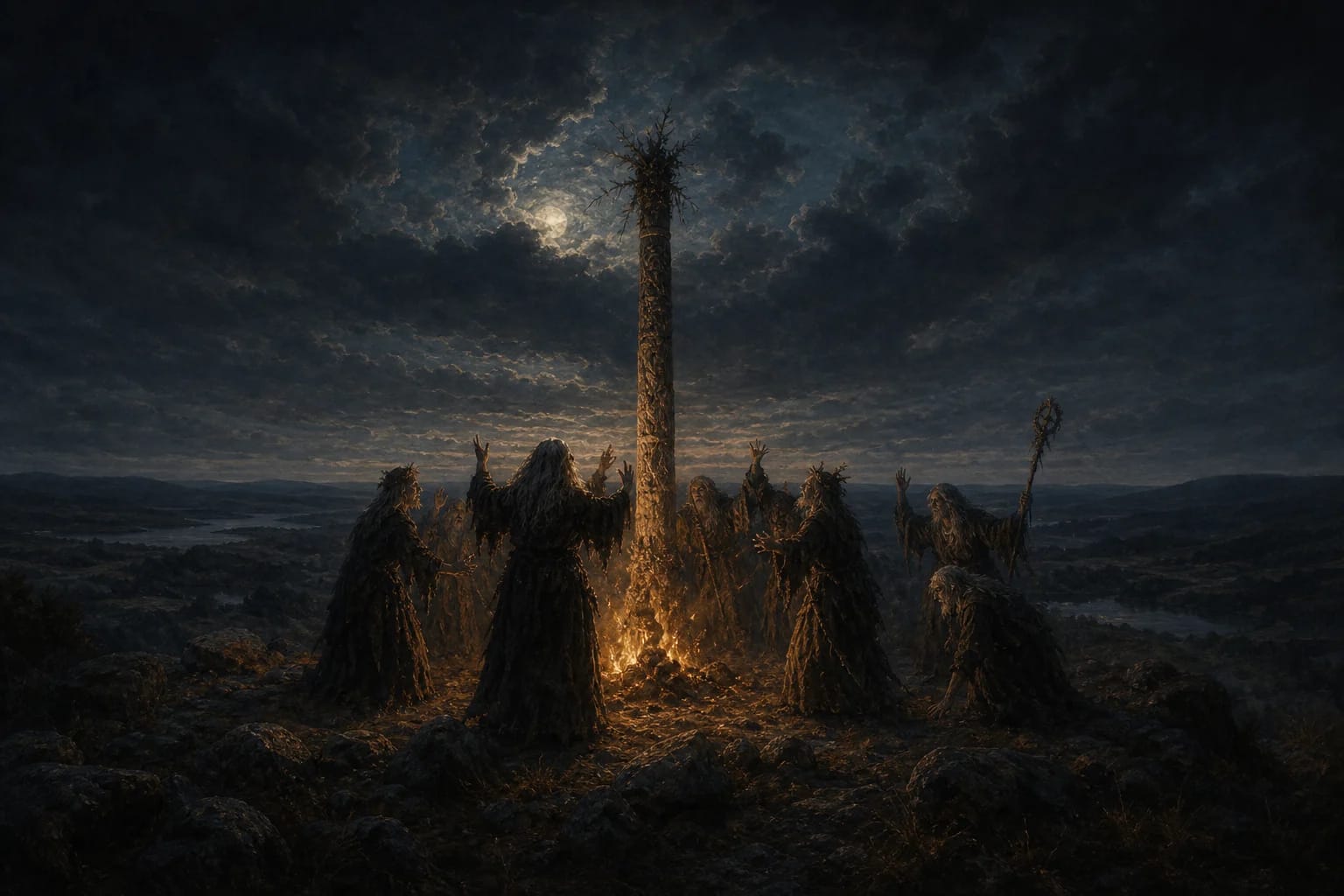
Once they were so carried away with merriment that they failed to notice dawn. When the rooster crowed, the witches were frightened, grabbed their brooms, and scattered. One left her broom behind, and from that, the hill received the name Šatrija.
In other stories Šatrija is remembered as an old sacred hill where fire burned and people gathered. The witches' revelry therefore lives here beside the memory of sacredness.
Interpretation of the Šatrija Hill Legend
The witches' gathering motif lets the hill be understood as a liminal place. A high hill visible from far away becomes a stage where everyday order briefly withdraws.
The broom motif is etiological: it explains the hill's name through an object left behind after a supernatural event. Such explanations of names are very typical of place legends.
The sacred-hill layer of Šatrija shows that the image of witches may have covered or rewritten an older memory of sacredness. It does not erase the sacred; it makes it ambiguous.
History of the Šatrija Hill Legend
Saugoma.lt presents Šatrija as one of Lithuania's most famous archaeological monuments and a possible important center of the old faith. VLE describes its geographical and natural significance.
A Žemaičių žemė publication gives legends about Šatrija as a place of witches' gatherings and as the witches' capital. This shows that the witch motif is not a single tourist addition but a strong folkloric tradition.
The Šatrija page therefore has to hold together three layers: the hill as a natural landmark, the hillfort as a historical object, and the witches' sacred hill as a narrated place.
The motif of witches' feasts on Šatrija, especially at St. John's Day, became so established that writer Marija Pečkauskaitė chose the pen name Šatrijos Ragana, the Witch of Šatrija. In genre terms this is a sacred-hill place legend with an etiological explanation of the name; Lithuanian place legends are collected in Žemės atmintis: Lietuvių liaudies padavimai (1999) and classified in Bronislava Kerbelytė's catalogue, vol. 3 (2002).