

- Genre
- Hillfort legend
- Source status
- regional local tradition
- Motifs
- Sprūdeikis, Mindaugas's brother, hillfort, shelters, Žemaitija, flight
Sprūdė hillfort legend, Šaukštelis hillfort, Sprūdė
The Legend of Sprūdė Hill
Legends tell that the castle of Duke Sprūdeikis stood on Sprūdė Hill. Sprūdeikis was close to King Mindaugas, but angered the ruler and withdrew to Žemaitija, where he built a safe fortress on a high hill with broad views.
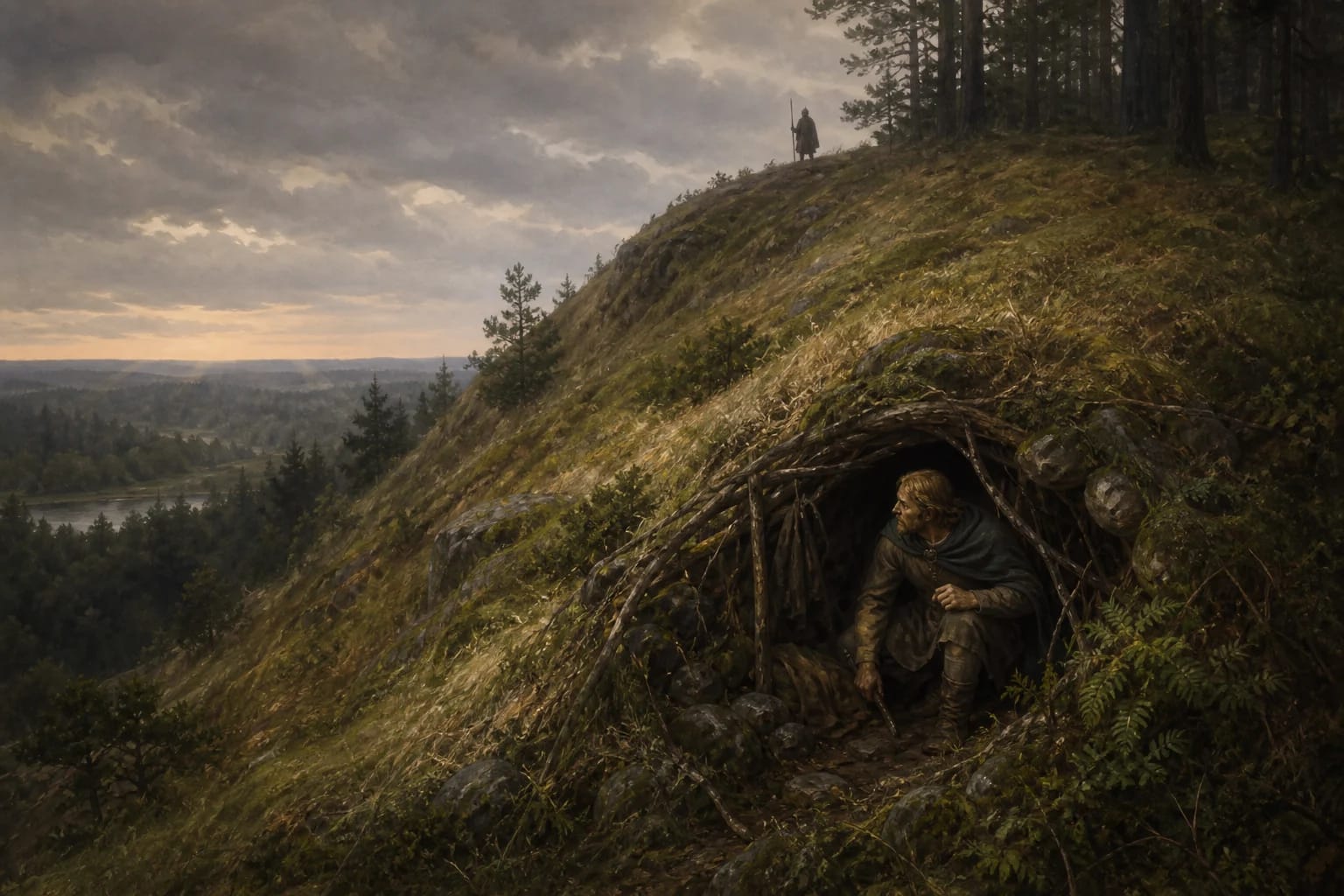
People imagined cellars and shelters beneath the castle. Supplies, weapons, and people could supposedly fit there if an enemy appeared from an unexpected side. In the story the hill becomes not only a lookout but also a hidden dwelling.
Yet Sprūdeikis's hill did not save him from a ruler's anger. The legend ends with the thought that even the highest place and the thickest hiding places cannot hide a person from oaths, anger, and family conflict.
Interpretation of the Sprūdė Hill Legend
The legend of Sprūdė Hill speaks about the place of a fugitive ruler. It is not merely a simple castle story. The hill becomes the last support for someone who has lost safety in the political world and searches for it in the landscape.
The shelter motif strengthens the story. It shows that the hill has two sides: an open summit from which lakes and other hills are visible, and a hidden interior where a person hopes to wait out danger.
The motif of Mindaugas's brother gives the legend tension from the beginnings of the state. The story writes a Žemaitian hill into the larger field of early Lithuanian rule, while preserving the local logic: the most important thing is Sprūdė Hill itself.
History of the Sprūdė Hill Legend
Telšiai and Baltic Route regional sources connect Sprūdė Hillfort with the legend of Duke Sprūdeikis, Mindaugas's brother, his castle, and the shelters beneath the hill.
The hillfort also has a real defensive form: sources mention surviving ramparts, ditches, an old entrance, and wide visibility over the Varniai landscape. These features help explain why the legend took root here.
Historically, Sprūdeikis should be treated as a legendary figure. He matters not because of a documented biography, but because through him the hill gains a story about power, fear, and hiding.
The motifs of a fugitive prince and hidden cellars or shelters beneath a hill are typical hillfort legends. In genre terms this is a hillfort legend; Lithuanian place legends are collected in Žemės atmintis: Lietuvių liaudies padavimai (1999) and classified in Bronislava Kerbelytė's catalogue, vol. 3 (2002).
What Does the High Hill Mean in This Legend?
A high hill lets one see far, but it also makes a person visible to others. This tension is central to the Sprūdė legend: Sprūdeikis searches for safety, yet the hill he chooses testifies to his presence.
For that reason, Sprūdė works as a dramatic place. It is not only a beautiful viewpoint, but a story stage where safety constantly crosses with danger.