
- Genre
- Sacred-hill legend
- Source status
- local legends of the Šiauliai region
- Motifs
- mother of giants, Kurtuovė, sunken church, sacred fire, stone
Girnikai sacred hill, Šikštas Hill, Girnikai hillfort
The Legend of Girnikai Hill
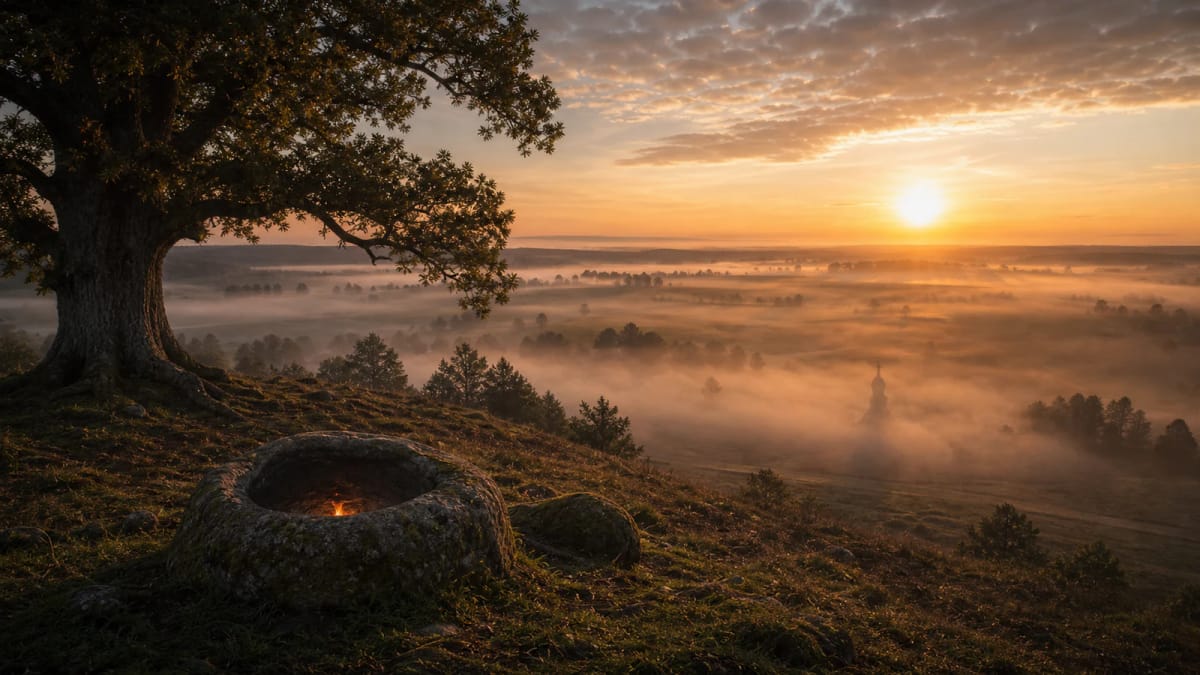
On Girnikai Hill, also called the Sacred Hill, people say there was once a holy place. At the summit supposedly stood a stone on which sacred fire burned, and people could see its sign from far away.
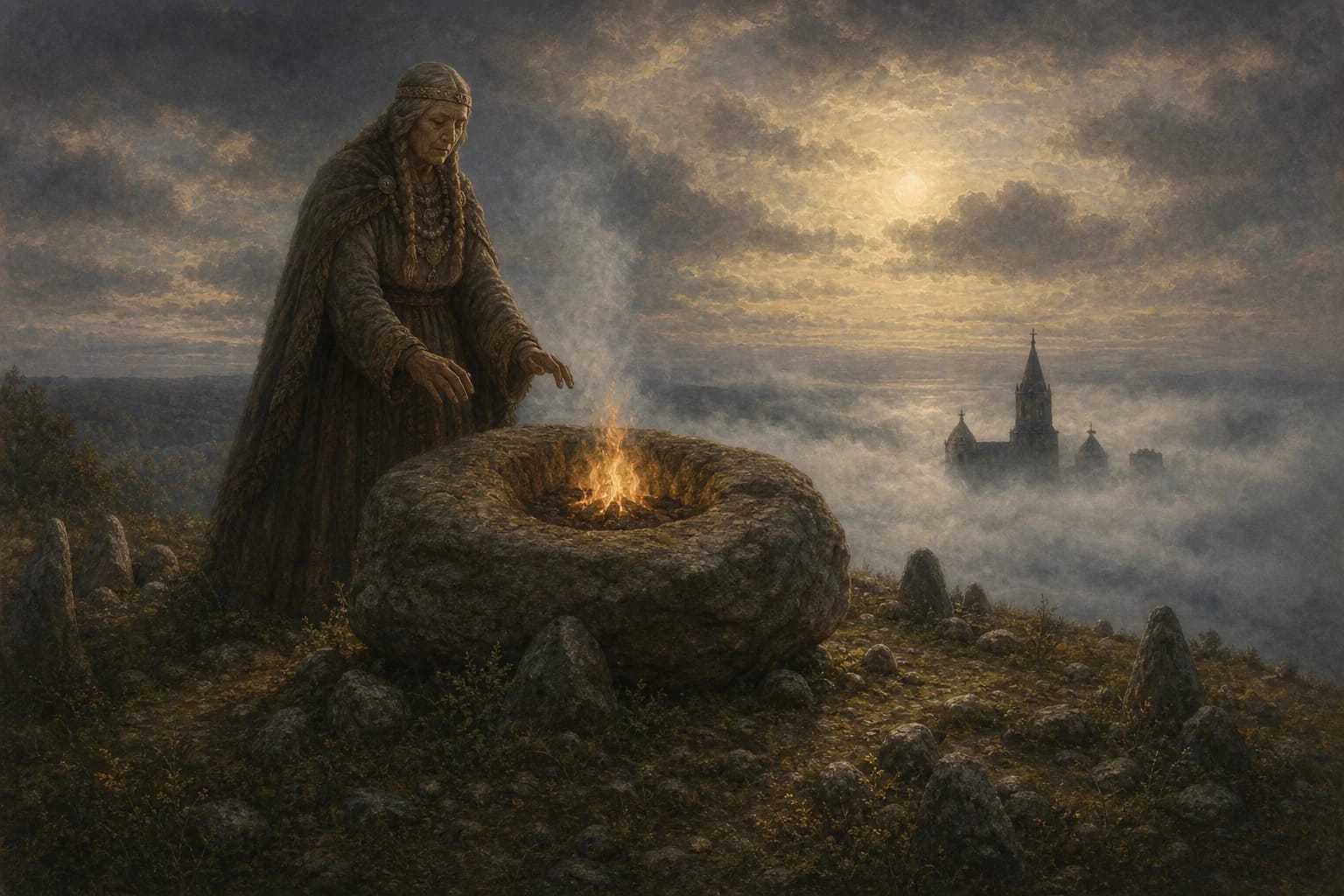
Another story mentions Kurtuovė, the mother of giants, buried in the hill. Her name seems to have grown into the surroundings: the hill, landscape, and human memory preserve an echo of the age of mighty beings.
There is also talk of a sunken church. Thus, in one field of legends, Girnikai Hill joins old fire, the mother of giants, and the sinking of a Christian sanctuary.
Interpreting the Girnikai Hill Legend
The conflict of layers matters in the Girnikai legends. Sacred fire and stone speak of old sacrality; the sunken church speaks of another form of holiness, which in the legend becomes hidden underground.
The motif of Kurtuovė, mother of giants, gives the landscape an image of kinship and body. The hill becomes not only a height but the grave of a maternal, very ancient power.
The panoramas from Girnikai Hill help explain why this place became a sacred hill. Height lets one see the region, and the legend lets one imagine that the region also saw the hill.
History of the Girnikai Hill Legend
VLE describes Girnikai Hill as a high hill in Šiauliai District within Kurtuvėnai Regional Park. Visit Šiauliai mentions local legends about a sacred place, Kurtuovė the mother of giants, a sunken church, and a stone of sacred fire.
Today Baltic Unity Day is marked on Girnikai Sacred Hill, so the old fire motif also has a modern cultural continuation.
The legend helps distinguish Girnikai Hill from a simple viewpoint: it is narrated as a sacred and memory-rich center of the landscape.
The motif of a sunken church associated with Girnikai Hill is one of the most widespread Lithuanian etiological place-legend types. In genre terms, this is a sacred-hill legend. Lithuanian place legends were collected in Žemės atmintis: Lietuvių liaudies padavimai (1999) and classified in Bronislava Kerbelytė's catalogue, volume 3 (2002).