- Instrument family
- Wind instruments
- Type
- Mouthpiece aerophone, herdsman, herd signals, birch-bark wrapping, hunting
- Source status
- well attested
shepherd's trumpet, šunšaukis
What is kerdžiaus trimitas?
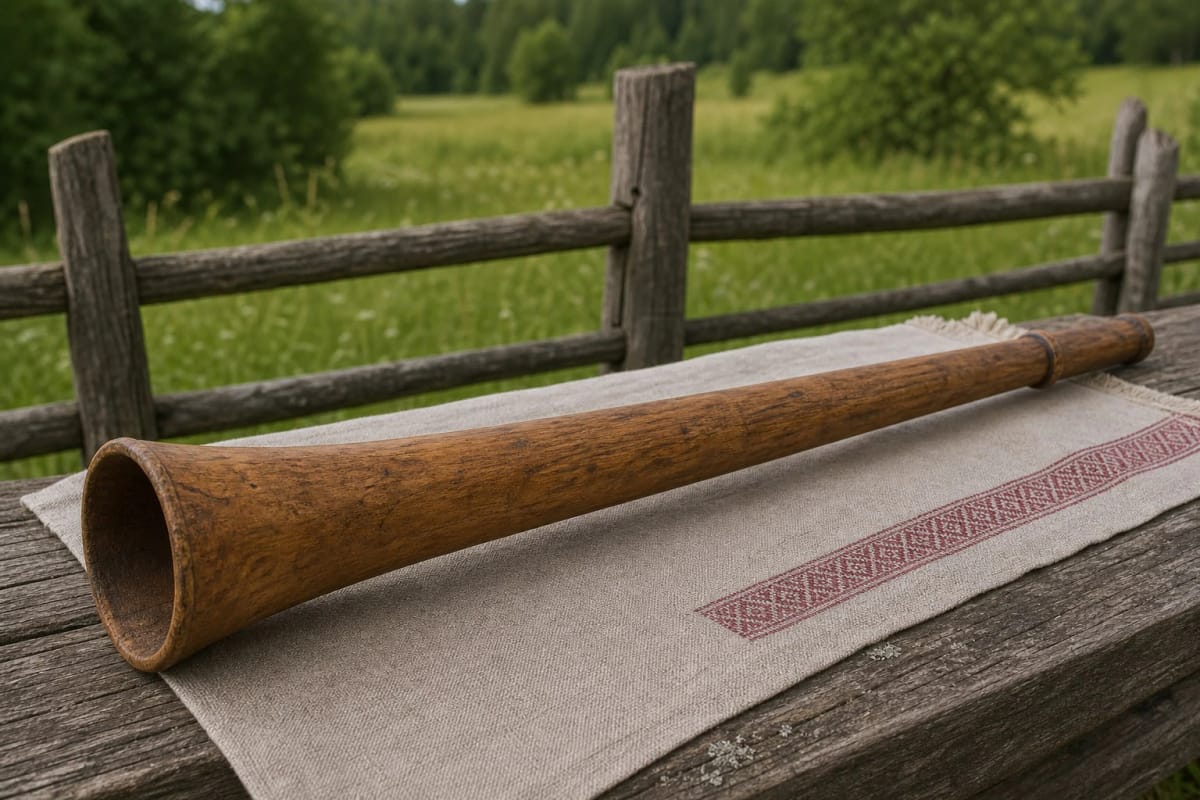
Kerdžiaus trimitas is a Lithuanian mouthpiece aerophone: a wooden signal trumpet made from a split branch with a hollowed channel, then tightened and wrapped. It is primarily an instrument of communication rather than concert music: its sound had to reach the herd, village, or a distant point in the field.
The name comes from the kerdžius, the head herdsman who used the trumpet to regulate the village day. It is closely related to ragai and daudytės, but its clear functional signaling role makes it distinct.
Construction and sound
The tube is made from a split branch with a hollowed channel and wrapped in birch bark throughout Lithuania, alder or pine bark, willow twig, or pine bast; in Dzūkija it could also be wrapped in cloth, and in some places, including Dzūkija and northwestern Žemaitija, it was left unwrapped. The wrapping strengthens the instrument and prevents air leakage.
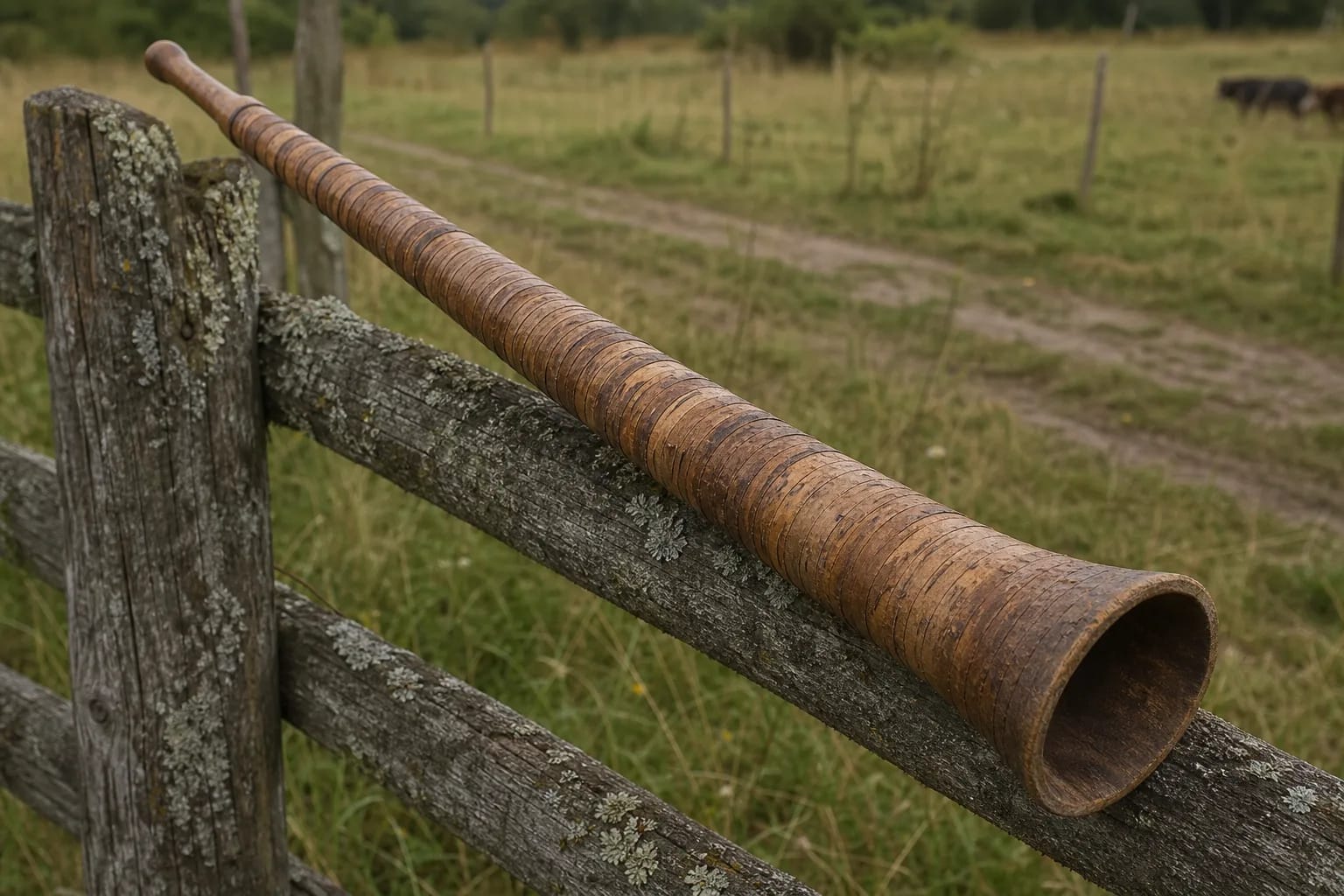
Some herdsman's trumpets resemble an animal horn and are curved, 42-77 cm long; others are almost straight, 62-170 cm, sometimes more than 200 cm long, with a very widened thick end. They produce several natural-scale tones: strong, open, and far-carrying, as a signal should be.
History and tradition
The herdsman trumpeted signals and sometimes folk song and dance melodies. Village days had a clear sound rhythm: driving out the herd, grazing, calling back, warning of danger. The trumpet made all of this audible to the whole community.
Hunters also used it. Around Skuodas, in Šatės village, it was called šunšaukis because it called hunting dogs. Historical sources also connect it with sixteenth-century bear handlers. Herdsman's trumpets are recorded in various parts of Lithuania, including Gervėčiai.
Kerdžiaus trimitas today
Today it is mostly presented in museums, education, and folklore reconstructions as a sign of shepherd and village sound communication. It helps show that old wind instruments had practical social functions as well as musical ones.
As one of the clearest signal instruments, kerdžiaus trimitas reminds us that before clocks and bells were widespread, village time and order were often announced by the blower's signal.