- Instrument family
- Other instruments
- Type
- Plucked idiophone, mouth resonator, metal tongue, solo playing, village bands
- Source status
- well attested
bandūrėlis, varganas
What is dambrelis?
Dambrelis, also called bandūrėlis or varganas, is a plucked idiophone. Its sound is made by a vibrating tongue, while the player's mouth cavity acts as a resonator and shapes the color and pitch.
It belongs to a broad family of world instruments: Latvians and Russians call it vargan, Estonians parmupill, Poles drumla, and Ukrainians, Moldovans, and Belarusians drymba. In Lithuania it is known both as a solo instrument and as one that fitted into village bands.
Construction and sound
The body is 5-30 cm long, with a tongue cut from the body or attached in the center and ending in a small hook. In Lithuania it is usually made from metal, more rarely wood; metal dambreliai were bought in town or forged by village blacksmiths.
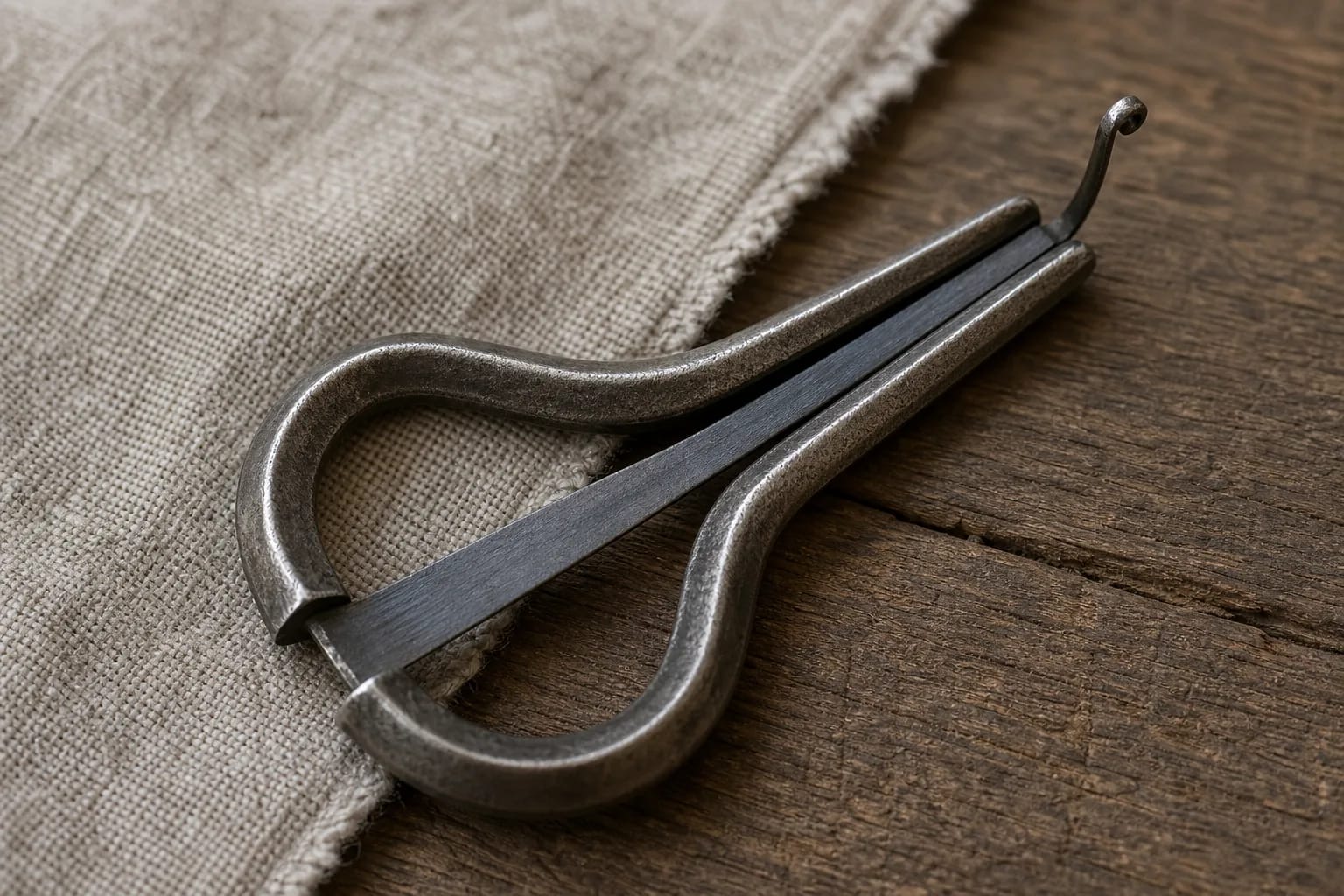
The musician bites or holds the narrow end against the teeth and plucks the tongue hook with a finger. The range is a fourth or fifth; changing the mouth cavity produces improvisations, song melodies, and dance tunes. The sound is quiet, buzzing, and highly distinctive.
History and tradition
In Lithuania, metal dambrelis was used from old times by both folk musicians and musicians at noble courts of the Grand Duchy of Lithuania. A fifteenth-century dambrelis found in the grounds of Trakai Island Castle testifies to its old presence in the region.
Dambrelis is mentioned by Theodor Lepner in 1744, Pilypas Ruigys in 1747, and Kristijonas Donelaitis in the poem Metai, published in 1818. Until the first half of the twentieth century, village bands used it for dance tunes, song melodies, and improvisations.
Dambrelis today
Since the 1970s, dambrelis has again been played in folklore ensembles. Because of its distinctive meditative buzz, it is also valued in contemporary ethno-music and education.
Dambrelis shows how a small pocket-sized instrument can have deep roots: from a medieval castle to village bands and the present-day stage.