
- Instrument family
- Other instruments
- Type
- Herding signal idiophone, stove rings, shepherds, Užgavėnės, lalauninkai
- Source status
- regional
rinkinis
What is rinkinė?
Rinkinė, also called rinkinis, is a Lithuanian herding signal tool and musical instrument: a shaken and struck idiophone. Its first purpose was practical, as shepherds used its jingling sound to discipline cattle.
It belongs to instruments whose main function is not melody but sound color and rhythmic motion. It shows how a field-work tool became a sound device in folklore ensembles.
Construction and sound
There are forked and cross-shaped rinkinės. A forked rinkinė is a 90-150 cm forked staff with several or a dozen stove rings on each branch and tied branch ends. In the cross-shaped form, rings are strung on the teeth of a long-handled rake- or pitchfork-like crosspiece.
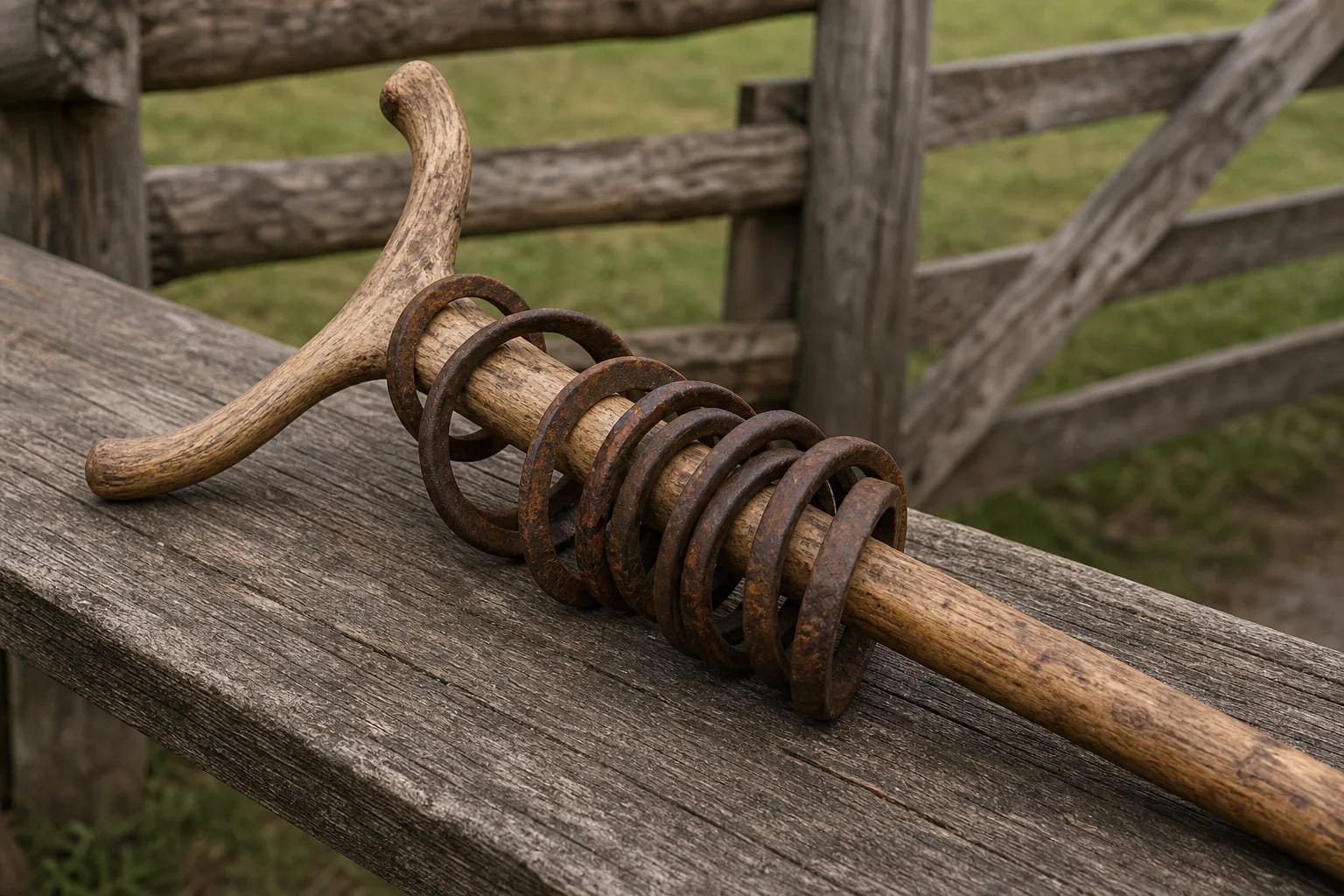
When the staff is shaken or struck, the rings jingle and create a shimmering rhythmic sound. It is strong and carries well outdoors, so it can discipline cattle and emphasize rhythm.
History and tradition
Until the first half of the twentieth century, shepherds used the jingling sound of the forked rinkinė, shaking it in the air or striking it on the ground, to control cattle. It was an everyday herding tool for managing the herd.
Until the same period, Užgavėnės masked performers, lalauninkai, and marshals of shepherds' sambariai shook the cross-shaped rinkinė to the rhythm of their songs, hymns, lalinkos, talalinės, and instrumental music. Thus it moved from herding tool to ritual and festive rhythm device.
Rinkinė today
Since the 1970s, the forked rinkinė has been used in some folklore ensembles. Algirdas Karaška reconstructed it and used it in the Ratilio folklore ensemble's 1979 program Darbo tautosaka.
Rinkinė reveals the meeting of work and music in Lithuanian culture: the same jingle that once controlled a herd can now be heard as rhythmic color in a folklore program.