- Instrument family
- Wind instruments
- Type
- Reed aerophone, shepherds, signals, melodies, modern concert birbynė
- Source status
- well attested
birbynėlė, Sekminių ragelis, šiaudo birbynė
What is birbynė?
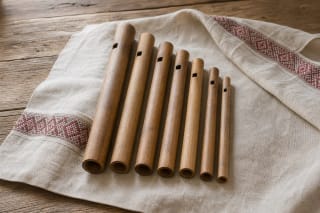
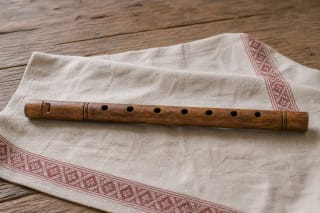
Birbynė is a Lithuanian reed aerophone: a wind instrument with one or two reeds, with or without a mouthpiece. Sound is made by blowing and vibrating the reed, while 3-6, and sometimes more, holes along the instrument regulate pitch.
One name covers very different forms: a simple straw, willow, or goose-feather birbynė; a small horn with an animal-horn or bark bell; and the modern refined concert birbynė. They are linked by the flexible, reed-vibrated tone.
Construction and sound
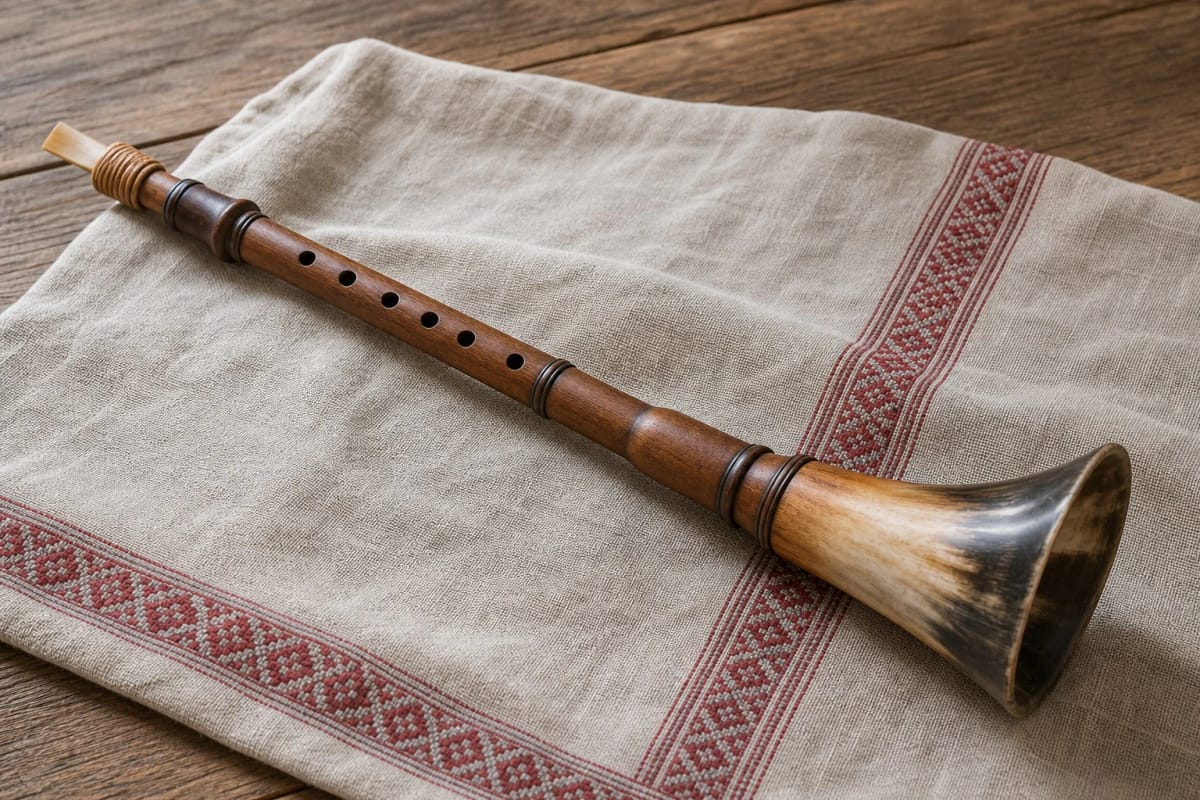
Older birbynės were made from straw, feather, reed, bark, or wood; there were also clarinet-like forms with a tied-on reed. Birbynės with a little horn or a horn-shaped bark widening at the end were called rageliai and were common in southern, southeastern, and eastern Lithuania and in Žemaitija.
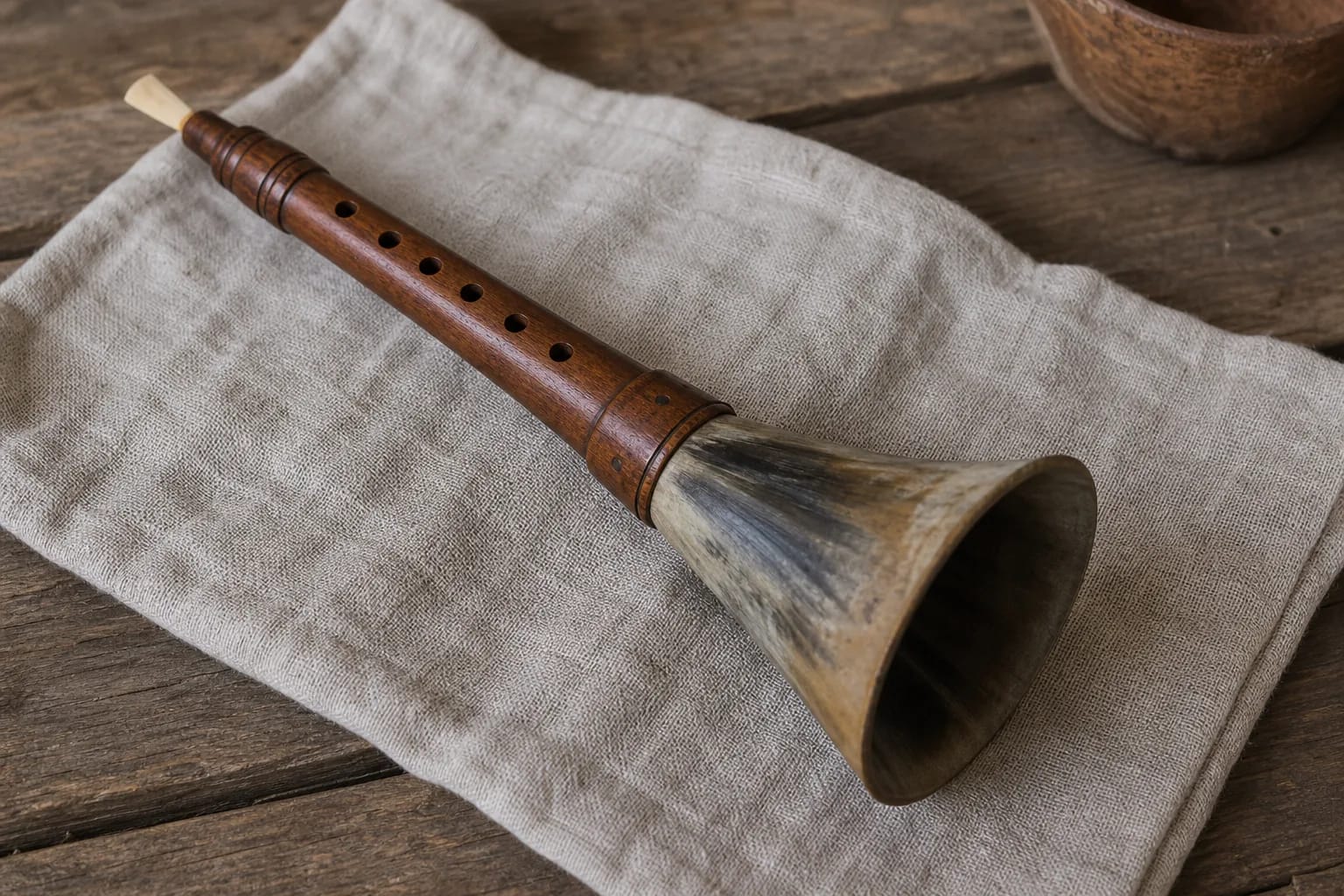
Improved birbynės are turned from wood, while the contrabass version is bent from sheet metal. They have a cylindrical or conical bore, 10 tone holes and 1 harmonic hole, an inserted mouthpiece with a tied reed, and an animal or plastic horn at the end. The tone is soft, slightly nasal, and flexible: the simple shepherd's birbynė sounds signal-like, while the concert birbynė plays a wide melodic repertoire.
History and tradition
Old birbynės were first mentioned by Pilypas Ruigys in 1747. Children and shepherds most often played them, imitating birds, playing folk song and dance melodies, and making raliavimai and tirliavimai; herdsmen used rageliai for herding signals. In northeastern Aukštaitija, birbynės accompanied newer sutartinės and talalinės.
A separate layer is the Sekminių rageliai, a birbynė variant used in spring holiday rituals, especially Pentecost. Later, diatonic birbynės appeared and allowed melodies in two keys; old makers include K. Bložė, S. Karanauskas, J. Stankevičius, and S. Valackas.
Birbynė today
From 1940, improved birbynės began to be made on the basis of the traditional ragelis. The high birbynė, range a-f3, was designed by P. Samuitis and P. Serva in 1950; the tenor by P. Kupčikas in 1960; and the contrabass also by P. Kupčikas in 1957. V. Bagdonas, J. Gaižauskas, B. Gorbulskis, J. Juozapaitis, and others wrote works for it.
Today birbynė is one of the most recognizable Lithuanian wind instruments. It sounds in village bands, folklore ensembles, birbynė quintets, and folk-instrument orchestras, and it is taught in music schools and on the academic stage. Noted players include R. Apanavičius, K. Budrys, A. Smolskus, and V. Tetenskas.