- Instrument family
- Percussion instruments
- Type
- Struck membranophone, tambourine, jingles, village bands, rhythm
- Source status
- well attested
tambūrinas, būbnas
What is būgnelis?
Būgnelis, also called tambūrinas, is a struck membranophone: a small drum, often with jingles or metal plates. It is one of the oldest instruments among many peoples and has varied, lively striking techniques.
In Lithuanian village music, būgnelis is primarily a rhythm instrument. In addition to the membrane sound, it rattles and jingles, enriching the rhythmic texture of a band or ensemble.
Construction and sound
Būgnelis has a wooden, more rarely metal, frame 5-7 cm high and 25-50 cm in diameter, covered with skin on one side. The cutouts of the frame hold 6-16 pairs of metal plates, and jingles are suspended inside on wires.
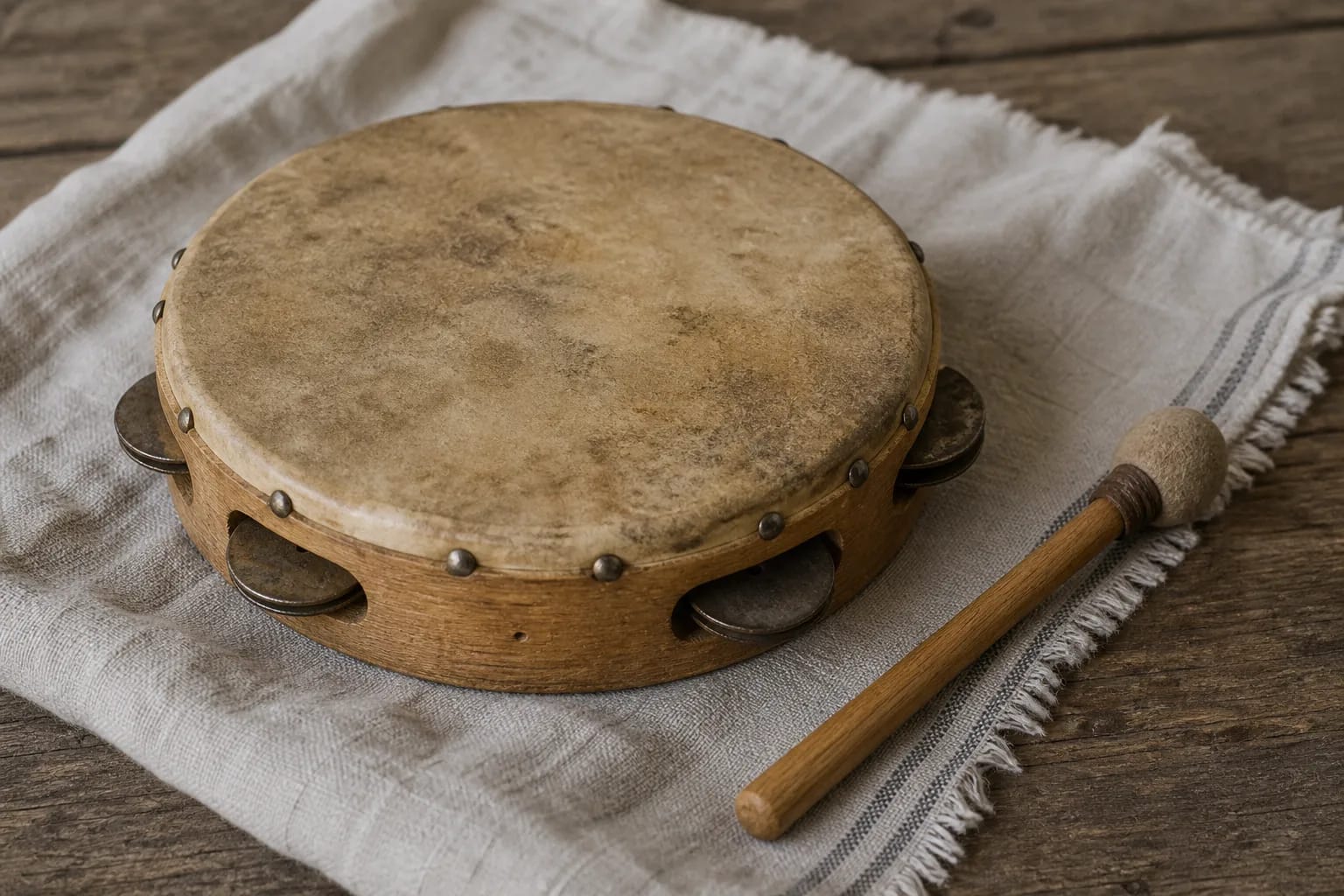
It is struck by hand, sometimes with small-drum mallets. Membrane strokes combine with the jingling plates, so the sound is lively, rhythmic, and colorful: one instrument can both beat rhythm and rattle.
History and tradition
It is thought that Romani musicians spread būgneliai in Lithuanian folk music. The instrument is mentioned in writings by Juozapas Jaroševičius in 1844, Oskar Kolberg in 1879, and Antanas Juška in 1880, so its nineteenth-century village use is well attested.
Būgnelis was probably also used in older rituals. After ritual meaning faded, it became an instrument for evening music-making and a practical companion for dance and song rhythm.
Būgnelis today
Village bands, folklore ensembles, and folk-instrument orchestras use būgneliai with and without jingles, often made by folk musicians themselves. They remain a favored instrument of rhythm and color.
Būgnelis shows how Lithuanian percussion works not only as beat but also as timbre: membrane and jingles together create a lively sound well suited to dancing.