- Instrument family
- Wind instruments
- Type
- Whistle vessel flute, clay ocarina, children, bird calls, art ceramics
- Source status
- well attested
clay whistle, clay bird
What is molinukas?
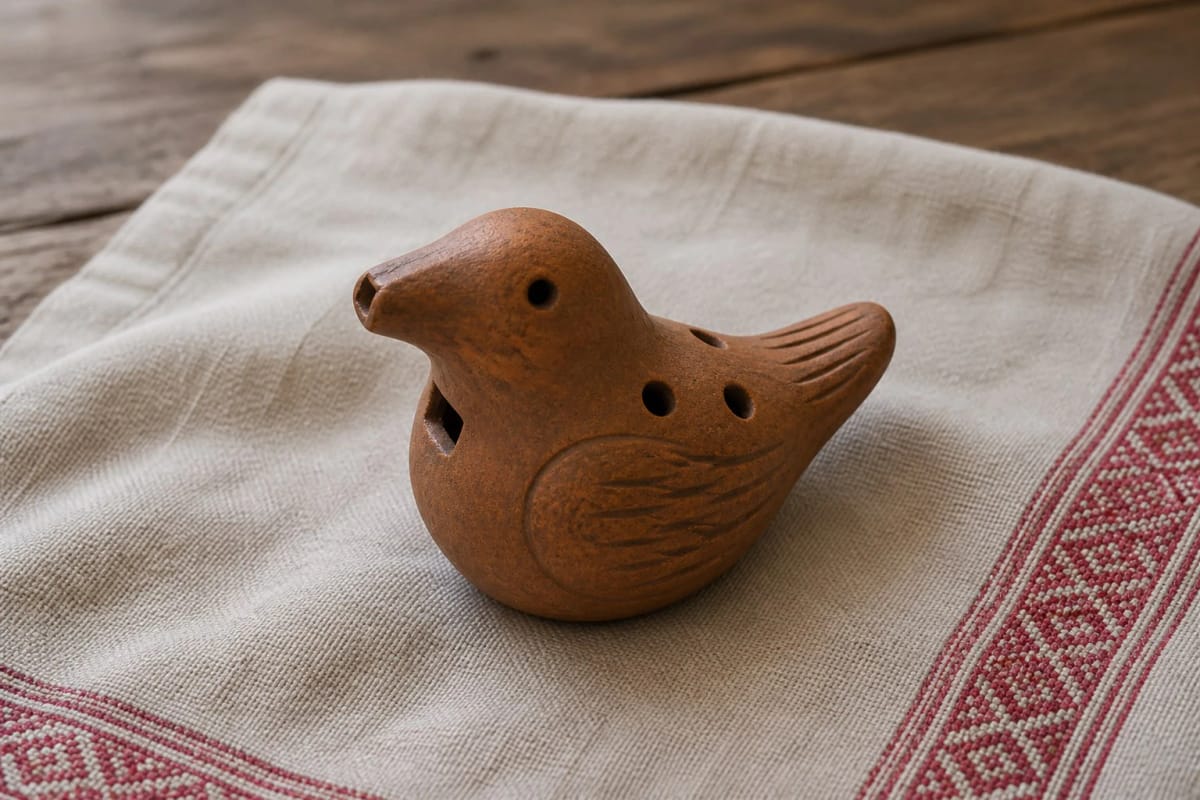
Molinukas, a clay whistle, is a folk wind aerophone: a whistle vessel flute close to the ocarina. It is both an art-ceramic object and a toy, most often played in Lithuania by children and young shepherds.
Molinukai are modeled as domestic animals, wild animals, birds, a rider, more rarely a woman, a tube, or another form. This playful shape and clay material distinguish molinukas from wooden pipes: it is an instrument born in the potter's hands.
Construction and sound
Lithuanian molinukai are 3-20 cm long and 1.5-15 cm high, with 2, more rarely 1, 3, or 4 finger holes, or none at all. They are hand-modeled from loam or clay, sometimes shaped in plaster molds, decorated with relief or painted ornaments, and finished with engobe, glaze, oil paint, smoking, or wax.
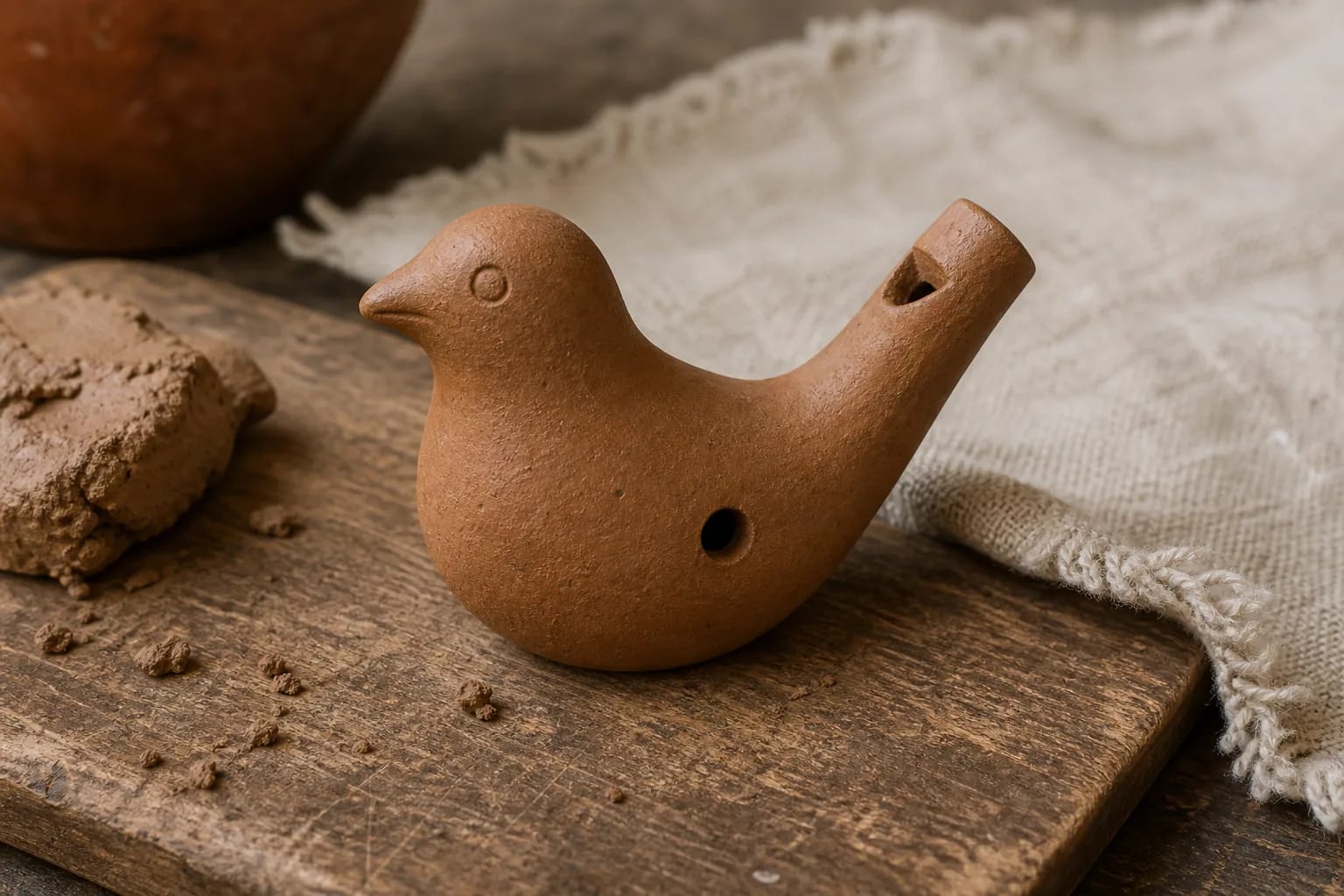
They produce 1-5 gentle, bright tones in the middle or high register. A water-filled molinukas, called the lakštingala or nightingale, produces chirps, trills, glissando, and other bird-like effects, making it especially suited to nature-sound imitation.
History and tradition
Molinukai have been known in Lithuania for a long time. A seventeenth-century bird-shaped molinukas found in the barbican of Kaunas Castle shows that clay whistles were made here for several centuries. Children played them from old times, imitating bird voices and nature sounds.
Molinukai belong to a broad world family of vessel flutes, showing how a simple ceramic object becomes a musical instrument. In Lithuanian folk art, the clay bird or small animal long remained both toy and sound object.
Molinukas today
Folk potters still make molinukai, and from the mid-twentieth century some art-combine makers made them as well. Since the second half of the twentieth century, molinukai have been used by folklore ensembles, village bands, and folk-instrument orchestras; since 1965, orchestras have used modified molinukai with 6-8 finger holes.
Today molinukas remains popular in education and folk-art fairs. It is both a ceramic artwork and a simple but expressive wind instrument suitable for easy song and dance melodies and sound imitation.