- Instrument family
- Other instruments
- Type
- Scraped idiophone, toothed cylinder, Lent, Užgavėnės, herding, hunting
- Source status
- well attested
tarškynė, tarškutis
What is terkšlė?
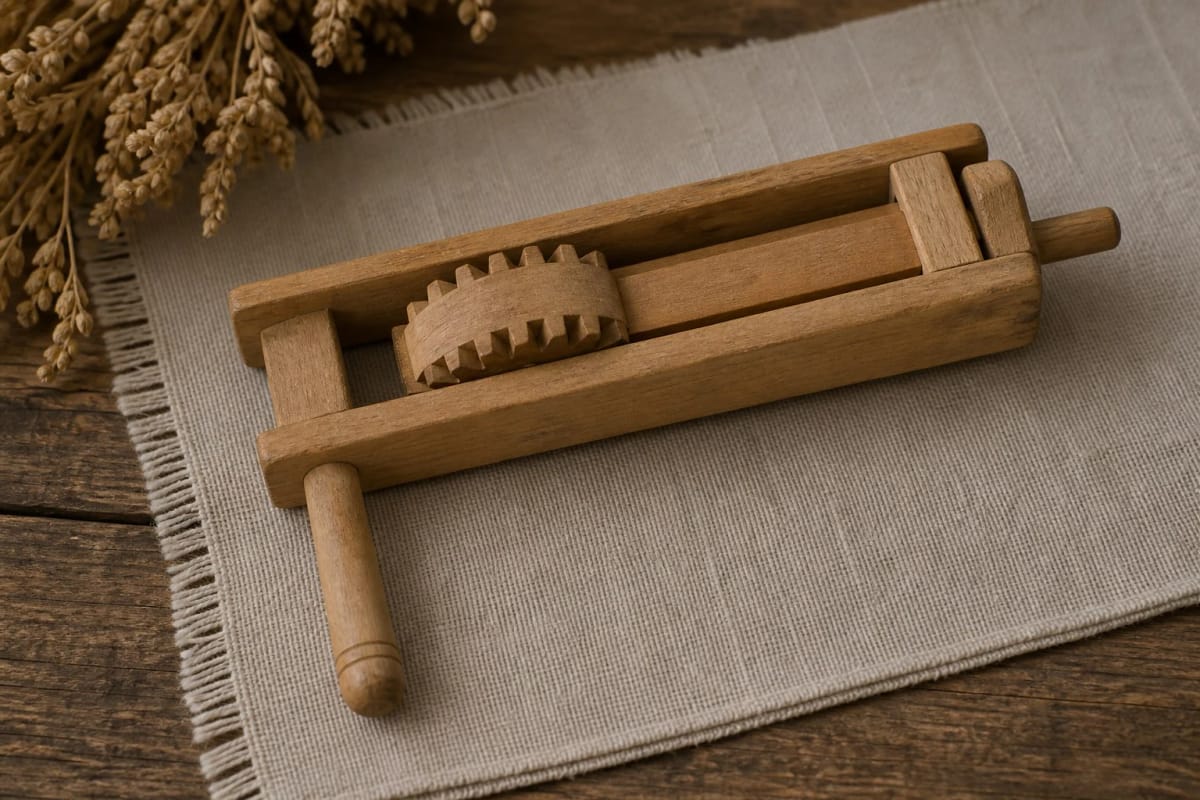
Terkšlė, also called tarškynė, tarškutis, or plerškynė, is a Lithuanian scraped idiophone. Unlike rattles or skrabalai, its sound is made by turning a toothed cylinder against slats, so the sound is a steady rattle.
It is primarily a signal and ritual instrument whose strong dry rattling sound was meant to warn, call people together, or replace bells. Terkšlė has been used throughout Lithuania from old times.
Construction and sound
Terkšlė consists of a wooden frame, 1-2 or 3-4 slats, and a toothed cylinder. There are hand versions, both small portable ones and large stationary ones fixed into church floors or stands, and wheel versions whose cylinder turns with the wheel of a pushed cart.
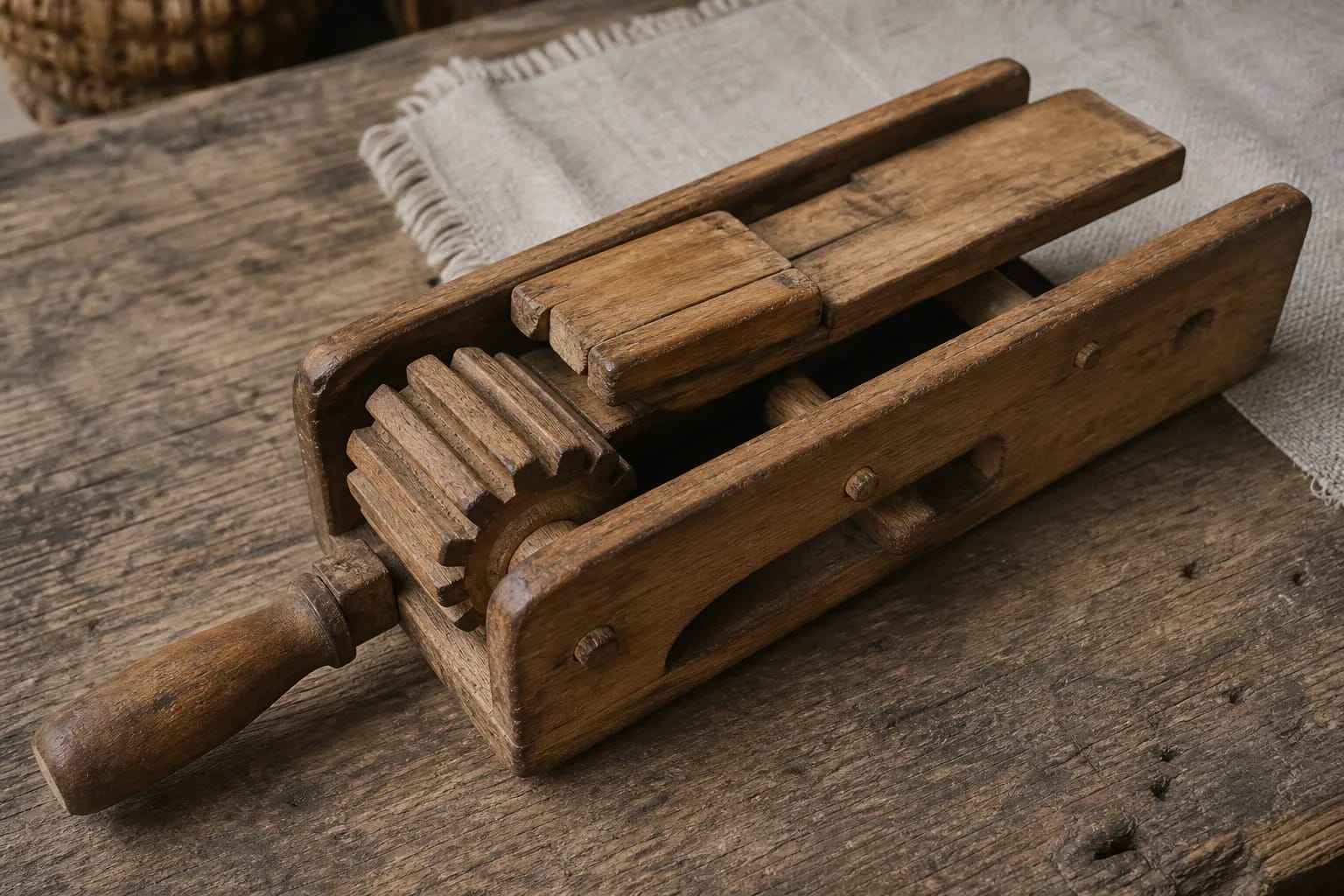
When the cylinder turns, the free ends of the slats strike the teeth and produce strong, dry rattling sounds. The faster it turns, the denser and louder the rattle, so it can be heard from far away.
History and tradition
From old times, terkšlė was used for calendar festivals, especially Užgavėnės, and church rituals; during Lent it replaced bells. It also served cattle herding, night pasturing, crop and orchard guards, and night watchmen.
It was used by hunting beaters, as a military sound tool imitating shots, as a signal for gatherings, and as a game instrument. Such wide use shows that a strong recognizable rattle replaced many announcement tools in village life.
Terkšlė today
Small hand terkšlės are still used in folklore, song and dance ensembles, and instrumental village bands. They add a bright rhythmic color and recall the instrument's ritual origin.
Similar scraped instruments are known among other peoples, so terkšlė places the Lithuanian signal tradition in a wider European context, from Lenten church use to Užgavėnės noise.