- Instrument family
- String instruments
- Type
- Bowed monochord, one string, wooden board, dance and song melodies
- Source status
- regional
bowed monochord
What is dzindzinis?
Dzindzinis is a Lithuanian musical instrument, a bowed monochord. It is less known than kanklės or fiddle, which makes it especially worth documenting because instruments like this often disappear from short lists.
The essence of a monochord is one string and a bow. Dzindzinis shows that Lithuanian bowed tradition was broader than the fiddle and also included simple homemade one-string instruments.
Construction and sound
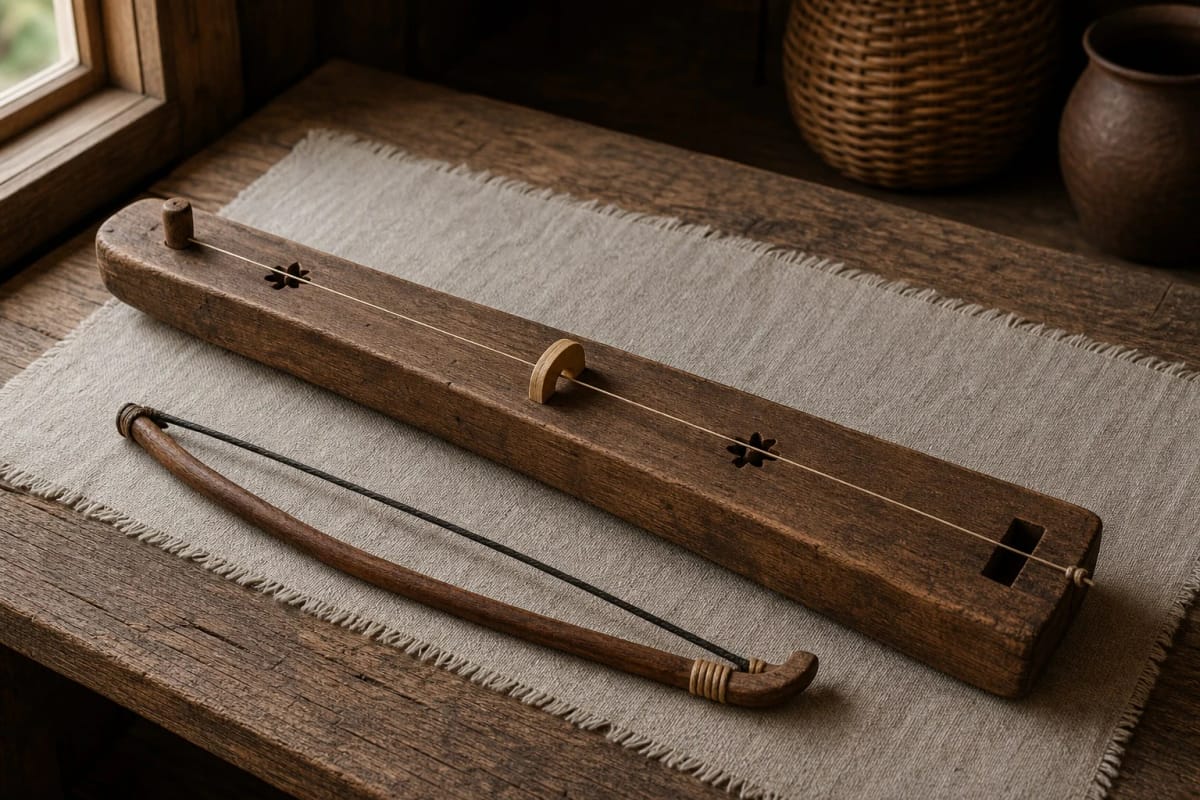
Dzindzinis consists of a wooden board about 100 cm long with one string stretched lengthwise. The construction is simple, so the main sound source is this single string, vibrated with a bow.
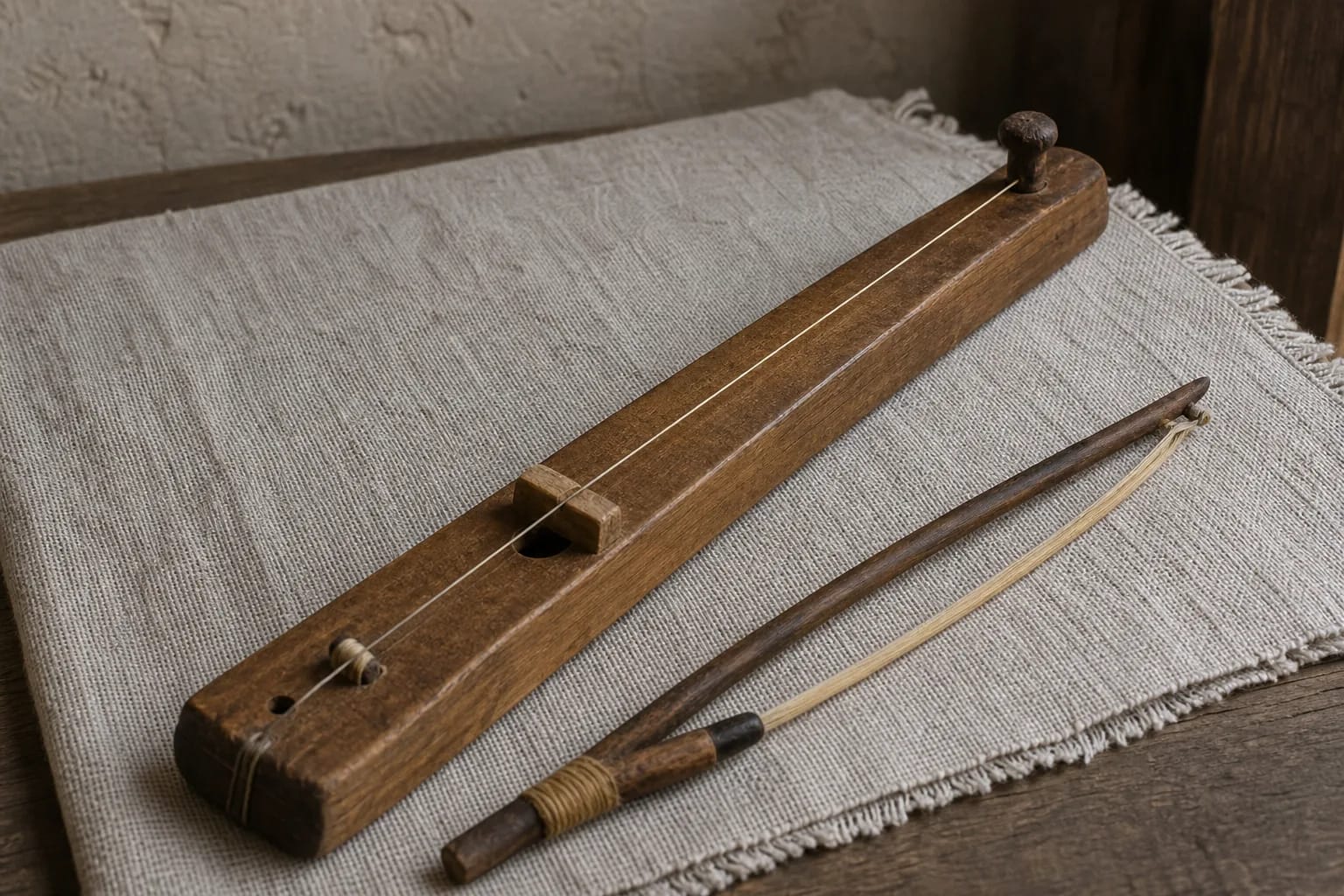
Its tones are sharp. With only one string, the player works with rhythm, intonation, and glissando-like movement, so the sound is narrower and more direct than a fiddle but highly expressive.
History and tradition
Dzindzinis is mentioned in Liudvikas Adomas Jucevičius's work Litwa in 1846, so its attestation reaches at least the mid-nineteenth century. In the first half of the twentieth century, young people still used it for dance and song melodies.
It was not an instrument of the grand stage but one of regional folk ingenuity. It reminds us that village music also had simple, cheaply made string instruments alongside more complex kanklės or fiddle.
Dzindzinis today
Today dzindzinis is relevant in museum, reconstruction, and research contexts. Reconstructing it helps fill a less visible part of Lithuanian string instrument history.
It also matters as comparative material: one-string bowed instruments are known among many peoples, so dzindzinis helps place Lithuanian folk music in a wider European context.