- Instrument family
- Other instruments
- Type
- Shaken idiophone, herdsmen, Lent, calendar festivals, hunting beaters
- Source status
- well attested
klebetas, klegetas
What is kleketas?
Kleketas, also called klebetas, klegetas, or taškalas, is a Lithuanian shaken idiophone. Its sound is a short, dry clack, so it is primarily a signal and rhythm instrument rather than a melodic one.
It belongs to idiophones born in everyday and ritual settings. Its task was practical: to attract attention, warn, call people together, or mark ritual time.
Construction and sound
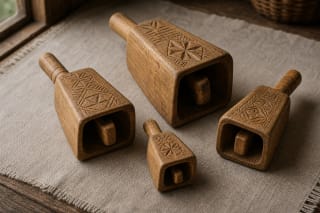
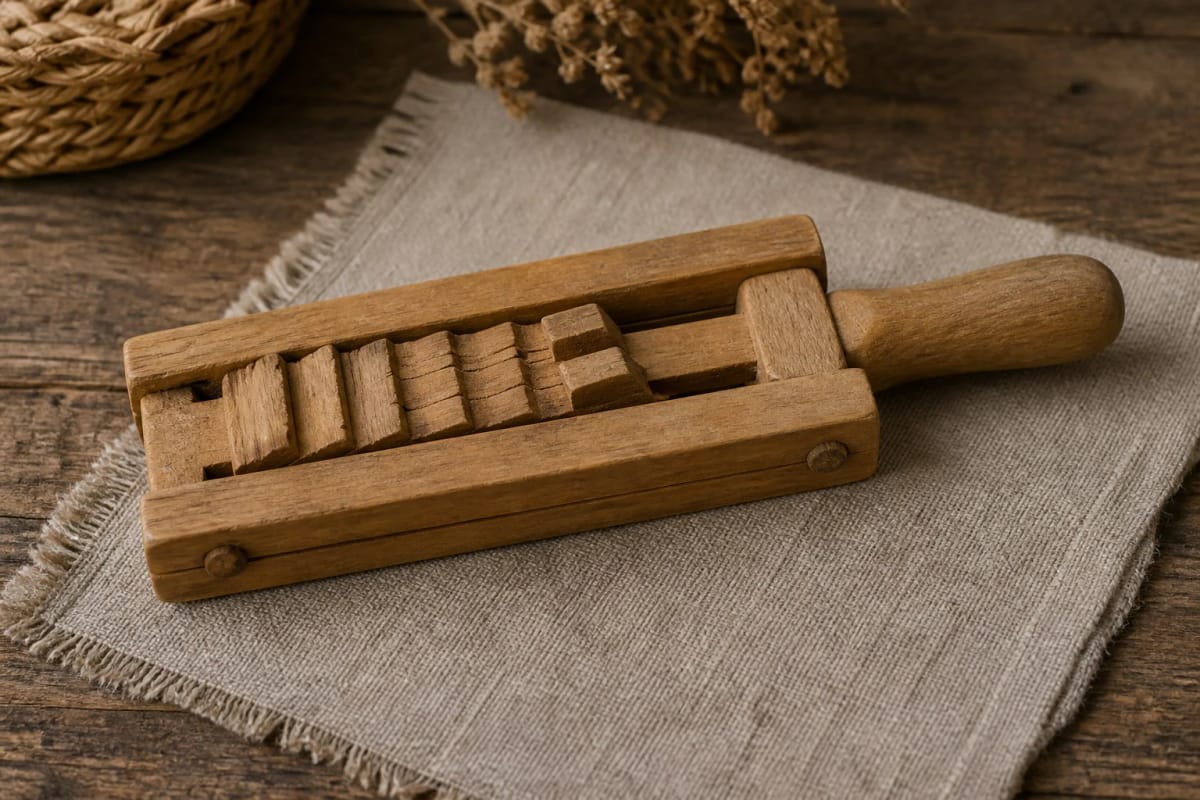
Kleketas consists of a board about 20 cm long and 10 cm wide with a handle in the middle and 1 or 2 wooden beaters attached at the top. When the handle is swung, the beaters strike the board. It is made from ash, maple, linden, spruce, or pine.
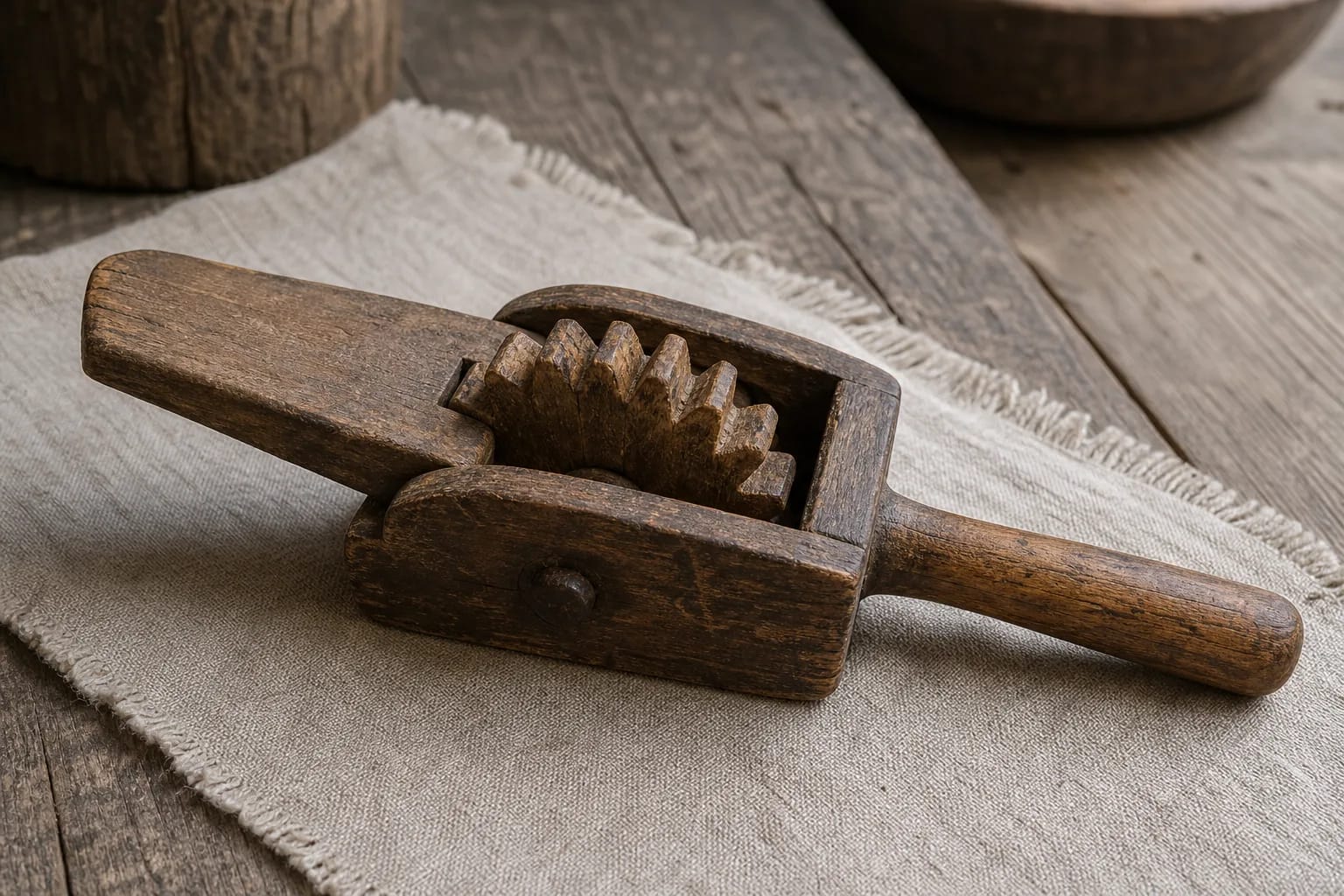
The sounds are short, dry, and easy to recognize. The speed and rhythm of striking create a characteristic clacking that can warn people or add rhythmic color to group music.
History and tradition
Until the first half of the twentieth century, kleketas was used by herdsmen, night watchmen, and children; during winter and spring calendar festivals, musicians, masked performers, and lalauninkai also used it. Tradition links kleketas with rituals meant to drive away evil supernatural beings.
It is still used in hunting as a sound tool for beaters and in Catholic churches during Lent instead of bells and small handbells. After its ritual sound meaning faded, it also became an instrument of rhythmic color.
Kleketas today
Since the second half of the twentieth century, kleketas has been used in folklore ensembles and village bands, adding rhythmic color to group music. Many peoples have similar instruments.
Kleketas shows how a ritual signal object can survive as a musical instrument: the same clacking that once drove evil away now enters the rhythm.