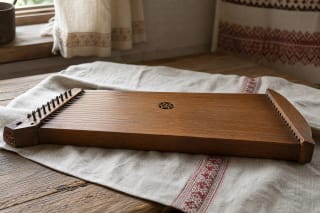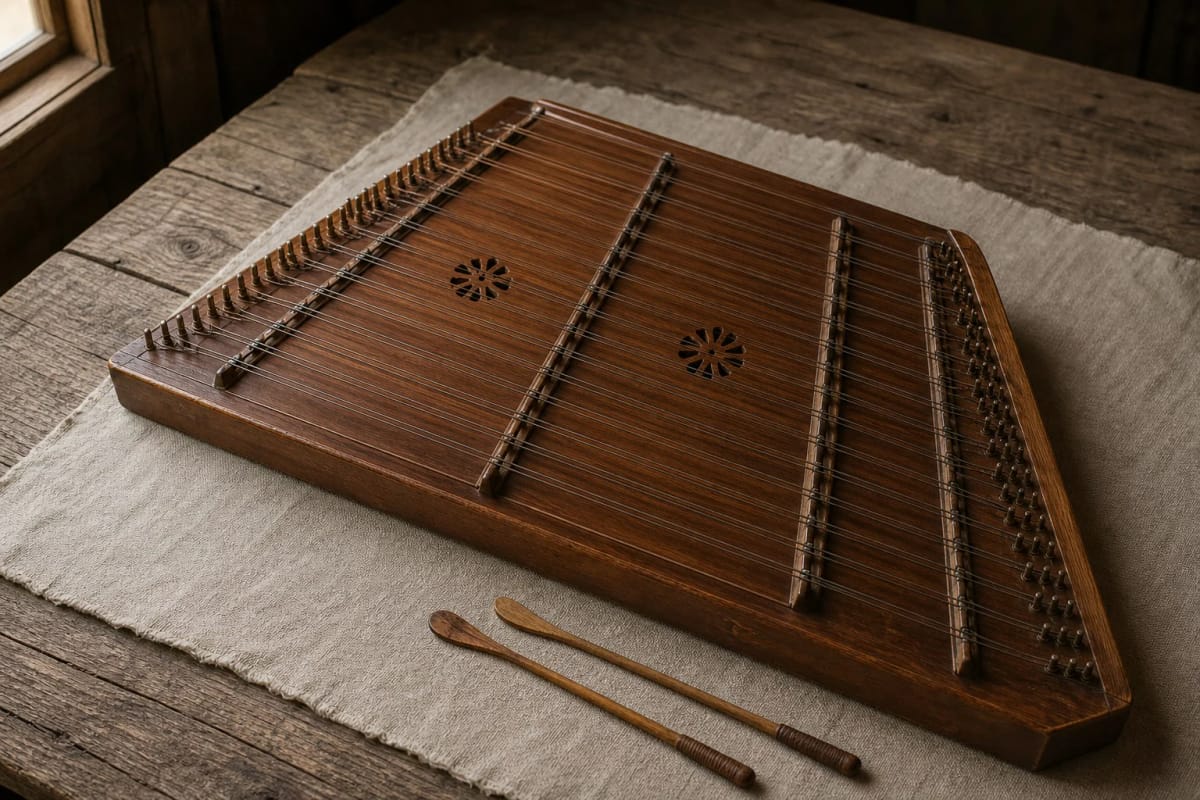
- Instrument family
- String instruments
- Type
- Struck chordophone, small hammers, Dzūkija, eastern Lithuania, village bands, weddings
- Source status
- later tradition
cimbalai
What are cimbolai?
Cimbolai are a struck string musical instrument, a chordophone whose strings are not plucked but struck with small hammers. They were one of the main instruments of the old Lithuanian village band, able to lead melody and support harmony.
In Lithuania they are most often played in Dzūkija and eastern Lithuania, regions where a strong kanklės tradition was not recorded. Cimbolai are therefore close to kanklės as string music, but they form a distinct local practice.
Construction and sound
The body is wooden, glued, and trapezoid: 900-1100 mm long, 400-600 mm wide, and 40-60 mm high. Along it are stretched 12-33 metal single, double, or even triple strings, usually tuned to a major diatonic scale.
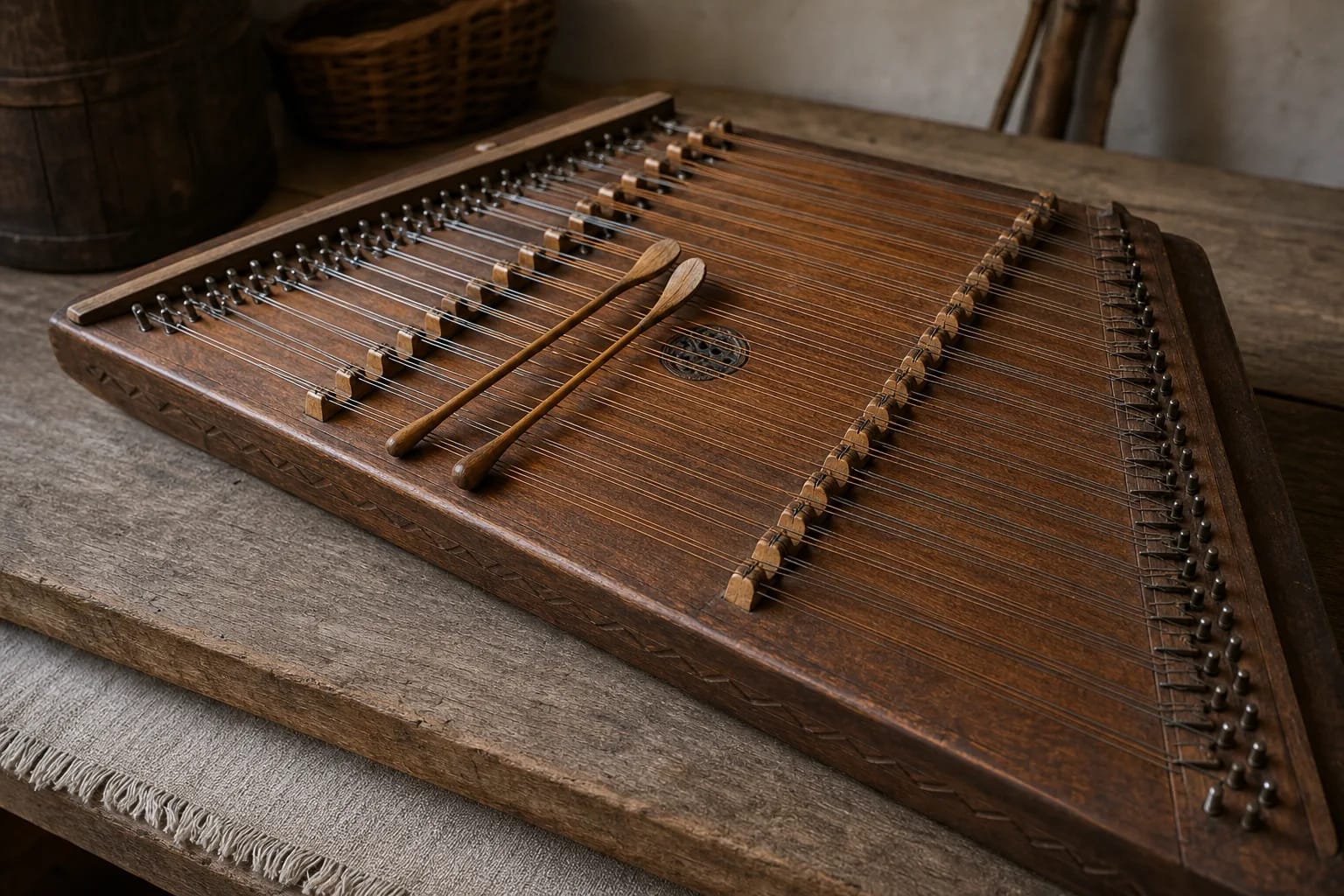
The strings are struck with two wooden hammers padded with leather or felt, giving a sharp, ringing, rhythmic sound. Because of this technique, cimbolai sound more energetic and band-like than finger-plucked kanklės.
History and tradition
Cimbolai are thought to have originated in eastern lands and reached Lithuania in the Middle Ages through the Slavic lands of the Grand Duchy of Lithuania. They are first mentioned in Jonas Bretkūnas's Bible translation in 1579-1590 and were used in southeastern and eastern Lithuania, Užnemunė, Lithuania Minor, and southern Žemaitija.
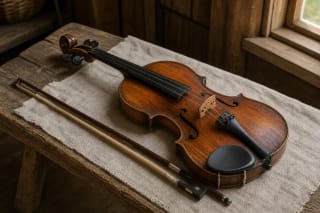
They were played at evening gatherings, weddings, and ritual processions: Easter lalauninkai and Christmas carolers. In village bands they were often paired with fiddles to create a dense, dance-friendly sound.
Cimbolai today
Today cimbolai are played by folklore ensembles and occasionally by village musicians. In Dzūkija and eastern Lithuania they remain a living sign of the old village-band sound.
They belong to the broader Central and Eastern European family of hammered dulcimers and sounding boxes, helping show how different Lithuanian regions chose different paths for string music: some kanklės, others cimbolai.