- Instrument family
- Wind instruments
- Type
- Closed multi-pipe flute, sutartinės, Aukštaitija, men's group blowing
- Source status
- well attested
skudutės, skurdučiai, tūteklės
What are skudučiai?
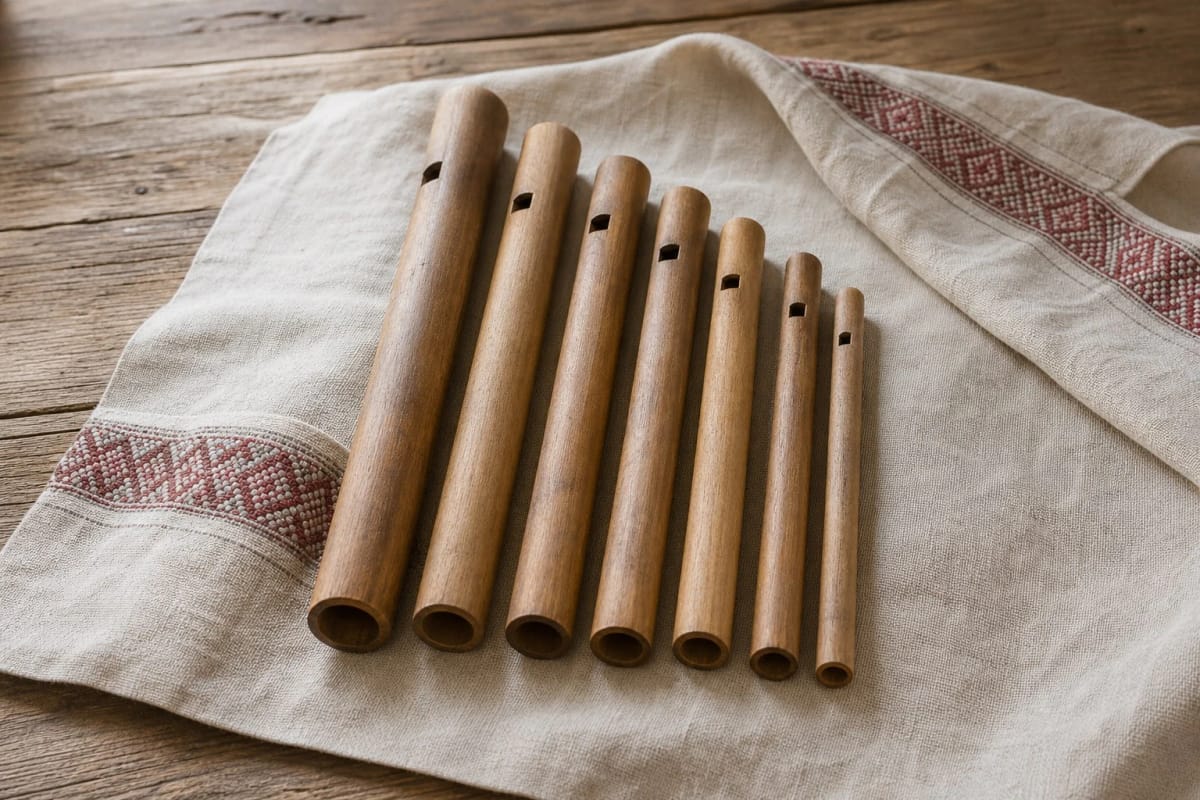
Skudučiai are a whistling aerophone, a closed multi-pipe flute. A set contains 5-8 pipes of different sizes, and each pipe produces only one fixed pitch. It is one of the oldest and most popular Lithuanian wind instruments.
The key point is that traditional Lithuanian skudučiai were not tied together; separate pipes were played by a group. Melody and polyphonic texture appear only when players divide parts precisely, making skudučiavimas a collective art close to sutartinės.
Construction and sound
The pipes are 8-20 cm long and 1-3 cm in diameter. They are made from ash, alder buckthorn, alder, willow, willow or linden bark, or hollow plant stems such as cow parsley, ground elder, and reed. The upper end is cut at two opposite angles; the lower end is closed by the stem node or a wooden bottom.
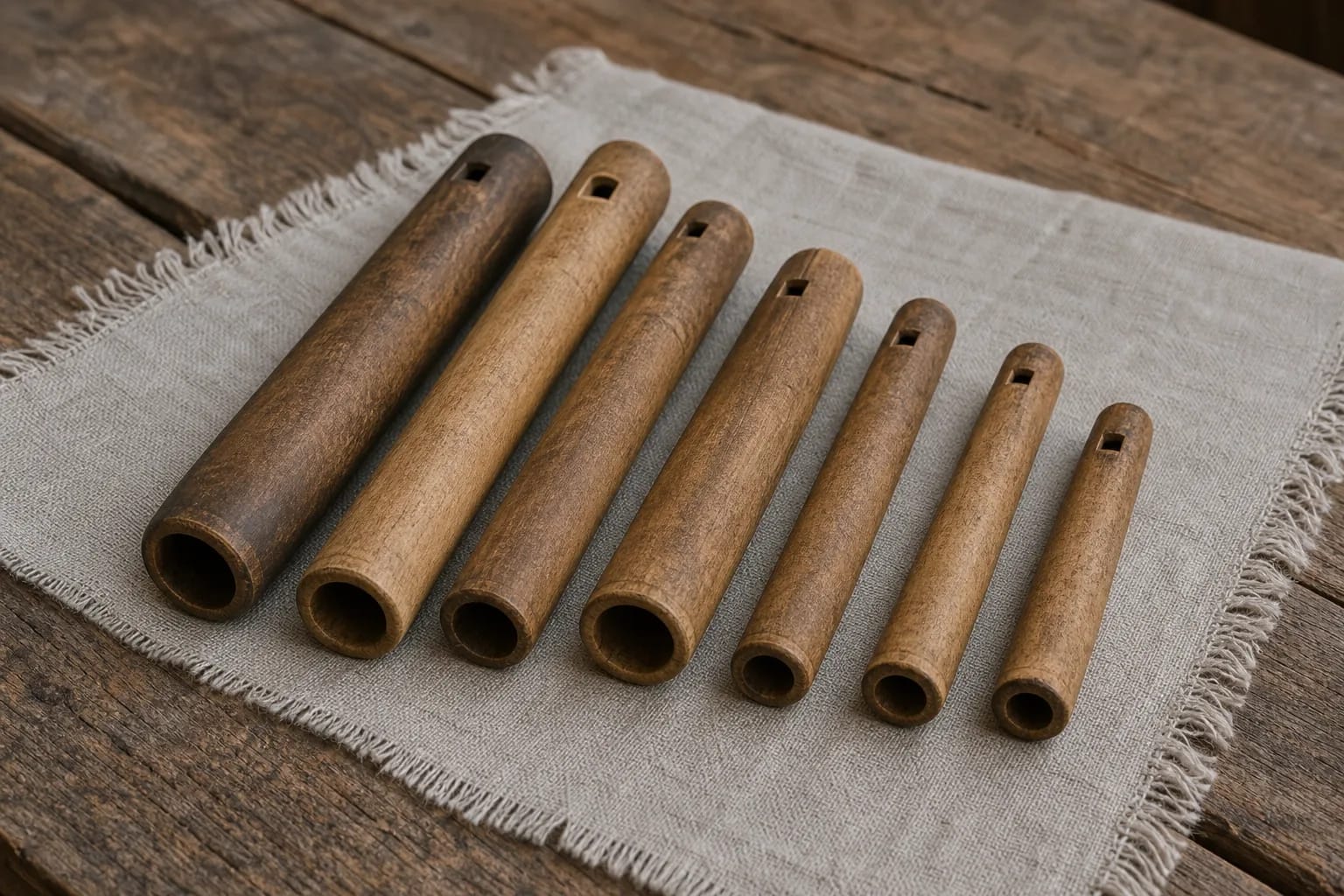
Each pipe has its own name, rhythm formulas, and mnemonic sound words. Skudučiai are tuned to the scale of the chosen sutartinė, traditionally according to the proportions of the fingers of the hand; scales are usually diatonic, sometimes anhemitonic. The sound is short, bright, and ringing, and wooden pipes were moistened with beer or water so they sounded better.
History and tradition
Skudučiai, called tūteklės, are mentioned in the appendix to Jonas Bretkūnas's Bible translation of 1579-1590. From old times to the first half of the twentieth century in northeastern Lithuania, groups of skudučiai players mostly performed traditional instrumental and vocal sutartinės, sometimes newer sutartinės and dances.
In older times, mostly men played skudučiai: in summer they traveled on foot from villages to the town market while playing sutartinės, and in winter they played during evening gatherings. In interwar Lithuania, skudučiai became popular in Aukštaitian schools; repertoire and method changed as popular music and marches were played and pipes began to be tied in groups of 2-3.
Skudučiai today
From 1973, Algirdas Karaška reconstructed ensemble and museum skudučiai from the hollow stems of the plant Angelica sylvestris (Lithuanian: miškinis skudutis). In the 1920s A. Liepus modified skudučiai, and between 1930 and 1955 broader chromatic and almost diatonic sets became established for six players. Since 1973, schools have also used plastic skudučiai designed by I. Petrošius.
Since 1950, skudučiai have been played at Lithuanian song festivals, where 500-1200 players perform at once. They remain one of the clearest symbols of Lithuanian group blowing in folklore ensembles, music education, and new ethno-music projects.