- Instrument family
- Wind instruments
- Type
- Reed bag aerophone, drone, eastern Lithuania, Labanoro dūda, itinerant musicians
- Source status
- well attested
Labanoro dūda, kūlinė su ūku
What is dūdmaišis?
Dūdmaišis is a reed bag aerophone, more complex than simple shepherd pipes, because air is stored in a bag. In Lithuania it is also called Labanoro dūda or kūlinė su ūku and is especially linked with eastern Lithuanian music-making.
Its main feature is continuous sound with a drone. While the bag holds air, the melody is accompanied by a constant supporting tone, so one musician can fill an entire dance space.
Construction and sound
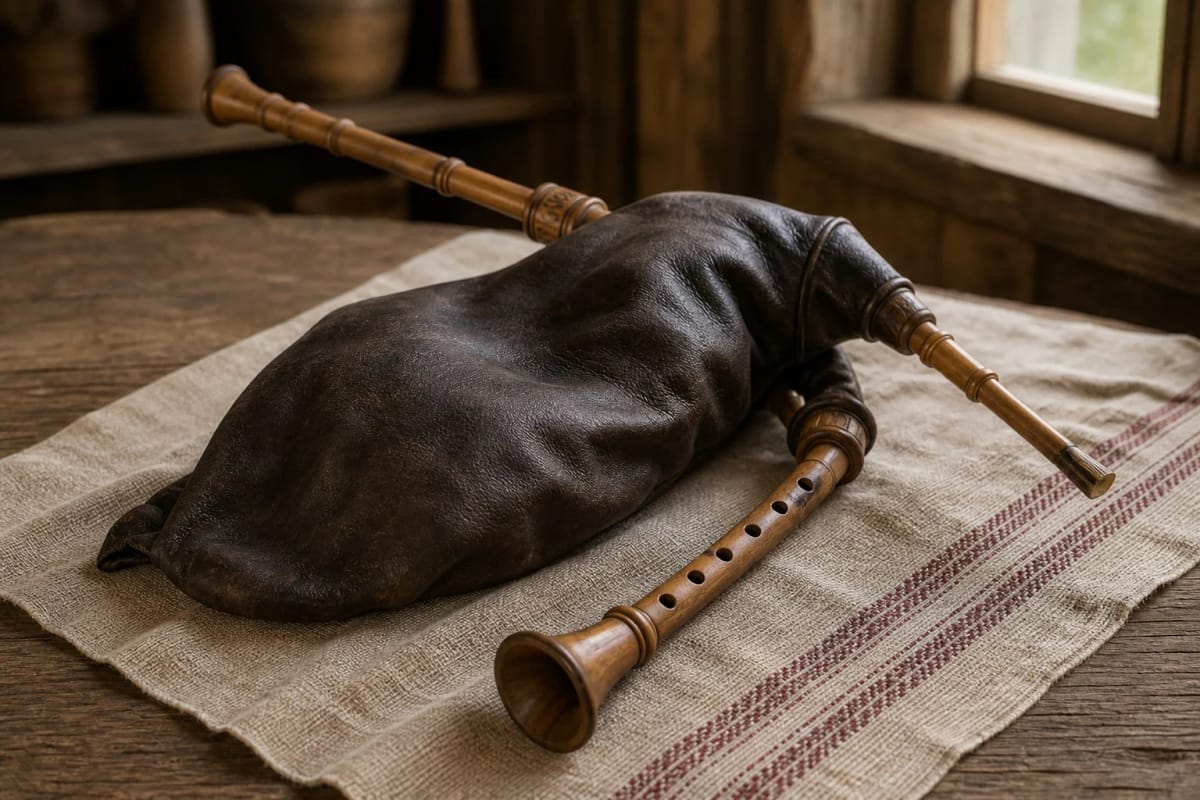
The instrument consists of a bag-shaped bellows sewn from animal skin, an approximately 200 mm blowpipe mounted in the bag, and pipes fitted at the bottom: one melodic pipe and 1 or 2 drone pipes. The musician blows air into the bag and presses it with the elbow to drive air into the pipes.
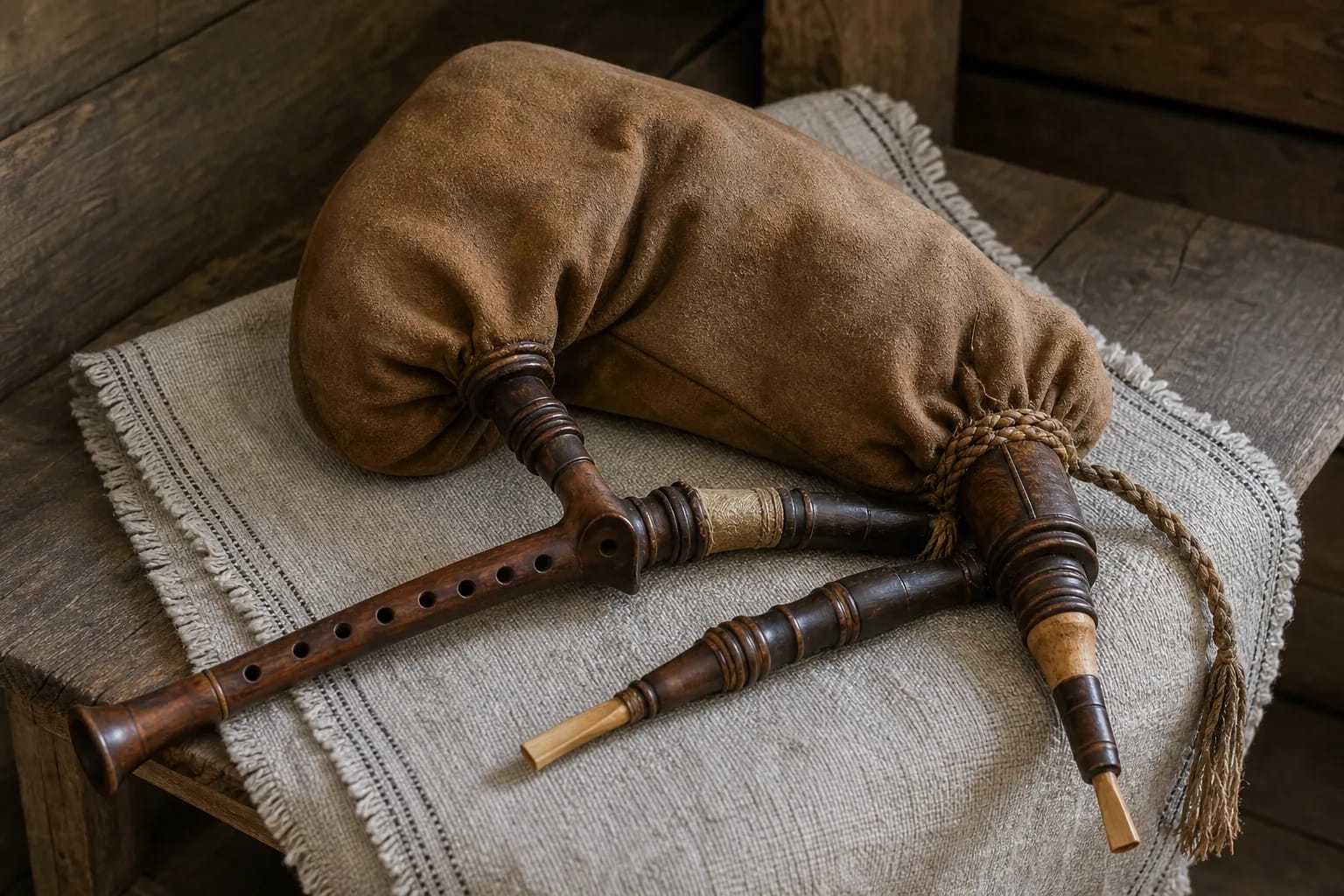
The holes of the melodic pipe are covered with both hands, while the drone pipe or pipes sustain a constant tone. The sound is piercing and far-carrying, with an uninterrupted humming base that gives the music a firm dance foundation.
History and tradition
Dūdmaišis spread in Lithuania from the first half of the sixteenth century. It is mentioned in the 1565 decrees of the Vilnius Seimas and in Jonas Bretkūnas's Bible translation of 1579-1590. It was used mostly in Lithuania Minor and eastern Lithuania, and survived in eastern Aukštaitija until the mid-twentieth century.
It was played solo or with other instruments by bear leaders, beggars, raftmen floating timber, and itinerant musicians. They played marches and dances and accompanied hymns and songs. Sources also mention professional musicians who led trained bears that danced to bagpipe music, and gatherings of bagpipers said to include up to 200 musicians.
Dūdmaišis today
Since the second half of the twentieth century, a reconstructed traditional dūdmaišis has been used in folk music ensembles; later makers include J. Bugailiškis. The name Labanoro dūda has become a symbol of the Lithuanian bagpipe and living ethno-music.
Dūdmaišis belongs to the broad European and world family of bagpipes. It was used in antiquity, spread in the Middle Ages as a shepherd and peasant instrument, and in Scotland even became military. The Lithuanian branch has its own regional context, repertoire, and place in the country's music history.