- Instrument family
- Other instruments
- Type
- Shaken idiophone, toy, rhythm, children, folklore ensembles
- Source status
- well attested
barškalas, žvangutis
What is barškutis?
Barškutis is a folk music instrument, a shaken idiophone, and also a toy. Its sound is made by rattling objects placed inside the body or attached outside it, so it is one of the simplest and oldest ways to make rhythm.
Rattles have been used by many peoples since ancient times. The simplest are dried gourds or pods with seeds, but Lithuanian tradition developed several distinctive barškutis forms.
Construction and sound
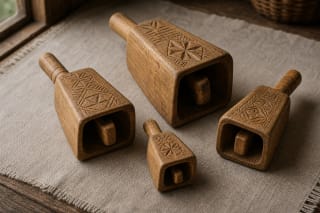
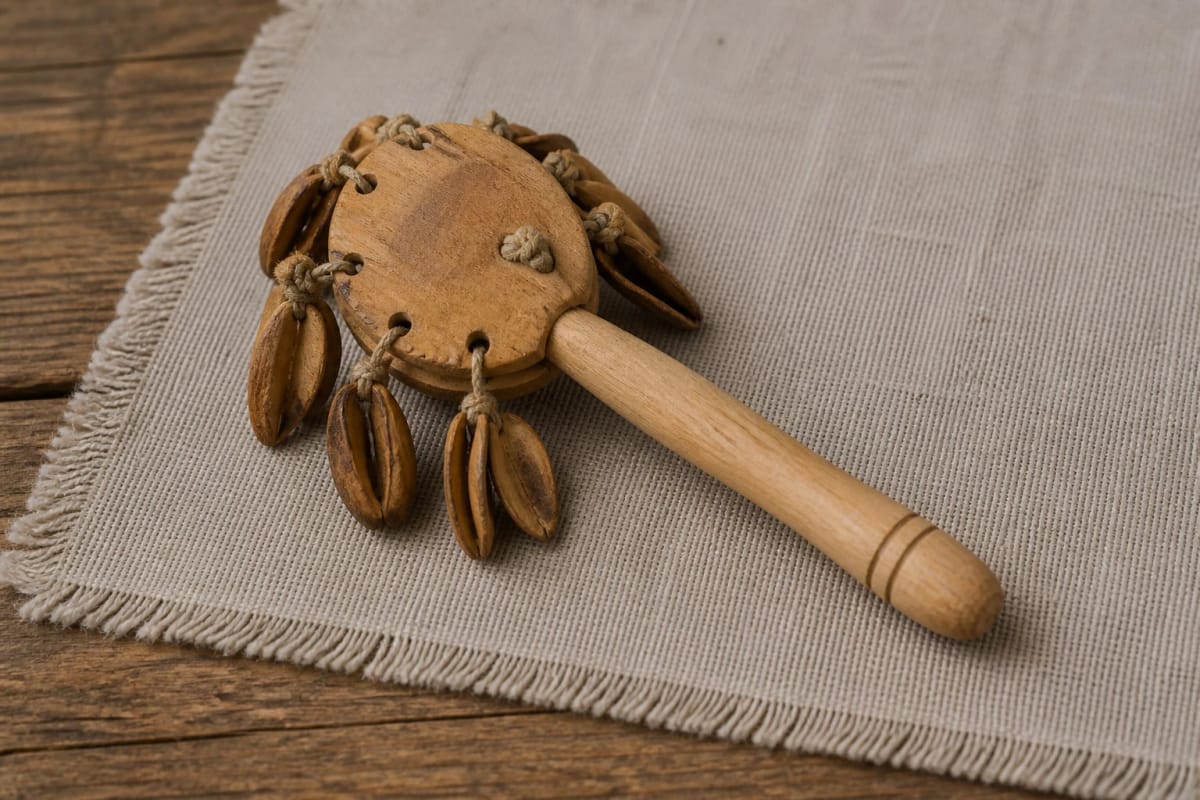
Lithuanian barškučiai appear in several forms: an inflated dried animal bladder fixed to a forked stick; a bird esophagus with its end wrapped in thread; a hollow fired-clay, loam, straw-woven, or wicker ball with pebbles or peas inside; and versions assembled from small wooden pieces.
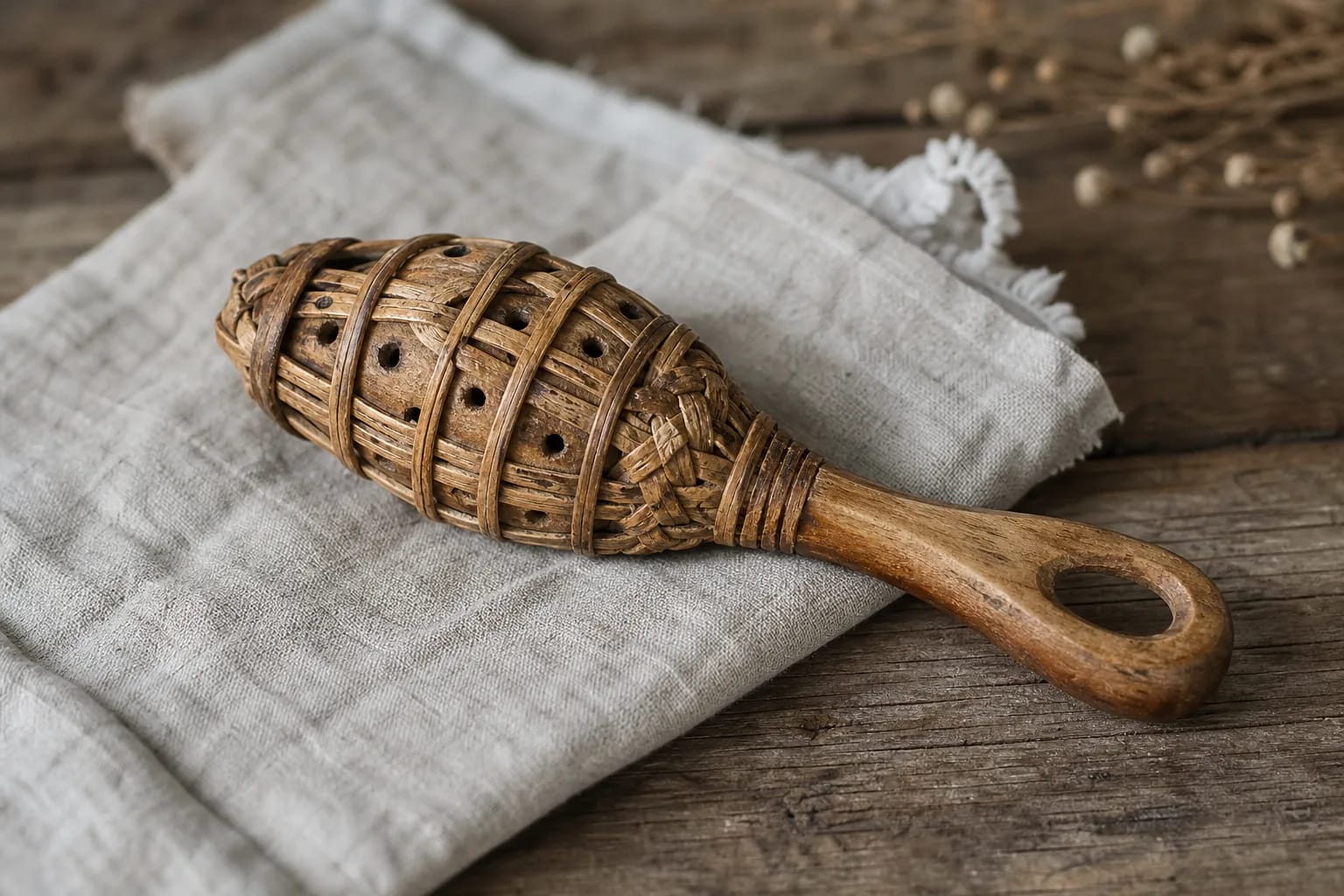
Elsewhere, rattles are also made from animal skin, horn, ivory, turtle shell, wood, clay, or metal such as brass. The sound is small, lively, and rhythmic; it may be gentle or sharper depending on the material and the rattling parts.
History and tradition
In Lithuania, barškučiai have been made since old times. The tradition of rattling instruments connects children's play, rhythm, and ensemble color, while the idea of the rattle itself reaches into deep pre-musical roots of sound and movement.
Like other small idiophones, barškutis often lived as a homemade object: a clay or woven ball with pebbles could be both a toy and a first lesson in rhythm.
Barškutis today
Since the mid-twentieth century, factory-made plastic rattles have become common, but folk artisans still make traditional barškučiai and folklore ensembles use them. In education, barškutis helps children join rhythmic music-making.
Barškutis shows that even the simplest object can become a musical instrument: a dried bladder, a clay ball, or a handful of pebbles. That makes it useful for understanding the place of idiophones in Lithuanian sound culture.