
- Instrument family
- Wind instruments
- Type
- Lip-blown horns, signals, herdsmen, hunting, sutartinės blowing
- Source status
- well attested
wooden horns, animal horns
What are ragai?
Ragai are lip-blown aerophones, usually signal instruments with a wide bore and conical curved tube. They produce only a few natural-series tones, so by nature they serve sound communication more than complex melody.
At first ragai were made from animal horns; later they were made from wood or metal. In Lithuanian tradition they stand between music and signal: in some places they are tools of the herdsman or hunter, in others a tuned set of wooden horns for sutartinės.
Construction and sound
A natural animal horn already has a curve and bell shape, making it suitable for blowing. Wooden horns are carved or split and tightened again, often wrapped in birch bark to prevent air leakage. Later, finger holes and, in orchestral development, valves were added to expand the sound.
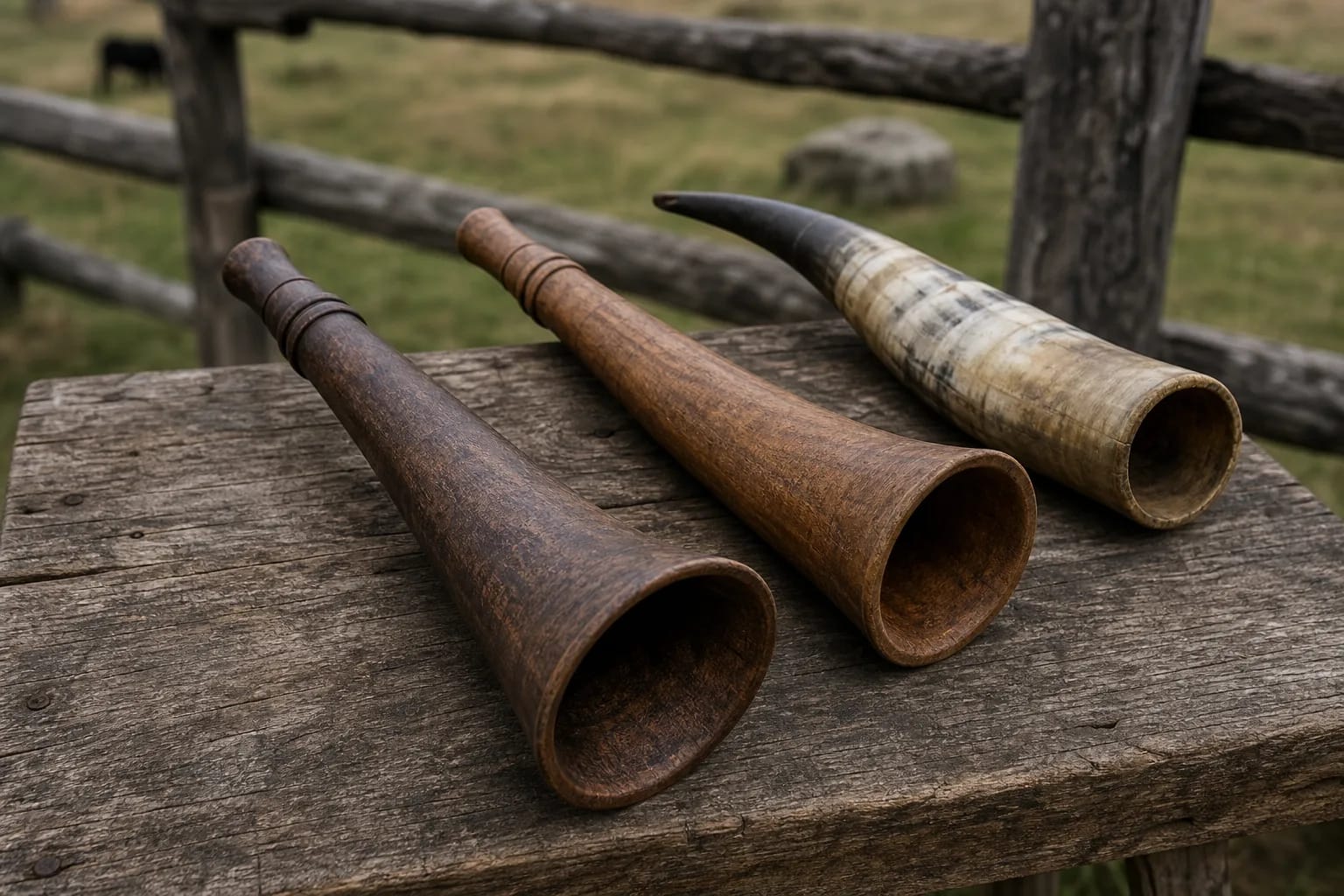
The sound is strong, open, and distant, meant for fields and open space. One horn gives only a few tones, but in northeastern Lithuania a group of men used a tuned set of horns to create polyphony close to sutartinės, much like skudučiai.
History and tradition
Ragai were the main instruments of herdsmen. Each village knew and recognized its herdsman's horn signal system, which announced driving the herd out or back and called shepherds together in danger. Hunters also blew signals on horns.
In northeastern Lithuania, men played sutartinės on tuned wooden horns wrapped in birch bark; the tradition also recorded two-part sutartinės performed on daudytės. Ragai were traditionally blown by men on summer evenings near forests and lakes, where informants said they sounded best.
Ragai today
Today ragai are reconstructed and used in folklore programs, old-instrument education, ceremonial performances, and experimental ethno-music. Horn ensembles let listeners hear how Lithuanian polyphony can grow from a few simple tones.
Academic brass instruments, such as the French horn, historically developed from hunting horns. Ragai therefore matter not only as evidence of village sound communication but also as part of the broader history of wind instruments.