- Instrument family
- String instruments
- Type
- Simple bass string instrument, pig bladder, village bands, rhythmic accompaniment
- Source status
- well attested
pūslė, bumbas
What is pūslinė?
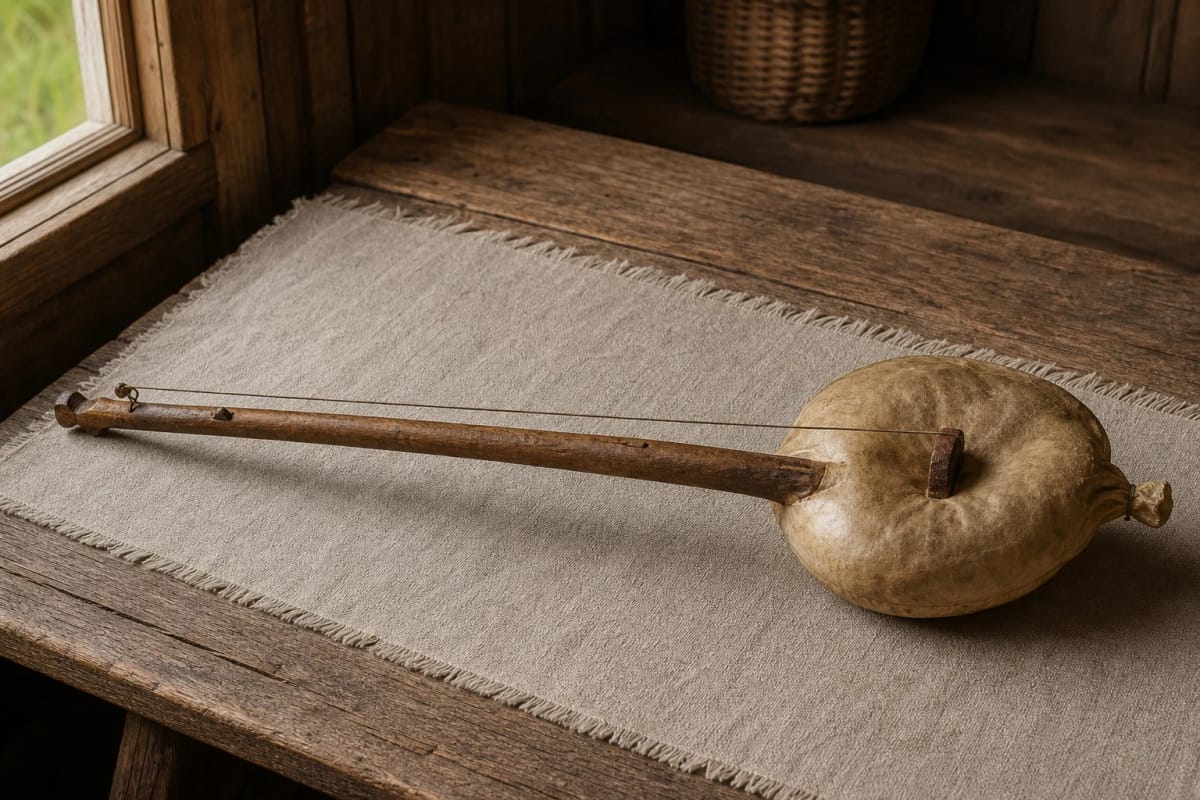
Pūslinė is a folk string instrument used to accompany village bands of various lineups. It is a simple bass instrument requiring minimal materials, made from everyday household items.
It reveals folk ingenuity: a plain stick, a dried pig bladder, and a few strings become a working bass. Its value lies not in complexity but in its clear rhythmic and harmonic function.
Construction and sound
Pūslinė is made from a wooden stick, an inflated dried pig bladder, and gut or cord. It may have 1-3 strings resting on a support called the kumelė; wooden pegs are used for tuning.
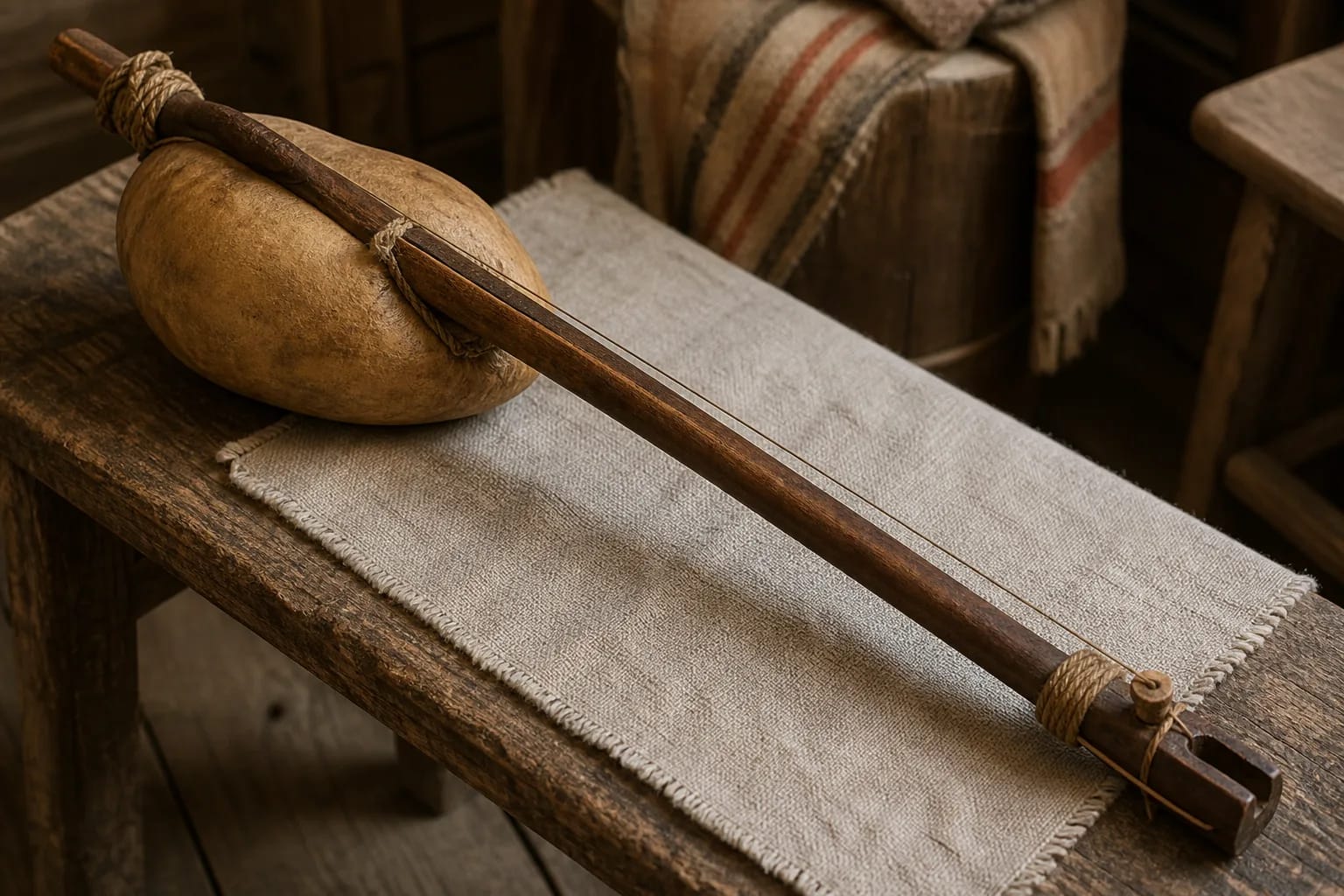
The bladder resonator gives a dull, low, humming sound. It is not a subtle instrument; its purpose is simple bass and rhythmic accompaniment that emphasizes the dance pulse in the ensemble.
History and tradition
Pūslinė was one of the cheapest and simplest bass tools for a village band, so it could be played where a more expensive basetlė was not available. In the band it held the low sound while fiddle or other instruments led the melody.
It was born from farm household materials: pig bladder, stick, and cord, all made at home. Pūslinė shows that a bass foundation mattered in Lithuanian village music even where more complex string instruments were lacking.
Pūslinė today
Today pūslinė is reconstructed in folklore ensembles and education as an example of a simple domestic bass instrument. It helps show how varied the Lithuanian village band could be.
This page matters because small homemade instruments often disappear from short lists, although in real village music they gave the ensemble bass and rhythm.