- Instrument family
- Wind instruments
- Type
- Whistling aerophone, natural flute without finger holes, northeastern Lithuania, improvisations
- Source status
- regional
dūda, vamzdelis
What is švilpa?
Švilpa is a Lithuanian whistling or whistle aerophone: a long natural flute without finger holes. It has no usual tone holes, so the whole melody is produced by changing blowing strength and covering the tube end. Ethnomusicologists consider it a prototype of the modern transverse flute.
Players usually made švilpa themselves, so it was homemade but skilled. Traditionally it is a solo instrument for improvised melodies, songs, and dances, though it was sometimes played in ensembles with other instruments.
Construction and sound
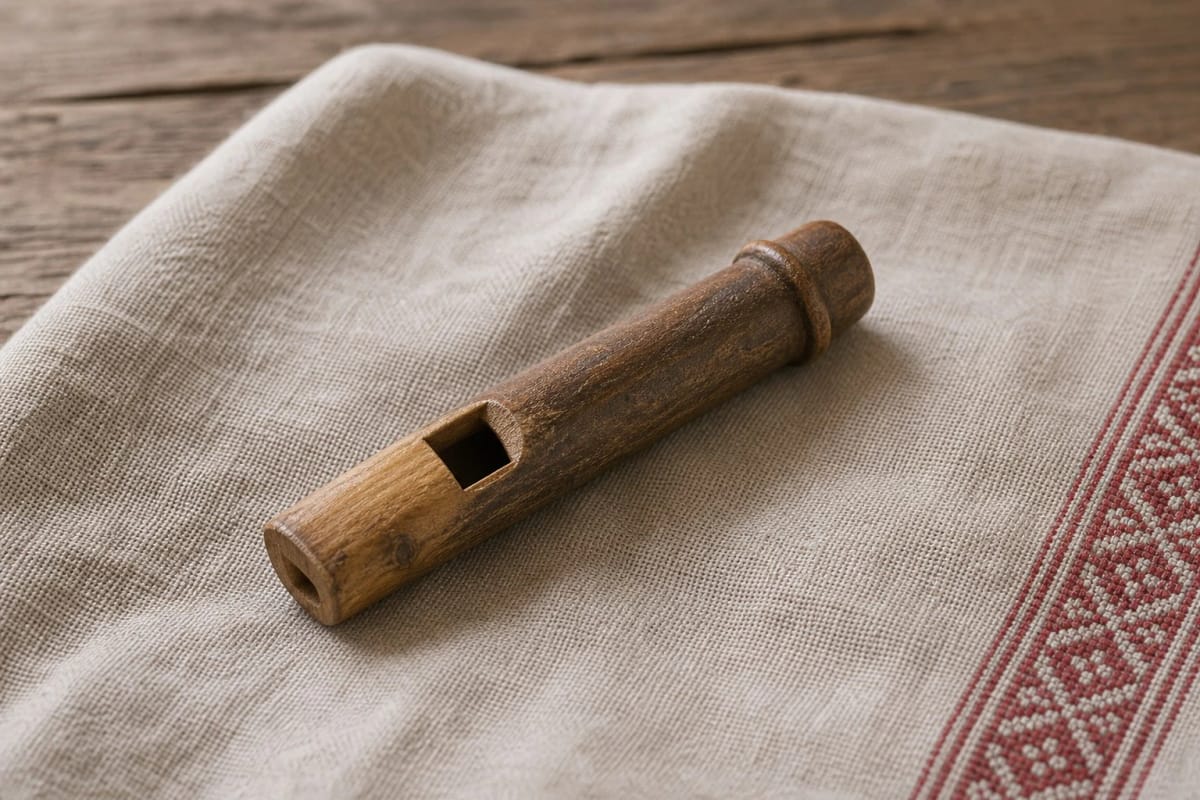
A traditional švilpa is about 60-90 cm long and 1.5-3 cm in diameter. A cylindrical švilpa is made from ash or maple wood or metal; a slightly conical one is made from goat willow, willow, or aspen bark, sometimes assembled from several tubes. The thick end is stopped, and a blow hole is cut near it.
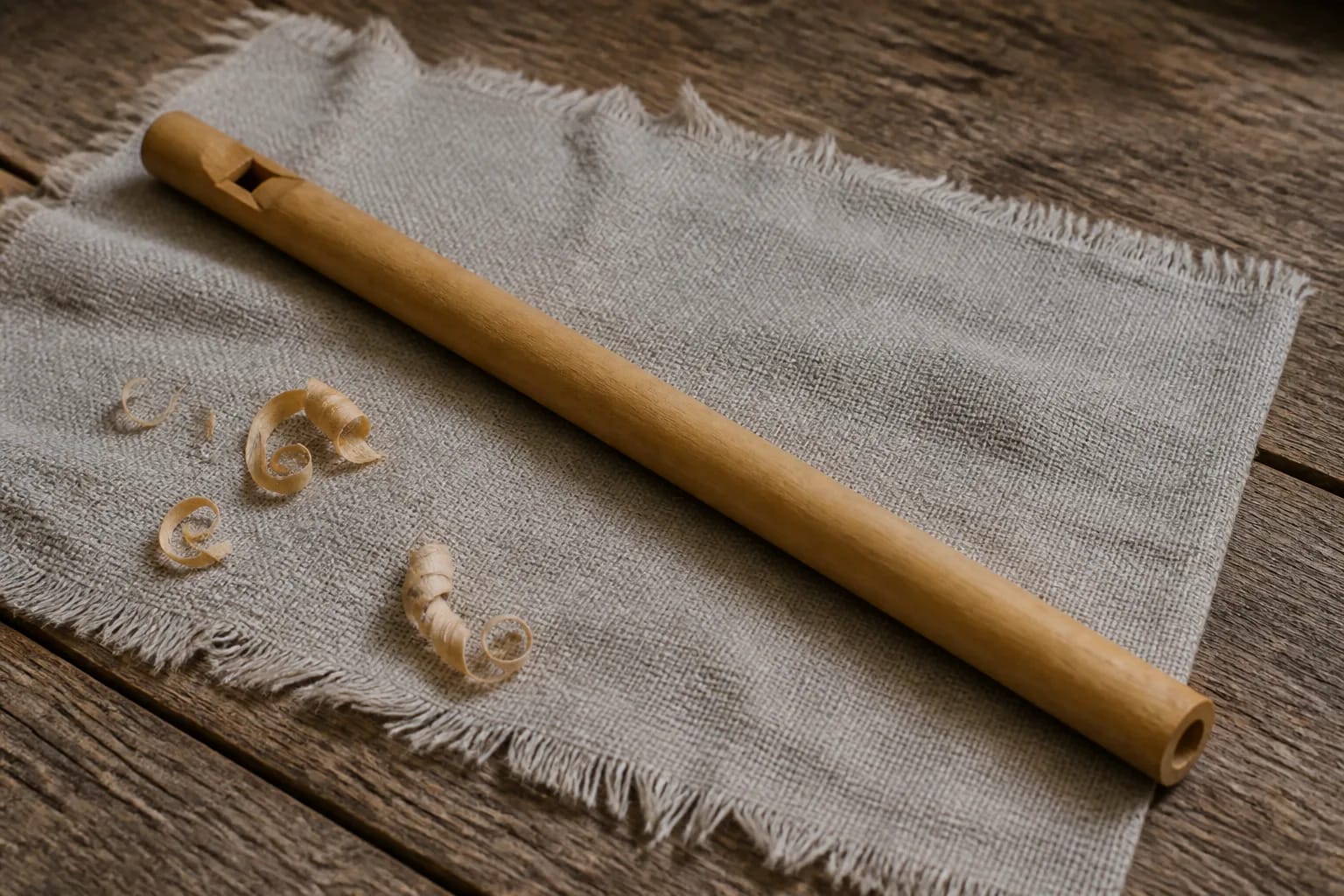
Švilpa produces up to ten natural-scale tones. Pitch changes by overblowing, and when the lower opening is fully or partly covered with a finger, the same segment is obtained a second or larger interval higher. Lower tones are quiet and soft; higher tones are louder and sharper.
History and tradition
From old times until the mid-twentieth century, švilpa was used in northeastern Lithuania. It was played solo, sometimes in ensembles, for improvisations, folk song, talalinė, and dance melodies. Its core is not a complex mechanism but the player's ear and breath control.
Noted makers and players include Stasys Valackas (1834-1926) and E. Vadlūga (1902-after 1985). Through them, švilpa connects with the same Aukštaitian blowing culture that preserved skudučiai, daudytės, and ragai.
Švilpa today
From the 1970s, a new generation of makers began making švilpos: A. Karaška made skudučiai-stem and metal versions, E. Vyčinas made wood and bark versions, and E. Virbašius made wooden ones. Some folklore ensembles play them.
As a natural keyless flute, švilpa today is mainly relevant for reconstructing old northeastern Lithuanian solo music and showing how rich improvisation can grow from a simple wooden or bark tube.