- Instrument family
- Wind instruments
- Type
- Lip or reed horn aerophone, herdsmen, herding signals, melodies
- Source status
- well attested
goat horn, tirlitas
What is ožragis?
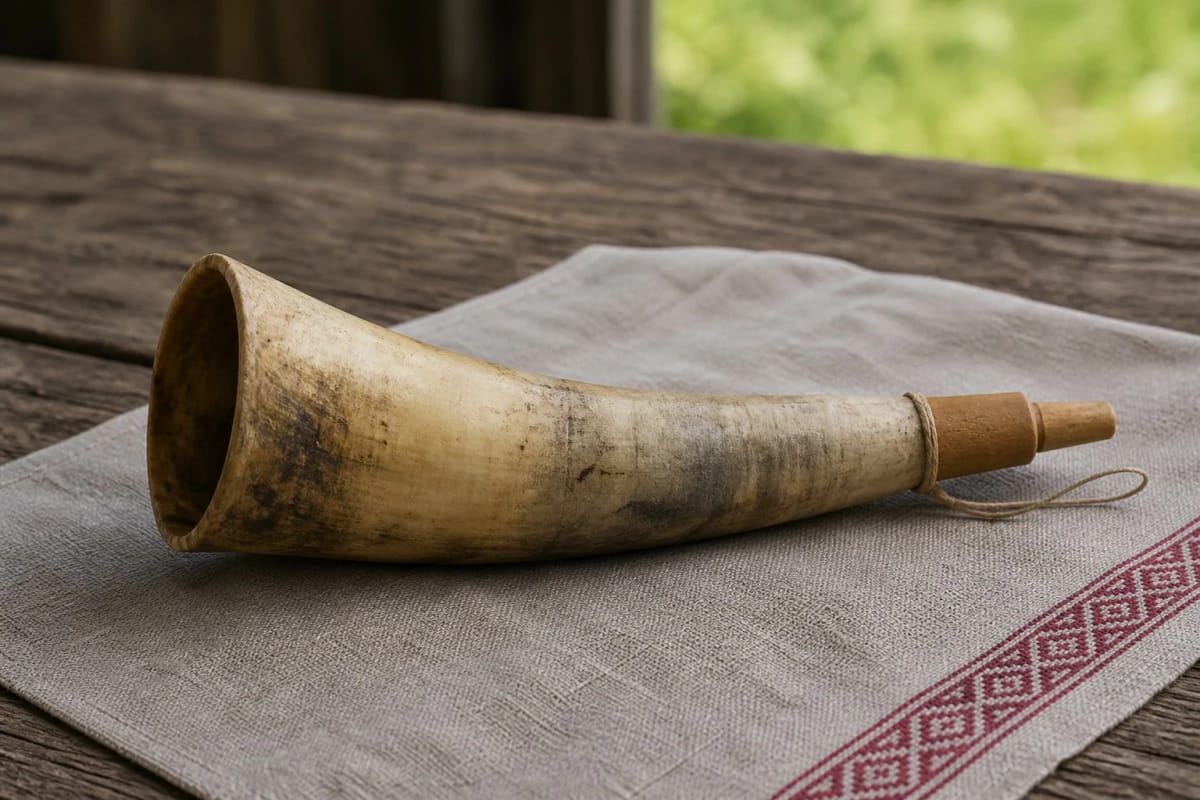
Ožragis, also called tirlitas, is a Lithuanian wind instrument made from a goat horn. Depending on construction, it may be a lip or reed aerophone. It shows how animal husbandry, shepherd work, and musical signaling meet in one object.
It is small but highly recognizable. It stands between a simple signal horn and a melodic pipe because, depending on the number of holes, it can give signals or play short melodies.
Construction and sound
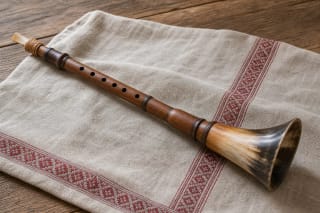
Ožragis is made from a hollow goat horn 20-50 cm long. At the narrow end a cup-shaped mouthpiece may be hollowed out, or the narrow end may be cut like a birbynė mouthpiece with a tied reed. It may have 2-5 finger holes or none.
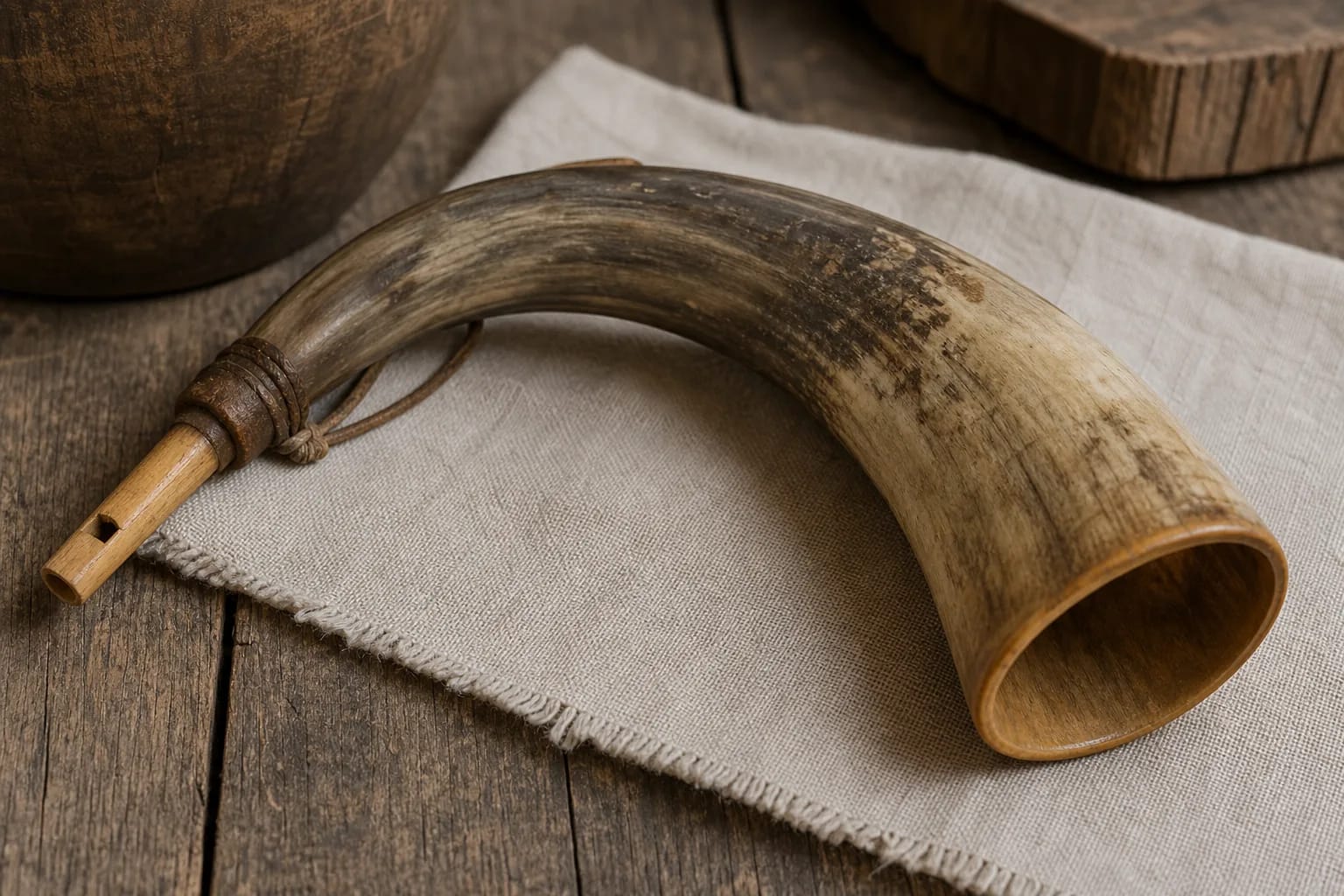
The sound is open, somewhat sharp, and easy to recognize. It is shorter than daudytė but well suited to signals and outdoor spaces. The reed ožragis sounds fuller, close to birbynė, while the lip version has a more direct horn tone.
History and tradition
From old times until the early twentieth century, ožragis was used throughout Lithuania, mostly by herdsmen and sometimes by village-band musicians. Solo players performed herding signals, tirliavimai, raliavimai, and marches; solo or in pairs, they played song, talalinė, and dance melodies, sometimes sutartinės.
Ožragis survives not only in ethnographic descriptions but also in photographs: a 1920s-1930s photo from the Kupiškis area shows a herdsman with ožragis. This shows how long the instrument remained in living shepherd culture.
Ožragis today
Since the second half of the twentieth century, ožragis has been used in folklore ensembles and Lithuanian folk-instrument orchestras. Since 1965, modified ožragiai with inserted mouthpieces have been made: lip versions 53-78 cm long and reed versions 28-36 cm long.
Many peoples have instruments similar to ožragis, so it helps show that horn wind instruments are old and widespread in pastoral cultures, with a distinctive Lithuanian sound and purpose.