- Instrument family
- String instruments
- Type
- Bass bowed chordophone, village bands, dance rhythm, Žemaitija
- Source status
- later tradition
bosas, boselis, basedla
What is basetlė?
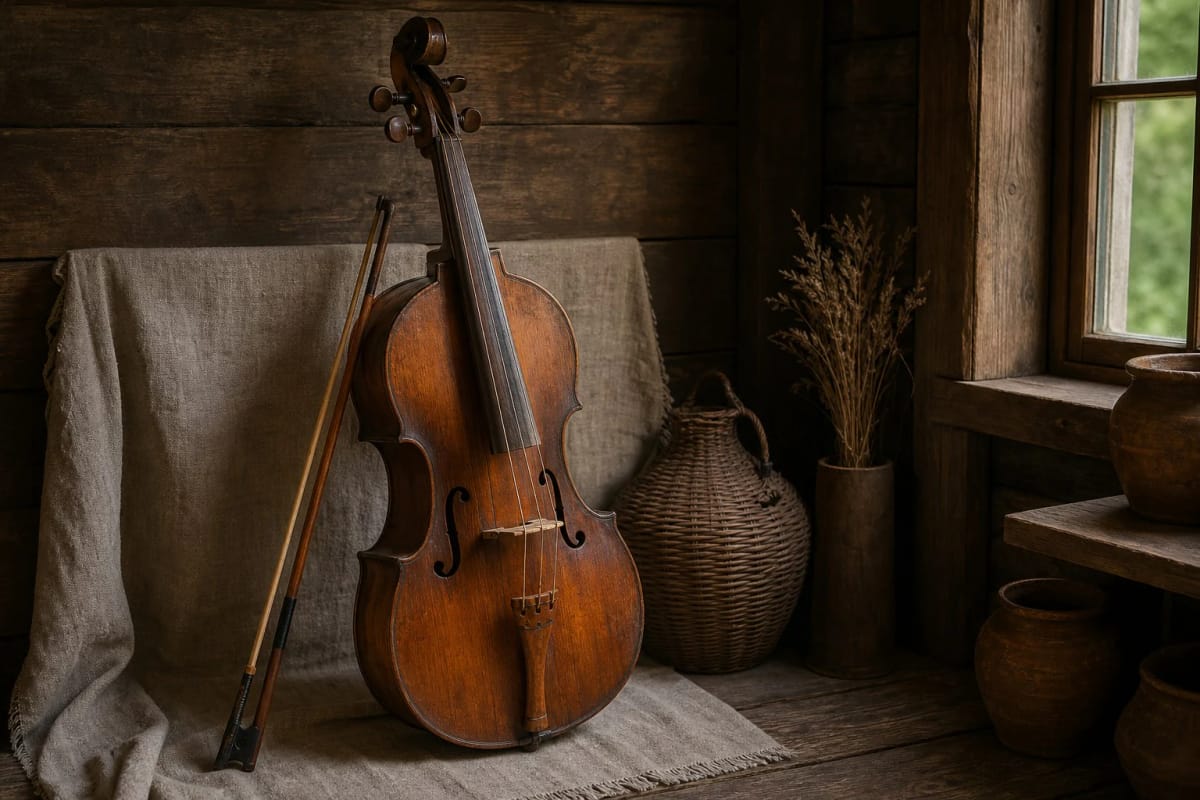
Basetlė, also called bosas, boselis, or basedla, is a bowed chordophone: a type of double bass or cello. In a Lithuanian village band it plays the bass parts, giving the ensemble its lowest and firmest voice.
Its role is the opposite of the fiddle's. If the fiddle leads the melody, basetlė holds the bass and rhythm. It is not mainly a solo instrument but an instrument that supports the ensemble.
Construction and sound
Basetlė has 2-4 gut or metal strings. Traditional strings were made from calf gut, while the bow used horsehair from the mane. Musicians often made the instrument themselves, so size and shape varied.
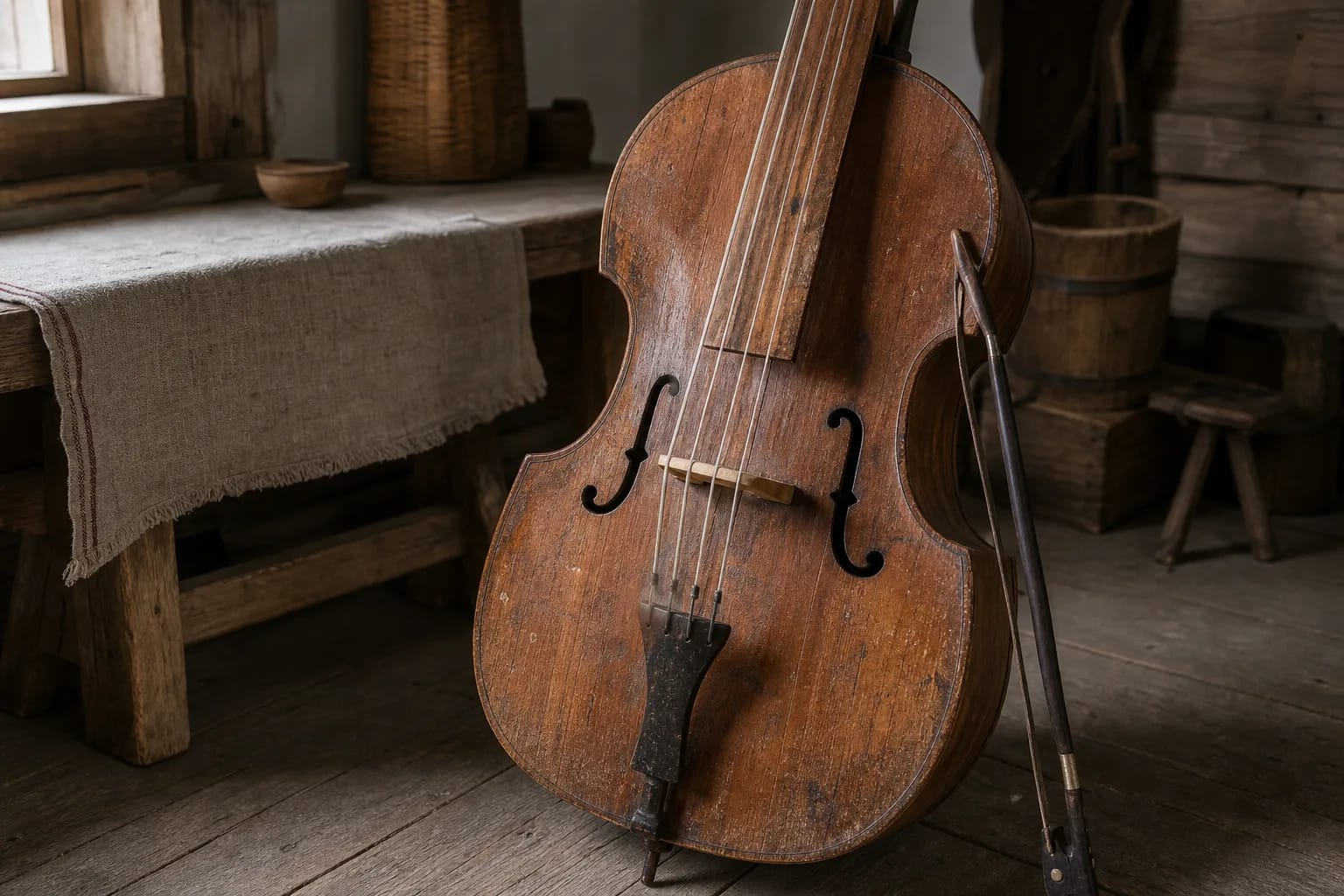
The sound is low, full, and rhythmic. Basetlė often plays simple bass notes that emphasize the dance pulse rather than a complex melody; its purpose is harmonic and rhythmic grounding.
History and tradition
In Lithuania, mostly in Žemaitija, basetlė spread from the eighteenth century. It is also used in neighboring countries such as Belarus, Ukraine, and Poland, so it belongs to a broader Central and Eastern European folk-bass tradition.
In a village band, basetlė is usually paired with the fiddle that leads the melody and with other accompanying instruments. For dances, weddings, and evening gatherings, it provides the low moving base that dancers can follow.
Basetlė today
Today basetlė is played in village bands and folklore ensembles, where it still performs the same bass function as in the older tradition. Because players often made their own instruments, each basetlė can have an individual character.
Basetlė helps explain the structure of a Lithuanian village band: a melody-leading fiddle, harmony-filling cimbolai or kanklės, and a bass-holding basetlė together form the classic rural ensemble sound.