- Instrument family
- Other instruments
- Type
- Shaken idiophone, wedding inviter, Užnemunė, Lithuania Minor, ritual magic
- Source status
- regional
kvieslys, maršelga
What is džingulis?
Džingulis, also called kvieslys, kvietka, or maršelga, is a Lithuanian shaken and struck idiophone. It is a less-known but revealing instrument because its purpose is directly connected with wedding customs.
It is not the melody leader of a village band. It works as a social and ritual sign, so its place is not mainly in dance music but in life-cycle customs, especially the invitation to a wedding.
Construction and sound
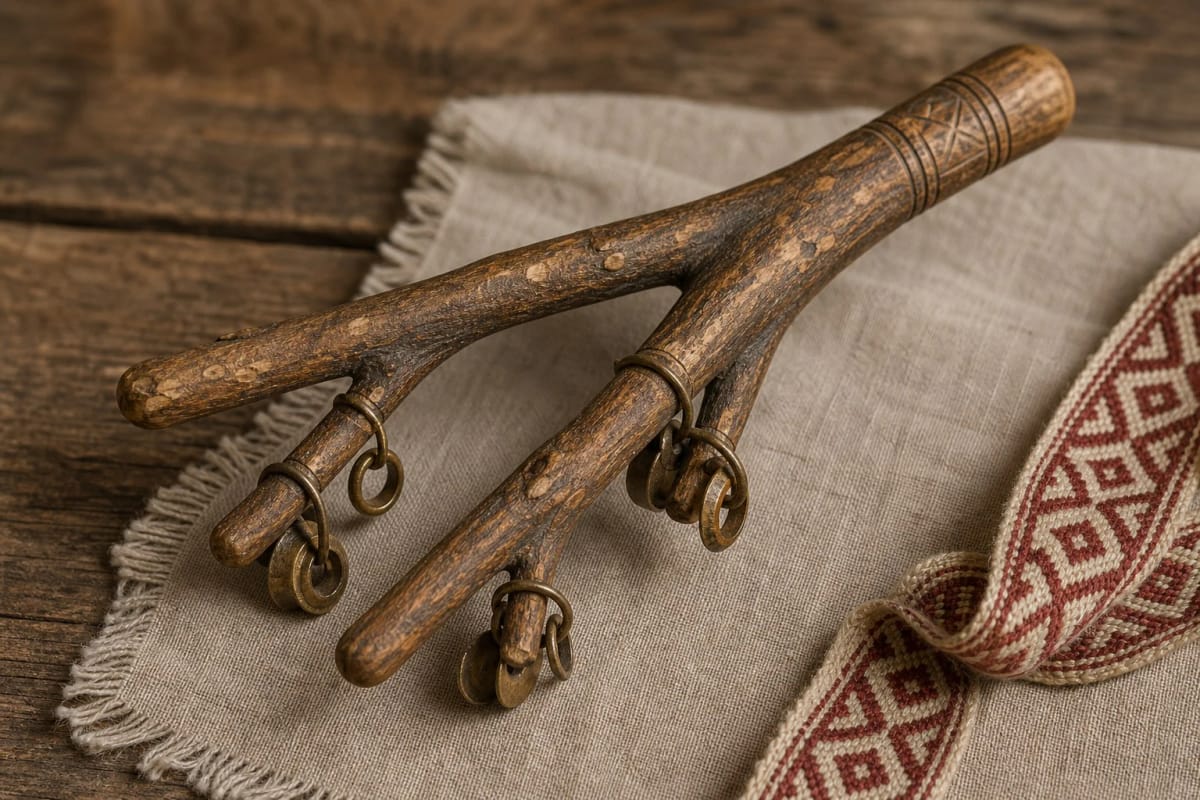
A traditional džingulis is a decorated one-, two-, or three-branched wooden staff with sounding elements. Its main feature is not complex melody but a recognizable jangling, buzzing signal.
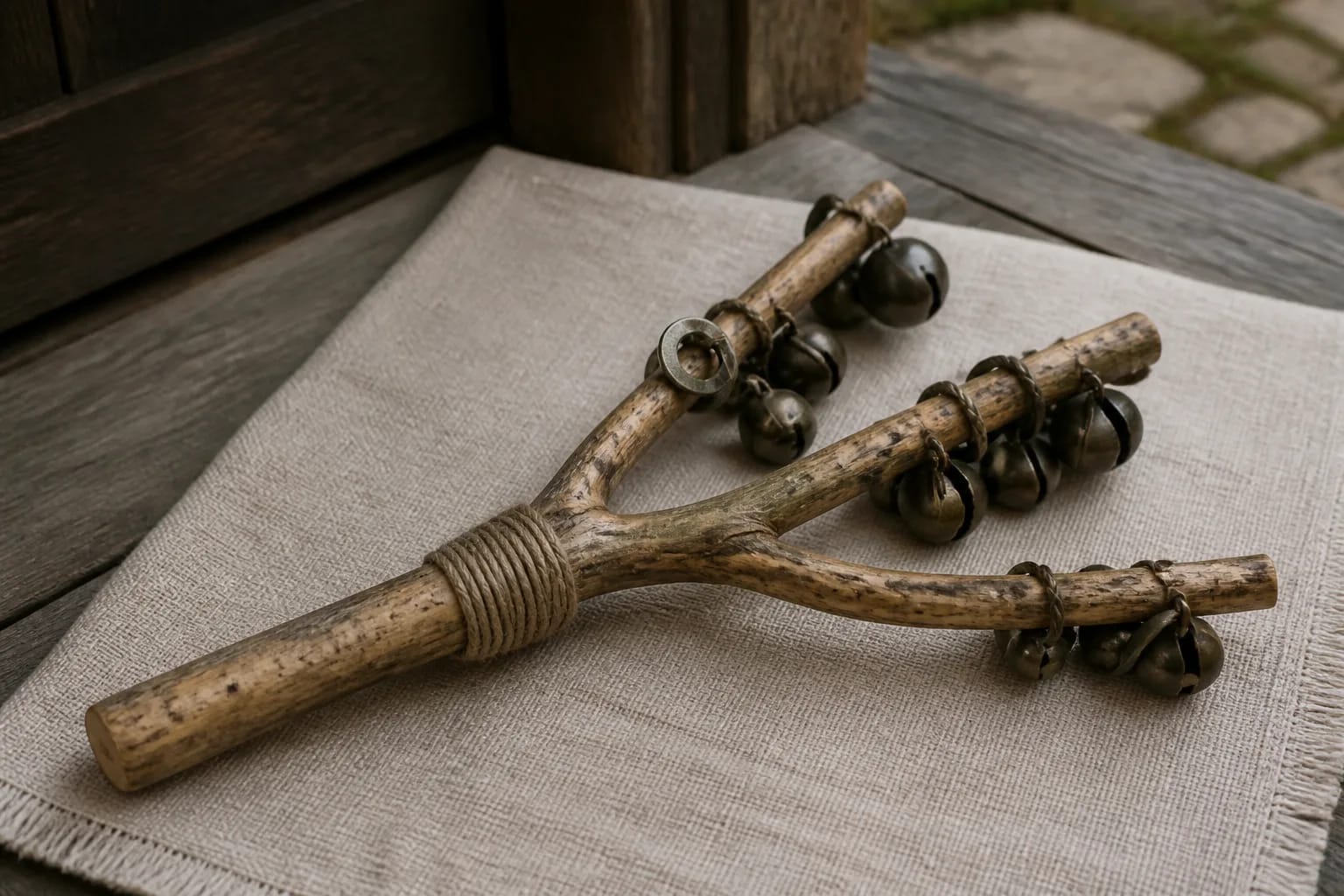
The sound is jangling, rhythmic, and signal-like, drawing attention to the inviter's action. The reconstructed džingulis used from 1966 is a 1.8 m staff with a 20 cm disc at the top hung with brass jingles.
History and tradition
In Užnemunė and Lithuania Minor, džingulis was used by the wedding inviter, the person who invited people to the wedding and became part of the ritual action. Its rattling was believed to have magical power, so it was not only a sound signal but also a protective and ritual act.
This link with the inviter shows that some Lithuanian instruments emerged not from music but from community custom. The sound marked an important life event and gathered people together.
Džingulis today
Since 1966, the reconstructed džingulis has been used by song, dance, and folklore ensembles; one known reconstructed example from 1979 was made by the craftsman A. Ragauskas. In this way the instrument returned from old wedding custom to the stage.
Džingulis is relevant in folklore reconstructions, wedding custom presentations, museums, and education. It helps show how sound in the Lithuanian village marked and called the community.