- Instrument family
- Percussion instruments
- Type
- Žemaitija drum type, hollowed tree stump, dog or goat skin, rhythm
- Source status
- regional
stump drum
What is kelmas?
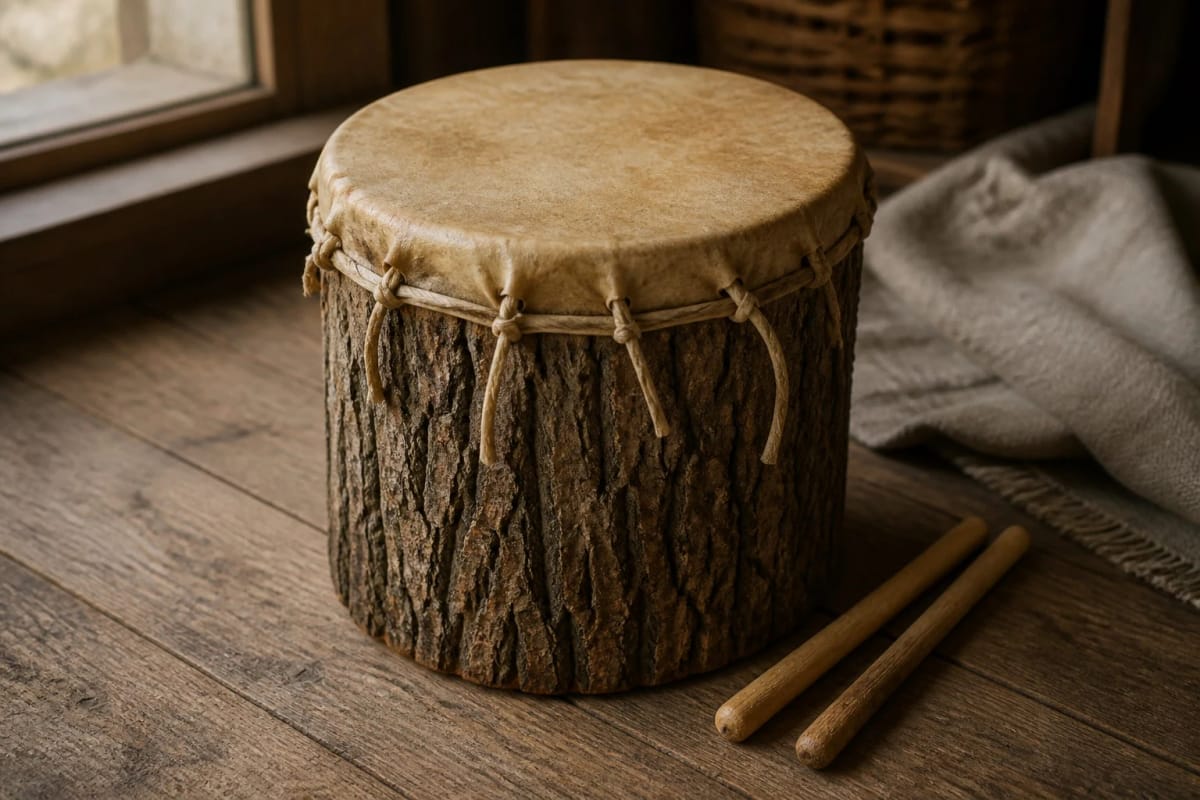
Kelmas is a drum type common in Žemaitija, a struck membranophone whose body is made not from a bent board but from a whole piece of wood. The name points to the material: it is often hollowed from a tree stump.
It is one of the more distinctive Lithuanian drums because nature shapes it: the musician uses an existing tree or stump cavity and turns it into a resonator. Kelmas is a regional instrument strongly associated with Žemaitija.
Construction and sound
The body is made from a whole or rotten piece of wood, most often a stump. One end is covered with scraped but untanned dog or goat skin fastened by a hoop. The other end is left open, so the cavity acts as a resonator.
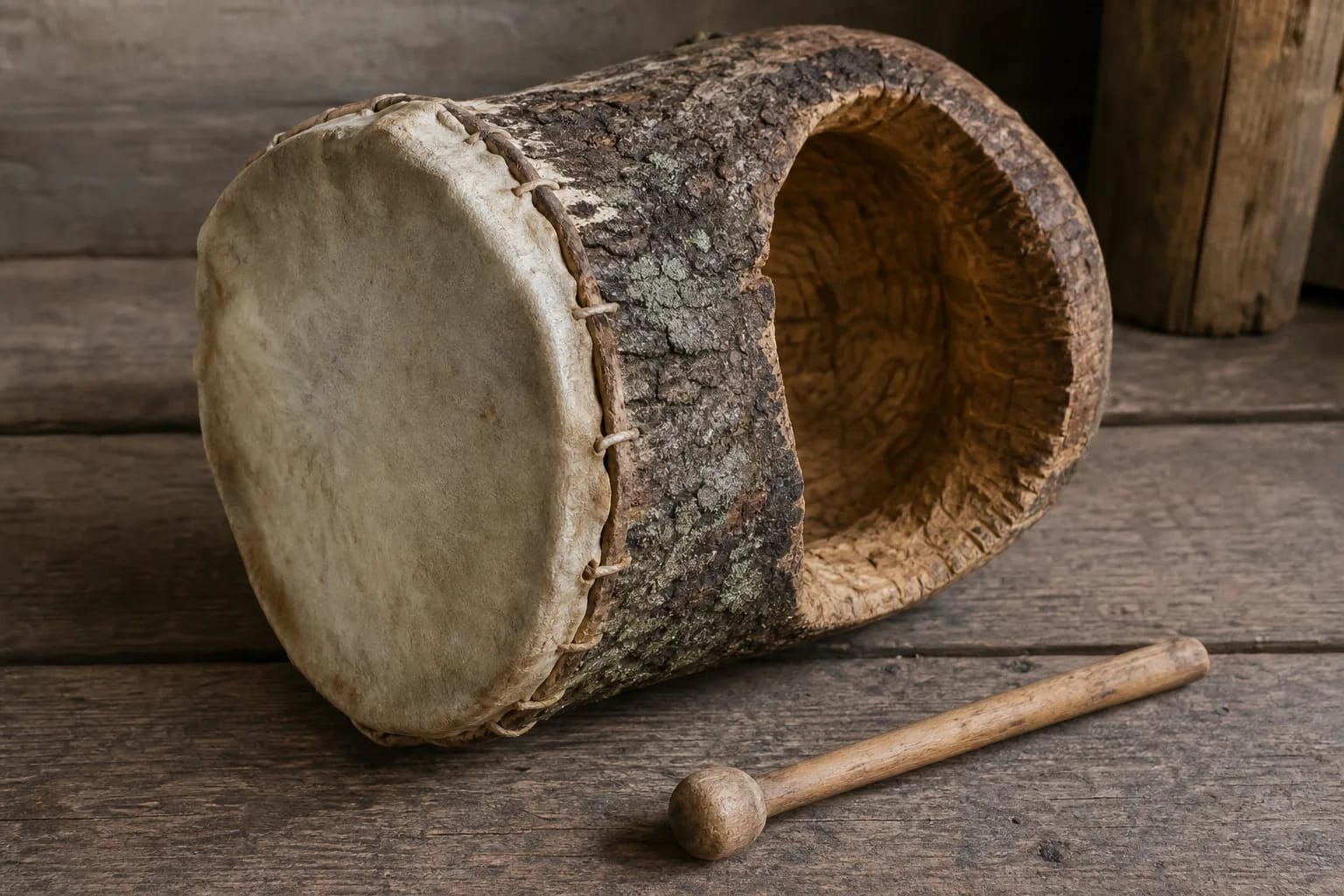
Kelmas is struck with one or two wooden sticks. The sound is muffled, low, and rhythmic, shaped by the size of the wooden cavity and the tension of the skin. Since every stump is different, each instrument also sounds different.
History and tradition
Kelmas belongs to the one-membrane drum type, along with the kettledrum. In Žemaitija it was used to support rhythm and became part of village music-making beside other percussion instruments.
As an instrument hollowed from a stump, it shows Lithuanian folk makers' ability to turn available material into a working musical tool: a piece of wood left over from everyday life becomes a distinctive drum.
Kelmas today
Today kelmas is presented in folklore ensembles, education, and museums as a regional Žemaitija drum type. It shows that Lithuanian percussion includes more than the classic two-sided drum.
This instrument matters because such regional homemade instruments often disappear from general lists, even though they reveal local traditions of music-making and craft.