- Instrument family
- Percussion instruments
- Type
- Struck membranophone, rituals, military kettledrums, Easter procession, village-band rhythm
- Source status
- well attested
katilas, katilbūgnis
What is būgnas?
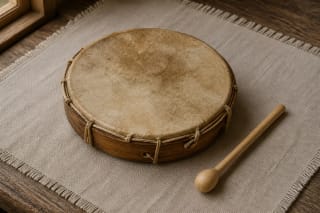
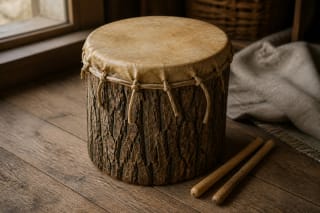
Būgnas is a struck membranophone: its sound source is a stretched membrane, usually prepared animal skin, bladder, or stomach. The body, or resonator, may be cylindrical, hemispherical, or another shape, and the membrane may be on one or both sides.
In the musical life of old Lithuania, drums were important festive, ritual, and military instruments. Later they became rhythm instruments in village bands, folklore ensembles, and orchestras.
Construction and sound
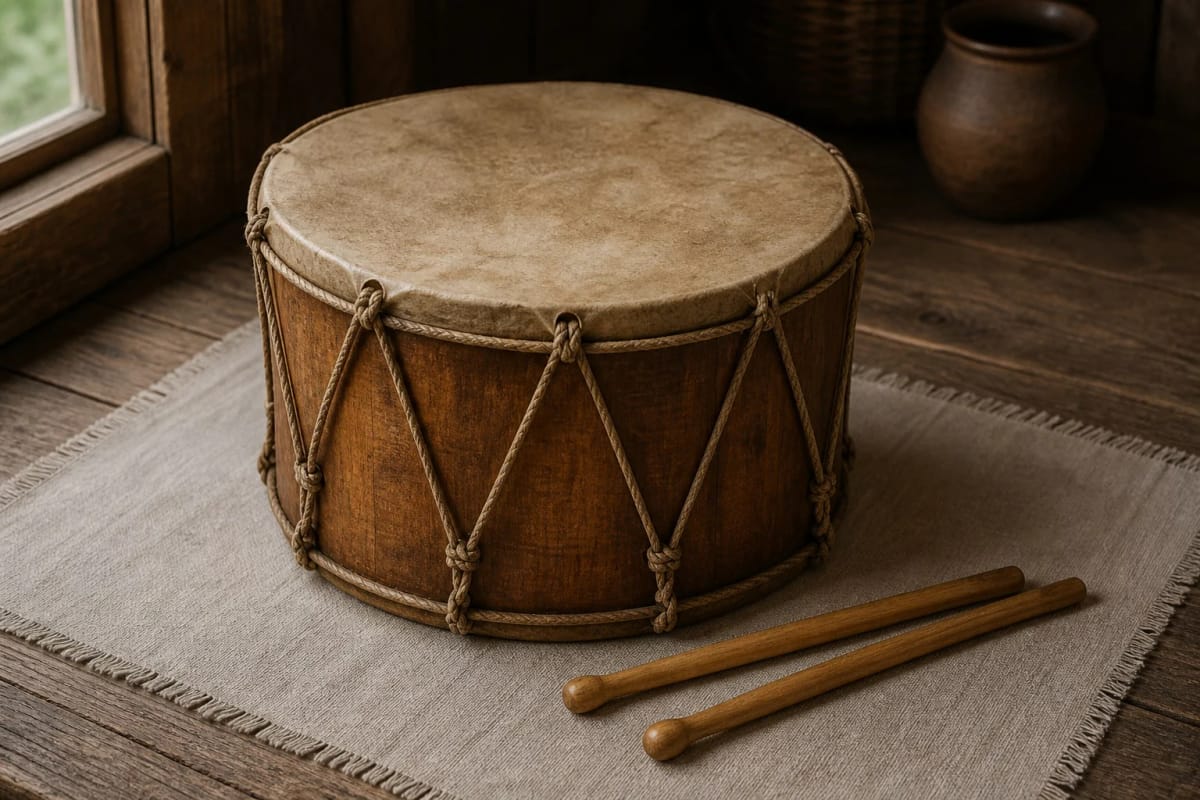
Ethnographic descriptions say the drum was made with animal skin. One belief held that it sounded especially well if the skin was taken from a dog while still alive, which shows a magical understanding of sound. The membrane was tied to the body with cords or sewn to a hoop, and tension was regulated with cords or straps.
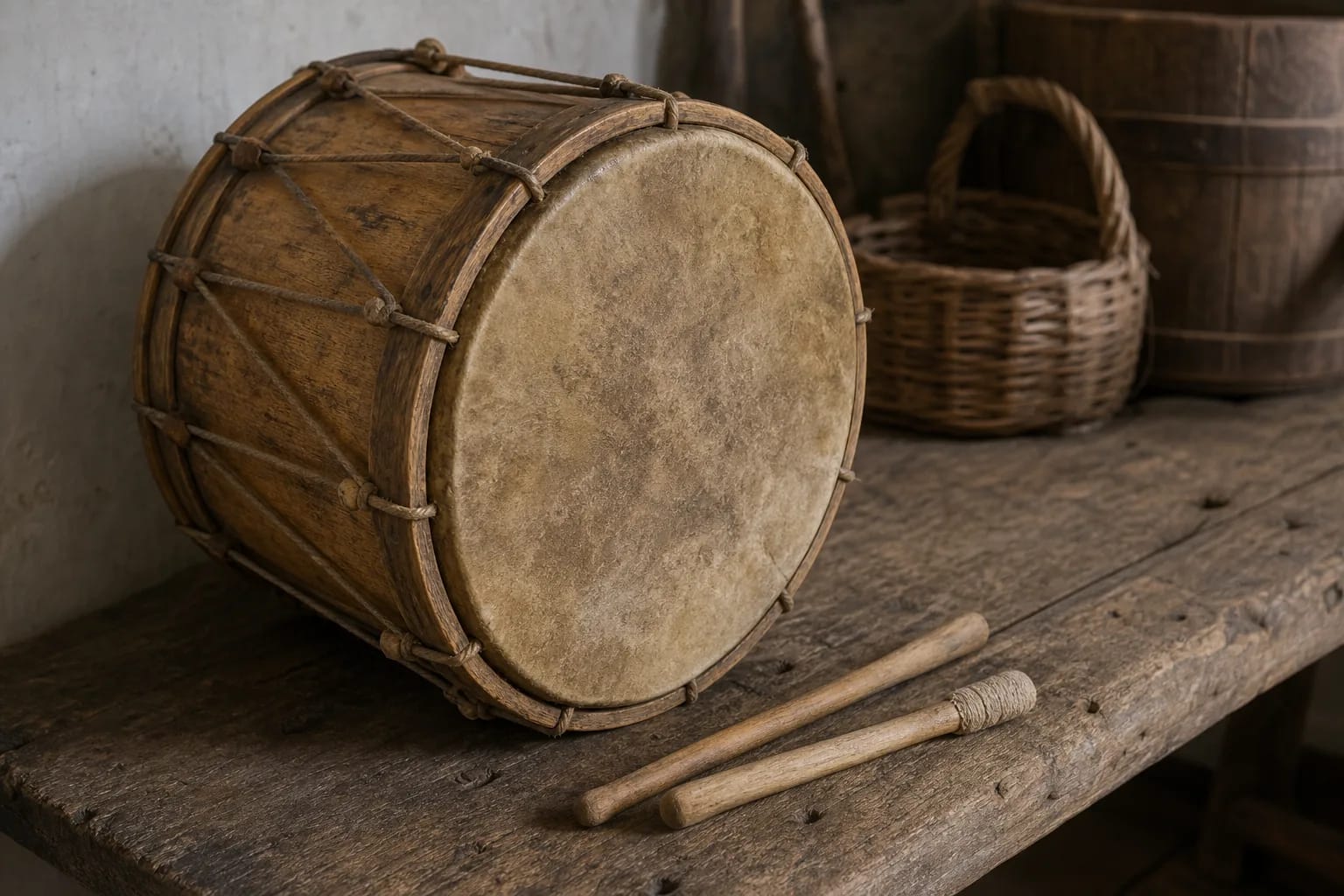
A separate type is the kettledrum: a copper hemisphere with 1-3 sound holes in the bottom, covered with skin on top and struck with wooden mallets. Folk kettledrums were placed on stones when played. The sound is strong and carries far, fitting both signal and rhythm.
History and tradition
In Lithuania, drums were ritual and signaling instruments from old times. The Chronicle of the Grand Duchy of Lithuania and Samogitia mentions military drums in a 1321 battle description, while the cavalry kettledrums of the Grand Duchy of Lithuania, called arganai or varganai, are first mentioned in the Nikon Chronicle in a 1536 battle account; they were hung on the sides of a warrior's horse.
In village life, drums were struck in Easter processions around the church and used to keep rhythm during evening music-making. Thus būgnas connects military, ritual, and entertainment sound traditions.
Būgnas today
Later, drums were taken up by folk music ensembles and various orchestras. Today būgnas remains a rhythmic base for village bands and folklore ensembles, often played together with other percussion instruments and skrabalai.
As a universal rhythm instrument, būgnas helps explain the role of percussion in Lithuanian music: from military signal and ritual sound to festive and dance pulse.