- Instrument family
- String instruments
- Type
- Bowed chordophone, village bands, dances, weddings, playing laments
- Source status
- later tradition
griežynė, skripka
What is smuikas?
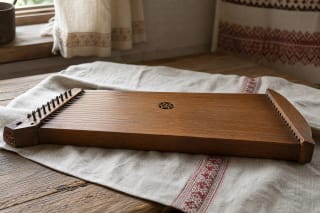
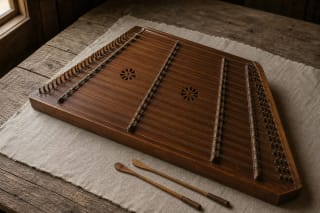
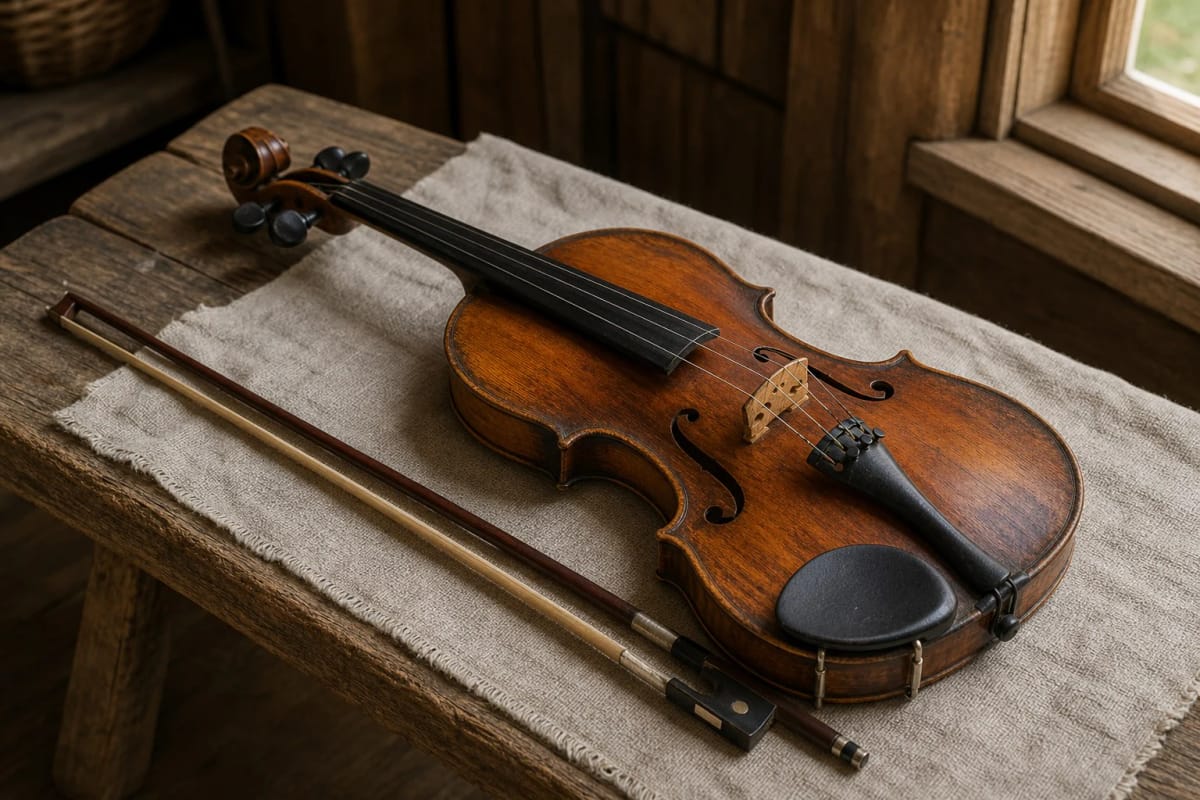
Smuikas is a bowed chordophone, the highest-sounding instrument of the violin family. In Lithuanian ethnic music it was not only an academic instrument: in village music, smuikas, also called griežynė, skripka, or griežtuvas, became one of the main melody-leading voices of the village band.
It has four strings tuned in fifths, g, d, a1, e2, a body about 35.5 cm long, and is played with a bow. In folk tradition, local holding, bowing, and repertoire styles mattered, and they varied by area.
Construction and sound
Simple fiddles from splints or boards were usually made by children and shepherds, while more complex hollowed or glued-side instruments were made by folk craftsmen. Because forms and holding methods varied, researchers think Lithuanian fiddle tradition may be older than the western European violin forms that later entered the region.
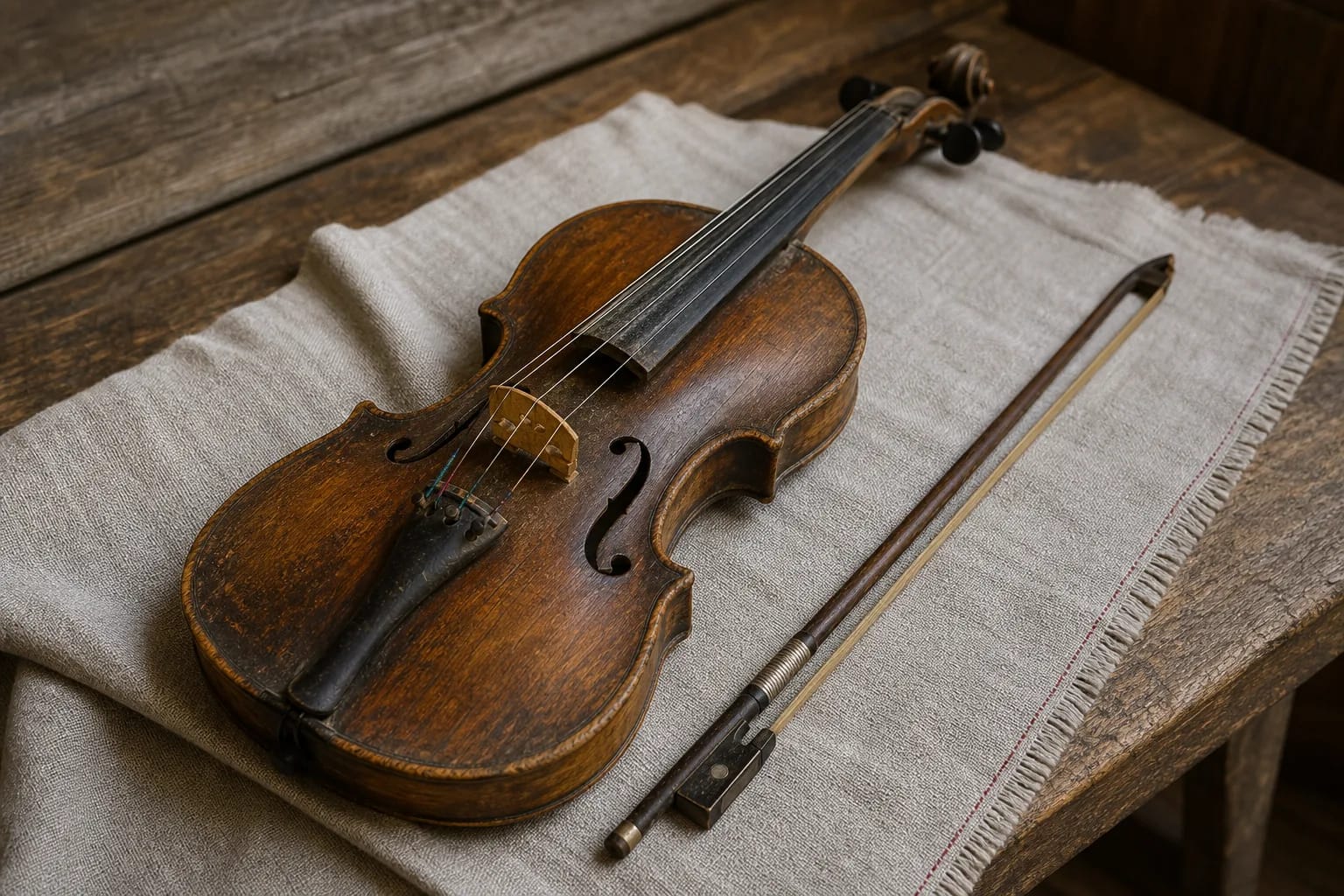
A folk fiddle often sounds sharper, more direct, and more rhythmic than in academic tradition. In a band it leads dancers, so the phrase is clear, pulsing, and energetic rather than smoothly concert-like.
History and tradition
Fiddle-like prototypes were probably first mentioned by Jan Długosz, quoting a Polish chronicle that described the retinue of Grand Duke Gediminas's daughter Aldona in 1325. In the second half of the sixteenth century Jonas Bretkūnas was the first to mention smuikas in Lithuanian, and fiddles are also mentioned in a 1582 court ruling. The classical violin form began to be used in Lithuania in the first half of the sixteenth century in noble courts, manors, municipal bands, and church chapels.
In Lithuanian villages, fiddlers played song melodies, accompanied songs, and there is evidence of playing laments. In the second half of the nineteenth and first half of the twentieth century, fiddles were played during family and calendar festivals, at church masses, weddings, and funerals. In a band, the fiddle usually leads melody while basetlė or pūslinė holds the bass.
Smuikas today
Smuikas remains a foundation of folklore ensembles and village bands; in living tradition it is heard more often than some more archaic instruments. Since the mid-twentieth century, professional makers in Lithuanian cities, including V. Banionis, P. Serva, P. Kupčikas, and others, have also made fiddles.
Folk fiddling has been studied by ethnomusicologists, including Gaila Kirdienė in Smuikas ir smuikavimas Lietuvių etninėje kultūroje in 2000. In Lithuania, smuikas therefore lives on two parallel paths: as a village-band voice and as an academic concert instrument.