
The Drake Called the Duck lyrics and meaning
Antinas antelę vadinojo,
Antelę vadinojo.
Plaukim, antele, Daugavėlėn,
Plaukim, antele, vandenėlin.
Neisiu, antinėli, neplauksiu,
Medėjai mane gaudys.
Gaudys antelę, pjaus antelę,
Virs antelę puodely.
Antinas antelę vadinojo,
Antelę vadinojo.
Variant from the Slaviūnas collection (SlS I-18, recorded 1936 in Paželviai)
Antinas antelę vadinojo:
— Eikš, mano antele, arčiau manęs.
— Oi neiki, antele, neklausyki.
Dės tavo galvelę kirtėjuosin,
Leis tavo kraujelį Dauguvosin,
O margas plunksneles perinuosin,
O pačią antelę katiluosin.
View illustration
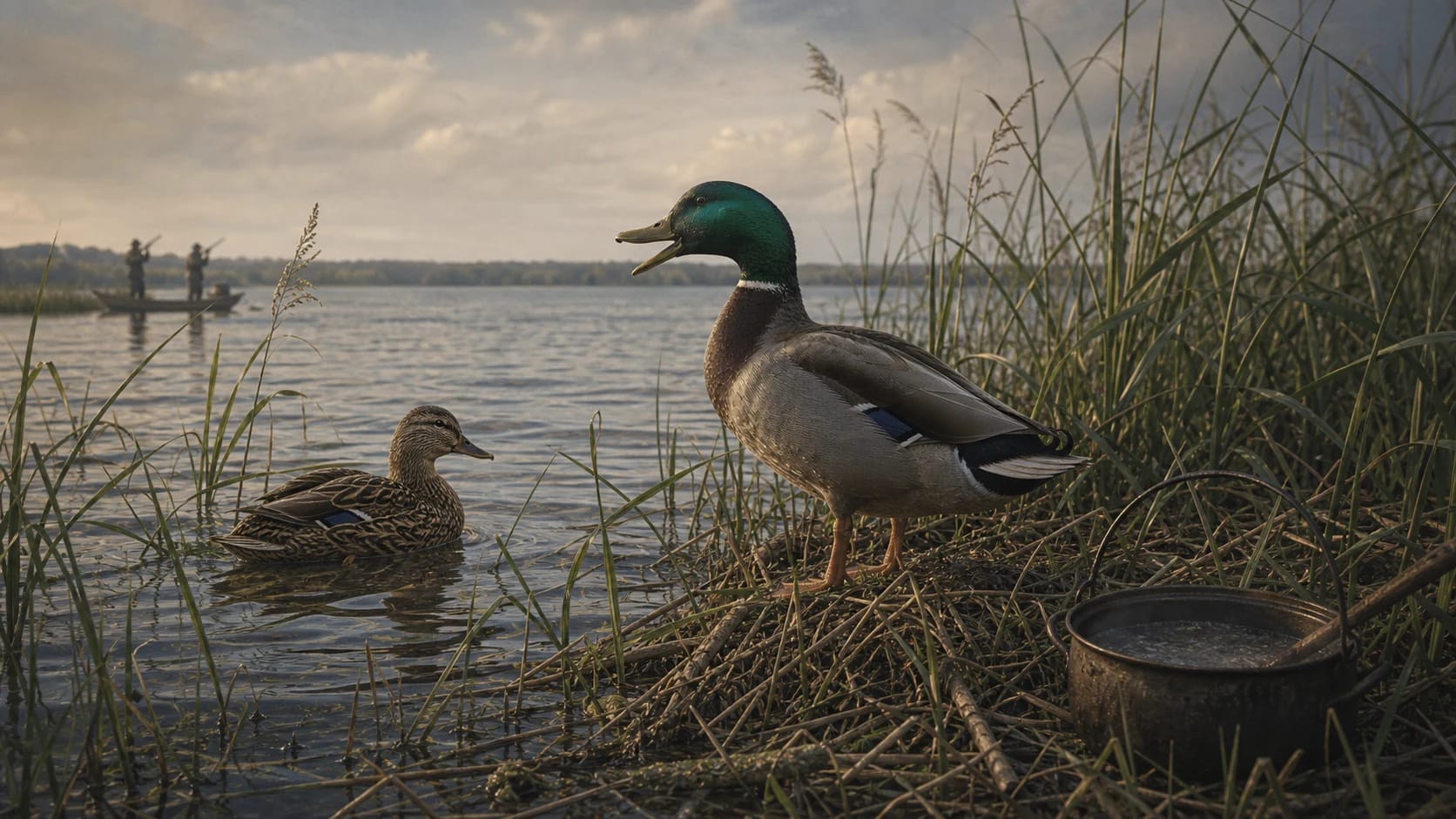
The Drake Called the Duck: sutartinė interpretation
The drake calls, but the duck knows the danger of the world. The dialogue form lets the sutartinė show seduction and caution in a few lines. The waters look open, but hunters wait there.
The food-chain motif, "they will catch, cut, and boil," sounds harsh, but such directness is not unusual in sutartinės. It reminds us that nature in these songs is not merely decorative.
A second reading draws on the stronger warning in the Slaviūnas variant. The second voice tells the duck not to heed the drake, because his invitation leads to death. This bird allegory can be read as a warning to a girl about a treacherous or false lover: the attractive call "closer to me" hides danger, and trust ends in destruction. The duck's transformation from living bird into the contents of a cauldron repeats an archaic sutartinė chain of transformations, where nature and human fate merge. At the same time, it remains a hunting sutartinė, naming natural danger plainly, without softening it.
The Drake Called the Duck: symbols and phrases
- Drake and duck
- A bird pair through which the song speaks about enticement, danger, and caution; possibly an allegory of a false lover.
- Daugavėlė / Daugava
- A wide waterway that invites movement but opens onto danger; it connects the song with the Aukštaitija-Latvia borderland.
- Hunters / cutters
- Figures who bring the threat of catching and death into the song.
- Pot / cauldron
- A domestic and almost comic in its brutality image of the ending: the duck is transformed from life into food.
The Drake Called the Duck: sutartinė history
"Antinas antelę vadinojo" is marked in Slaviūnas' collection as volume I, no. 18; it is assigned to dvejinės and to work and hunting sutartinės. According to the metadata, in 1936 in Paželviai (Želva volost, Ukmergė county), J. Kartenis wrote down both text and melody from the 89-year-old singer Ona Petrauskienė-Krasauskaitė, who came from Kriaunos in Rokiškis county (LTR 963(22)). The manuscript notes: "The first singer gathers, the second advises." That sentence describes the structure of a dvejinė sutartinė precisely.
The Slaviūnas variant is more threatening than the version presented on the site. In it, the second voice warns the duck not to listen to the drake, because he is luring her to destruction: her head to the cutters, her blood to the Daugava, her colored feathers to down, and the duck herself into the cauldron. The mention of the Daugava (Dauguva) River connects the song with the northeastern Aukštaitija and Latvian borderland.
Sources
- Z. Slaviūnas. Sutartinės, vols. 1-3 (1958-1959), I-18
- Zenonas Slaviūnas sutartinės collection, LTR 963(22) (sutartines.info)
- D. Račiūnaitė-Vyčinienė. Sutartinės: Lithuanian Polyphonic Songs (2002)
The Drake Called the Duck: sources
The Drake Called the Duck: frequently asked questions
Is this a dvejinė?
Yes. The manuscript note says that the first singer gathers and the second advises, which is the structure of a dvejinė.
The Drake Called the Duck: how is the Slaviūnas variant different?
In it, the second voice warns the duck not to listen to the drake, because he is luring her to destruction. The warning motif is much stronger.
Why does the duck refuse to swim?
She fears the hunters. Her caution is more important in the song than the drake's invitation.
The Drake Called the Duck: what is the deeper meaning?
The bird dialogue can be read as a warning to a girl about a treacherous or false lover.
The Drake Called the Duck: who recorded it?
J. Kartenis recorded it in 1936 in Paželviai from the 89-year-old Ona Petrauskienė-Krasauskaitė.
Why is the Daugava mentioned?
It gives the water space a concrete name and links the song to the Aukštaitija-Latvia borderland.