- Place
- Pociūnai, Prienai District Municipality
- Region
- Prienai District
- Type
- active sport and general aviation airfield supporting gliding, aerobatics, and parachuting
- Address
- Sklandytojų g. 10, Pociūnai village, Prienai District
- Coordinates
- 54.65295, 24.05613
- Visit duration
- 30-60 minutes to watch from an authorised area; allow 2-3 hours for a booked experience flight including preparation and weather delays
- Best time
- a weekend from May to October in flyable weather, after confirming operations by telephone
Pociūnai Aerodrome, EYPR, Kaunas County Gliding Club, Pociūnai Gliding Centre, Kaunas Gliding Club at Pociūnai
This is a living airfield, not an open-air aviation museum
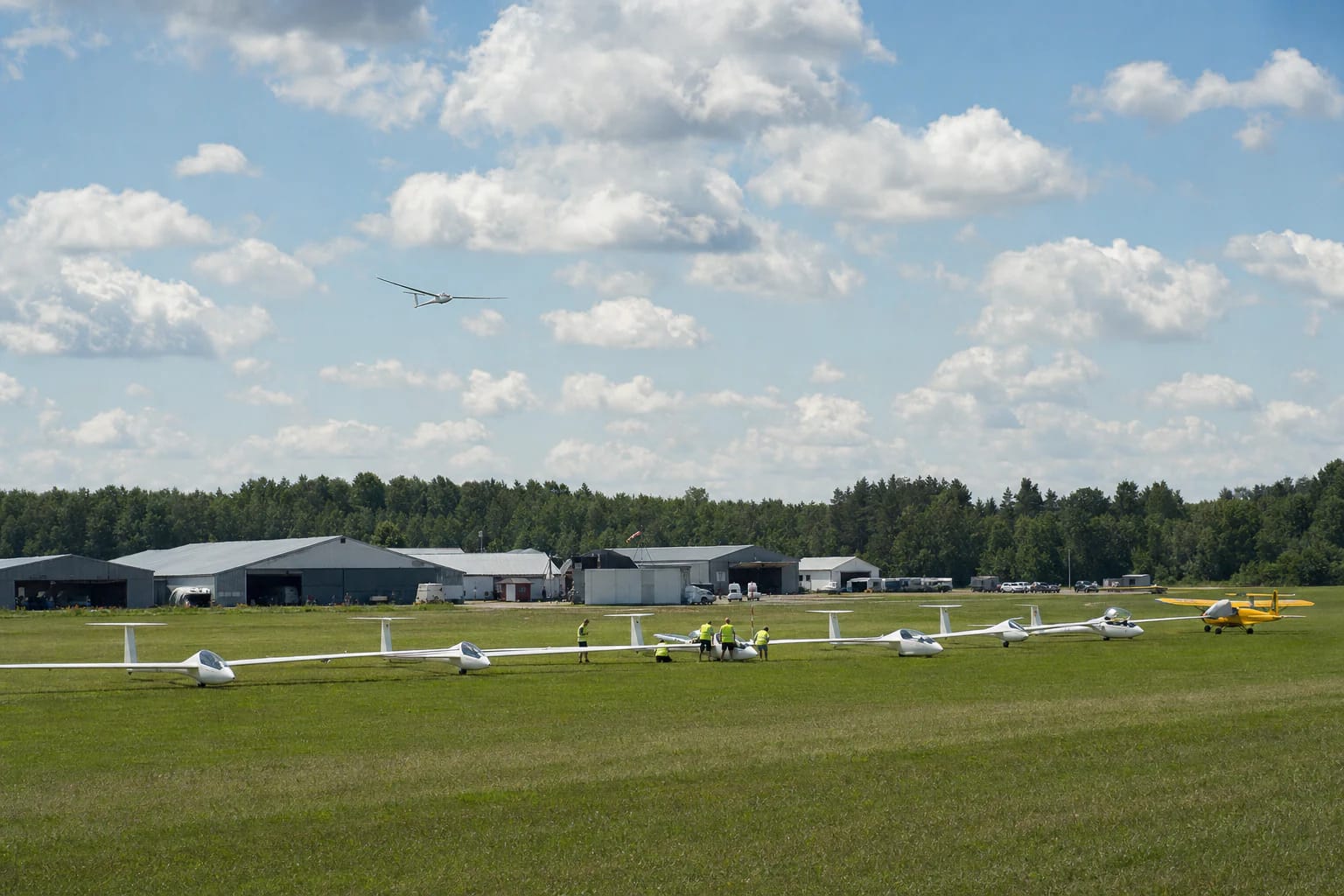
At Pociūnai, a tow plane can launch a glider while a winch is operating, a light aircraft is landing, and parachutists are descending. Even when the field looks empty, an operation can begin quickly and almost silently. A visitor area therefore ends wherever a sign or member of staff says it does. Never walk independently towards the gliders, across the field, or towards a runway.
The official description explicitly says that flight information services are not provided at Pociūnai. This is primarily an aeronautical notice for pilots, but it also reminds visitors that the site has no passenger terminal, permanent tour desk, or controller narrating activity for spectators.
The club welcomes people to watch aviation and attend public events, but an open day or competition spectator zone differs from an ordinary training day. On arrival, find the club office or a responsible member of staff and ask where it is safe to stand, take photographs, and park.
EYPR has one asphalt and two grass runways
The airfield's ICAO code is EYPR, its official call sign is POCIŪNAI, and its reference elevation is 65 metres above sea level. The asphalt runway 04/22 measures 667 by 18 metres. It looks small beside a commercial airport runway but provides an important hard surface for sport and light aviation.
The two grass runways are considerably longer and wider: runway 18/36 is 1,100 by 40 metres and 09/27 is 900 by 40 metres. They can resemble an ordinary mown meadow, creating the greatest risk of misunderstanding for a first-time visitor. A straight grass strip, marked edge, or row of flags identifies an active movement area, not a shortcut to a hangar.
Sailplanes are launched in two principal ways. A tow plane pulls one on a cable to the agreed altitude before release; a ground winch rapidly reels in a long cable and lifts the glider on a steeper trajectory. Both methods involve a tensioned cable and high speeds, so never cross a launch line even when the aircraft appears stationary.
The beginning at Pociūnai spans the 1956-1958 relocation period
Sources do not give one identical starting year. The club history says Kaunas glider pilots moved to Pociūnai in late 1956 after brief stays at Vepriai and Alytus. The airfield's sixtieth anniversary was counted from 1957, while the Lithuanian Universal Encyclopaedia dates flying at Pociūnai from 1958. These years are best understood as stages of relocation, establishment, and regular operation rather than a single undisputed opening day.
The club received its first Yak-12R glider tug in 1961. In 1963, the Kaunas gliding station became the Kaunas Aviation Sports Club, and the arrival of Czech Z-326 aircraft in 1965 began a systematic aerobatics programme. Pociūnai gradually developed from a training meadow into a base for several aviation sports.
After Lithuania restored independence, the site remained dedicated to sport aviation. Pociūnai hosted the first Women's World Gliding Championship in 2001 and later European and world championships, Baltic Cups, and vintage-glider rallies. Spectator arrangements, parking, and access during an event can be entirely different from an ordinary weekend.
Gliding met Lithuanian aircraft manufacturing here
Experimental sport-aviation workshops founded in Prienai in 1969 became a factory producing composite sailplanes. At the end of 1972, Balys Karvelis's BK-7 Lietuva flew, the first composite aircraft in this product line and the basis for later designs.
The long-winged LAK-12 Lietuva became one of the best-known models. The factory's official history records 253 examples built over twenty-five years and operated in twenty countries. The factory moved from Prienai to Pociūnai in 1985, concentrating design, production, flight testing, and repair expertise beside the airfield.
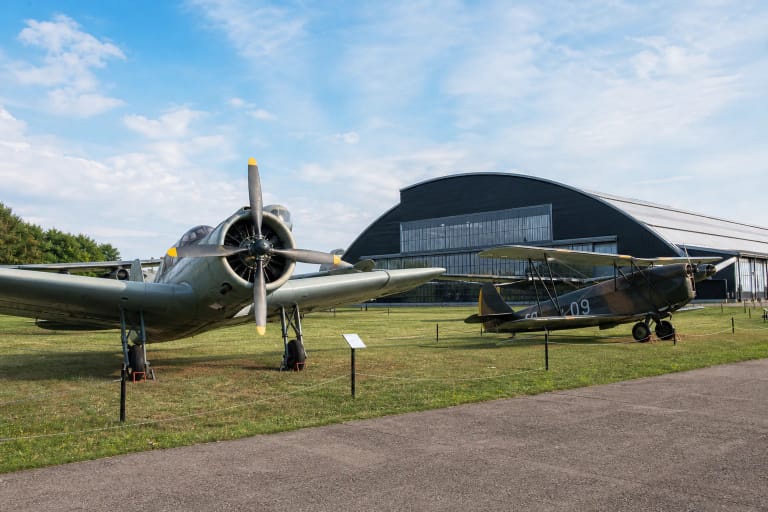
This industrial presence is not an automatic factory tour. Hangars and aircraft from different periods can be visible from public areas, but workshops, production spaces, and technical zones may only be entered with explicit permission from the relevant operator.
An experience flight can last from a few minutes to an hour
On 25 July 2026, the club listed a short five-to-eight-minute sailplane flight, winch-launched to 300-400 metres, at EUR 60. A fifteen-to-thirty-minute flight aerotowed to roughly 900 metres cost EUR 120, while a thirty-to-sixty-minute instructional flight with a licensed instructor was EUR 150.
Roughly ten-minute sightseeing circuits in four-seat Gawron and Robin aircraft were also offered on the Pociūnai-Prienai-Birštonas route. Published prices were EUR 120 and EUR 150 respectively for three passengers. A flight in a vintage open-cockpit Slingsby glider cost EUR 150. Prices, aircraft type, and availability can change; check the official page.
Detailed pages for most longer flights state a minimum passenger age of fourteen, prohibit flying while intoxicated, and advise against flying during pregnancy or with certain heart conditions or epilepsy. Discuss health, height, weight, mobility, and cockpit seating with the operator before purchasing.
A reservation still does not guarantee take-off
Experience flights normally operate at weekends from May to October. Rain, fog, poor visibility, low cloud, or strong wind can change the time even at the last moment. Call +370 698 20337 before setting out and obtain same-day confirmation even if you already hold a ticket bought online.
Keep a window of several hours free. You must check in, receive a safety briefing, wait for suitable weather and traffic, and prepare the aircraft. A fifteen-minute flight does not mean that you will leave twenty minutes after arriving.
Wear closed shoes that stay securely on the foot; flip-flops and high heels are unsuitable for flying. Sun, wind, and heat feel stronger on the open field, so carry water, head covering, and sunscreen. No reliable step-free audit of every visitor area was found; discuss mobility and boarding support with the club in advance.