- Place
- Birštonas Municipality
- Region
- Birštonas
- Type
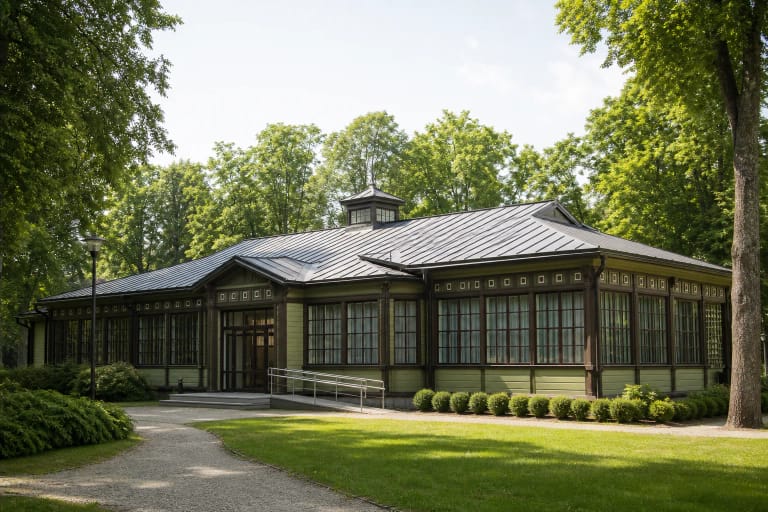
- protected-area visitor centre with an interactive natural and cultural heritage exhibition
- Address
- Tylioji g. 1, Birštonas
- Coordinates
- 54.60757, 24.02612
- Visit duration
- 45-75 minutes for an independent visit; 1-2 hours with a guided tour or education programme
- Best time
- Tuesday to Saturday before exploring the park, particularly on a first visit to Birštonas or in poor weather
Nemunas Loops Visitor Centre, Nemunas Loops Regional Park Centre, Great Nemunas Loops exhibition, Birštonas Regional Park Visitor Centre
The Great Nemunas Loops first become intelligible here as a whole
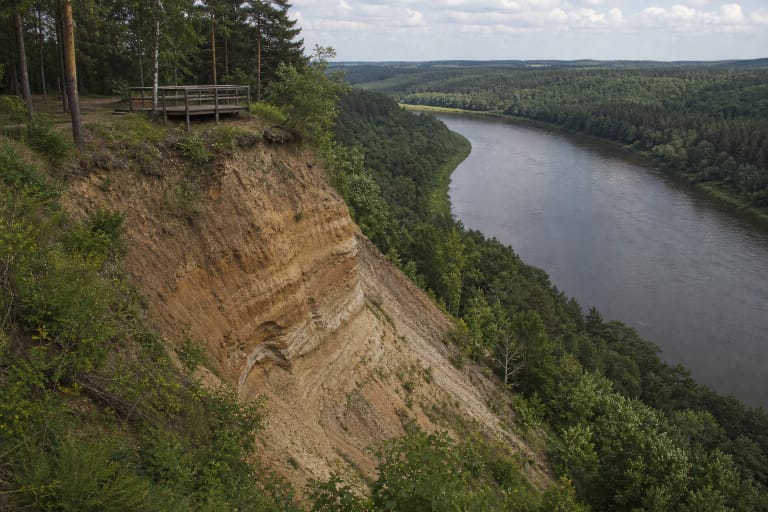
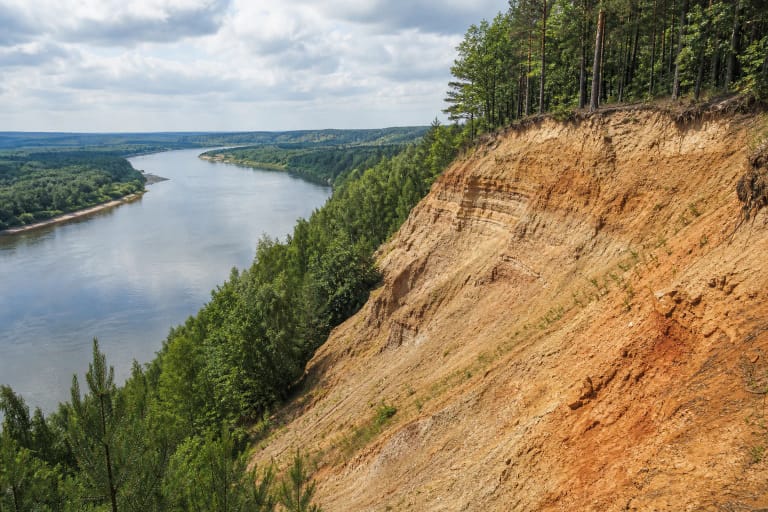
A single exposure or viewpoint reveals only one fragment of the river's enormous pattern. Inside the centre, the Punia, Balbieriškis, Prienai, and Birštonas loops are brought together in maps and terrain models, making it easier to understand why the Nemunas repeatedly changes direction along a 65-kilometre reach and how exposures, ridges, ravines, and erosional spurs developed in its valley.
The exhibition is called Great Nemunas Loops. Its subject extends well beyond physical geography: the Punia and Prienai forests, Verknė valley, Degsnė larch stand, island birds, plants, fungi, hillforts, ancient settlements, and livelihoods connected with the river all sit alongside the story of water and landforms.
This is the most useful first stop for a visitor new to the regional park. Staff can help select a realistic route for the available time, season, and mobility, while the exhibition introduces place names that later reappear on signs and information panels outdoors.
Curving furniture, models, and games echo the river landscape
The curves of the exhibition furniture recall riverbanks, while tactile models allow visitors to trace hills, hollows, and valleys by hand. The Verknė valley, Nibriai and Birštonas erosional spurs, and the Škėvoniai ridge are modelled separately. Rock samples open a discussion about geological time measured in millions of years and the formation of mineral water.
An archaeology table conceals photographs and representations of finds from many of the park's hillforts. The natural-history area invites visitors to identify fish, birds, molluscs, forest mammals, rare plants, lichens, and fungi. Puzzles and opening elements are not simply a children's corner; they connect each species to a particular Nemunas valley habitat.
The interactive map is intended for practical route planning rather than an abstract game. It helps locate park destinations in relation to one another. Because some routes lie far apart, ask staff about current trail conditions, reserve boundaries, and places where access is restricted before setting out.
The scale of the park explains why one weekend cannot cover everything
Nemunas Loops Regional Park was established in 1992 and covers 25,079.76 hectares across Birštonas, Prienai, and Alytus districts. Forest occupies about 69 per cent of the area. The protected subject is not a single panorama but an interconnected natural and cultural landscape.
The official park description lists four great hydrographic loops, seventeen reserves, the strict Punia Forest nature reserve, fourteen state-protected natural heritage objects, and sixty-five cultural heritage sites, including twenty-six hillforts. In the exhibition these totals acquire a place and purpose: visitors learn how a landscape reserve differs from a strict reserve and why one area has a marked trail while human access to another is tightly restricted.
The Lithuanian Universal Encyclopaedia records about 950 plant species in the park, including sixty-eight in Lithuania's Red Data Book, along with roughly 200 breeding bird species and fifty-six mammal species. Those figures are not a promise that a short visit will reveal every species. The centre instead teaches visitors to recognise habitats and understand why they are protected.
The present exhibition opened in 2020 but tells a story millions of years long
Birštonas Municipality's 2020 activity report records the opening of the new Great Nemunas Loops exhibition. It was created through a project to protect landscape values and make them accessible for learning, which is why older photographs and publications may show a different interior and obsolete opening hours.
The administrative structure of the regional park, established in 1992, later changed. The centre is now managed by the Dzūkija-Suvalkija Protected Areas Directorate, so its official page is the correct source for current admission, education programmes, and opening hours rather than the former standalone park-directorate website.
The exhibition's time scale is far longer than the institution's history. Geological specimens are millions of years old, relief models trace glacial and later erosional processes, and the archaeology section presents human life beside the loops long before Birštonas developed as a resort.
The centre stays open longer Tuesday to Friday and closes earlier on Saturday
On 25 July 2026, the published hours were 09:00-18:00 Tuesday to Friday and 10:00-15:00 on Saturday. The centre was closed on Monday and Sunday. It also closes on public holidays, while the working day immediately before a holiday ends one hour earlier.
Independent admission cost EUR 4 for an adult and EUR 2 for a preschool child in an organised group, school pupil, student, disabled visitor, or old-age pensioner. Children under six who were not part of an organised group entered free of charge. Prices and eligibility can change, so check the directorate's official page before travelling.
A guided tour cost an additional EUR 3 per person, but the standard service is priced for a group of at least ten. A smaller group or an individual can book it by paying the ten-person minimum. Education themes, duration, age ranges, and charges vary, so they are not a spontaneous add-on to admission; reserve on +370 612 37543.
A practical visit moves from an indoor map to a real trail
Allow at least 45 minutes for the centre, and an hour or more with children, interactive tasks, or questions for staff. A large group should arrange its visit in advance even without a guided tour, because visitors share the same models and games in a relatively compact exhibition.
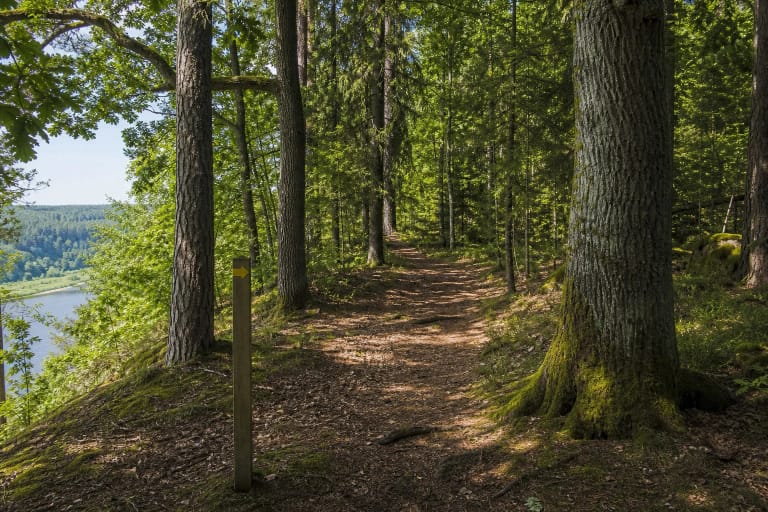
Afterwards, continue on foot along the Birštonas promenade, through Vytautas Park, and around the resort centre. Birštonas observation tower and the Škėvoniai ridge trail require a longer route, while Punia Forest, Balbieriškis exposure, and other parts of the park are separate excursions rather than immediate surroundings of the building.
No comprehensive public audit of accessibility throughout the building was found. Before visiting with a wheelchair, sensory requirements, or a large group, call to discuss the entrance, circulation between models, toilet facilities, and possible assistance. Touch exhibition elements only where they are designed for handling.